
 E-Paper



‘Hire and fire’ practices of aggregators violate human rights: NHRC chairperson
National Human Rights Commission (NHRC) chairperson Justice Arun Kumar Mishra on Saturday termed the ‘anti-labour hire and fire’ practices of aggregator platforms “gross violation of human rights”, and asked the judiciary, legislative, executive and human rights institutions to adopt a “new approach” to deal with such violations


National Human Rights Commission (NHRC) chairperson Justice Arun Kumar Mishra on Saturday termed the ‘anti-labour hire and fire’ practices of aggregator platforms “gross violation of human rights”, and asked the judiciary, legislative, executive and human rights institutions to adopt a “new approach” to deal with such violations.
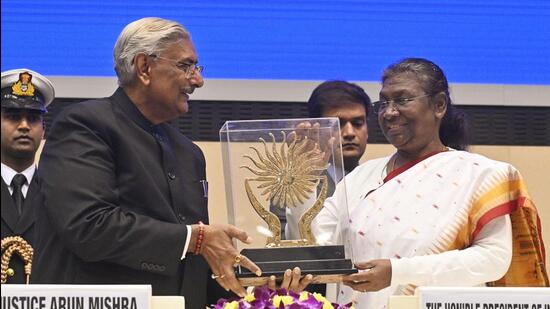
Justice Mishra also called for respect for human rights by multinational corporations and “guard against superior bargaining power within the national legal framework”.
“Globalisation has brought foreign investment; one outfall is the concentration of wealth in the hands of transnational enterprises and a few countries. Globalisation has created centres of power even in competition with the power of states. Free movement of capital causes money laundering. The challenge is ensuring the right to livelihood by aggregator platforms with no investment. Majority of them are distributors. Their monopoly disrupts the global supply chain. They can change shape and locate easily and are involved in anti-labour practices of hire and fire, predatory pricing and dodging taxes in gross violation of human rights,” Mishra, who was speaking on the occasion of 74th Human Rights Day at Vigyan Bhawan, said.
“Hence, a new approach should be adopted by the judiciary, legislative, executive and human rights institutions. Even civil society has to be vigilant,” he added.
While the NHRC chairperson did not name any company, his remarks came against the backdrop of reports on layoffs by several aggregator companies and start-ups. Food aggregator Zomato recently confirmed that it will lay off 3% of its workforce across the organisation. Social media giant Meta also recently fired 13% of its staff while Twitter announced laying off 3,700 employees.
Justice Mishra underlined the need to safeguard the rights of victims of business-related human rights violations.
“It is necessary that safeguards in domestic regulations should be anchored in international legal obligations towards victims of business-related human rights violations. The terms and licensing conditions to operate must include provision for protection of human rights,” he said.
“We must ensure respect for human rights by multinational corporations and guard against superior bargaining power within the national legal framework. Licensing regulations must protect the interest of the national industries/businesses,” he added.
The NHRC chairperson referred to the 1984 Bhopal gas tragedy and said the delay in disposing of hazardous waste at the site continues to abuse the right to health of survivors and residents in the area.
“For calamities caused by industrial disasters, the transnational enterprises’ responsibility has to be well defined. For example, the world’s worst disaster, the Bhopal gas Tragedy, occurred in 1984. Approximately 3,000 people died. Around 336 tonnes of hazardous waste is still lying on the premises. The property changed hands. Delay in the disposal of such hazardous waste by a multinational company contaminates the groundwater and soil and is a direct abuse of the right to health of the survivors and residents in the area,” he said.
The Bhopal gas tragedy took place at a plant of a global company, Union Carbide, in Bhopal in 1984 and is considered one of the world’s worst industrial disasters. The multinational company faced global criticism after over 3,000 people were killed in the incident.
Mishra also made a pitch for a Uniform Civil Code to end discrimination against women.
“We see discrimination against women worldwide due to social, customary and religious practices. The time has come to take care of the same by enacting legislative provisions to remove discrimination in inheritance, property rights, parental rights, domicile of married women, and legal capacity. Improving the condition of women in vulnerable sections and in rural areas is needed,” he said.
“To ensure equality, empowerment of women through development and proper education is essential. They cannot be made to suffer discrimination and gender violence for eternity. Without providing dignity and equal rights to them, a celebration of the day is meaningless. The Supreme Court has shown the way for equality by progressive interpretations. Article 44 of the Constitution, enabling equality by enacting a Common Civil Code should not remain a dead letter,” he added.
President Droupadi Murmu, who was the chief guest at the event, said “human rights are a work in progress around the world”.
“Today, we fail to understand why something as simple as basic dignity could be denied to someone solely on the basis of their race, religion, gender or language, or where and in which group they were born,” she added.
Murmu also said the “Universal Declaration of Human Rights (UDHR) is said to have been translated into more than 500 languages, which makes it the most translated document in history.”
“Still, when we consider the sad developments that keep taking place in many parts of the world, we wonder if the declaration has been read at all in some of those languages,” she said.
“The fact remains that human rights are a work in progress around the world. At home, however, we can take solace in the fact that the NHRC has been making the best possible efforts to spread awareness about them,” she added.
December 10 is observed as Human Rights Day to mark the adoption of the UDHR. It was approved and proclaimed by the United Nations General Assembly on this day in 1948 as a universally accepted value-based document to understand the importance of promotion and protection of human rights.
The NHRC, formed in 1993, is the apex body for human rights issues in India.


