
 E-Paper



HistoriCity | Palestine: The quest for a homeland
Many see the ceasefire between Israel, Hamas as another chapter, but understanding current crisis demands deeper look into Palestine’s long, complex history

 Prefer HTon Google


Many see the ceasefire between Israel, Hamas as another chapter in a long-standing conflict. Understanding current crisis demands deeper look into Palestine’s long, complex history
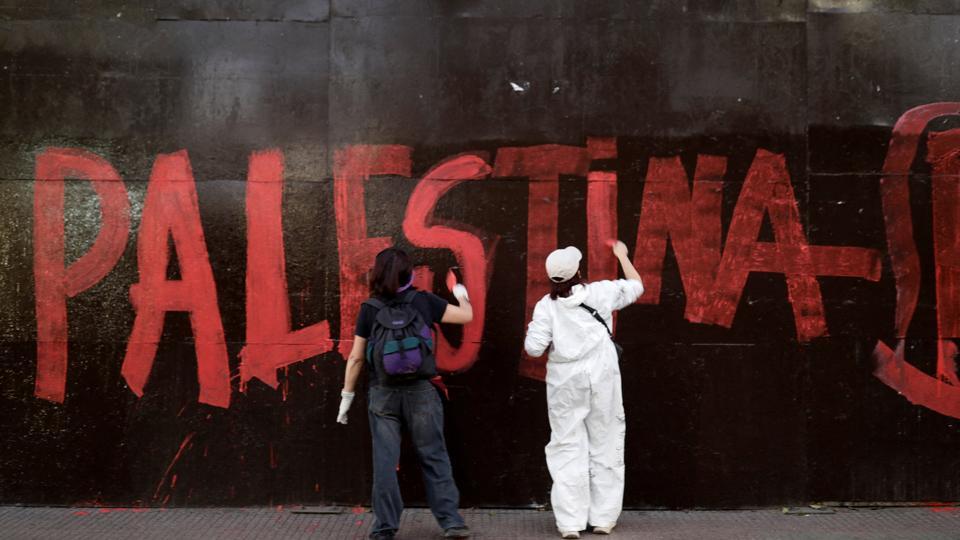
A ceasefire between Israel and Hamas has taken effect, nearly two years after Hamas—a Palestinian nationalist organisation—launched a major attack in response to the Israeli occupation of Gaza, resulting in the deaths of over 1,200 people, most of them civilians. In the aftermath, Israeli Prime Minister Benjamin Netanyahu has led a devastating, genocidal military campaign in Gaza, with casualty estimates starting at 67,000. While many dismiss this as yet another chapter in a long history of violence, understanding the current crisis requires a deeper look into the history of Palestine: a land shaped by colonisation, displacement, and ongoing struggles over sovereignty.
What or Where is Palestine?
For over two thousand years, Palestine has been coveted by the three monotheisms. Nabil Matar writes in Mediterranean Captivity through Arab Eyes, “While some of these men and women offered sacrifices, collected relics, and prayed, others studied, fought, preached, excavated or conquered. A rich granary in the Fertile Crescent, no land has been as much the focus of religious tourism and piety, pilgrimage and colonisation as Palestine.”
According to Palestinian historian and academic Nur ad-Din Masalha in Palestine: A 4000 Year History, the earliest known names for the region later called Palestine were Retenu and Djahi, used in ancient Egyptian texts like the Story of Sinuhe (14th century BCE). Retenu referred broadly to the eastern Mediterranean coast, divided into three subregions: Amurru in the north, Lebanon (Upper Retenu) in the middle, and Djahi in the south, stretching from the Litani River to Ascalon and the Rift Valley.
Traditional interpretations of the Philistines (Peleset) and ancient Palestine were shaped by colonial and biblical scholarship. However, recent genetic, archaeological, and epigraphic discoveries — such as 3,000-year-old Philistine graveyards in Ascalon — have challenged earlier views, showing the Philistines were indigenous to the Near East, not Aegean ‘sea peoples’. Egyptian inscriptions from the reign of Ramesses III (1150 BCE) mention the Peleset as part of his campaigns in Djahi, i.e., Palestine, while Assyrian records of the 8th–7th centuries BCE refer to the region as Palashtu or Pilistu, and called the people who lived there Palestinians.
For the ancient Hebrews, ‘Philistia’ referred to a confederation of five coastal cities where the Philistines lived: Gaza (Ghazzah), Ashkelon (‘Asqalan), Ashdod (Isdud), Ekron (‘Aqir), and Gath (Jat), and potentially the territories connecting them as well. It is a point to note that in the myth of Israel, this population has consistently been portrayed negatively: from Goliath to Delilah, they have been depicted as epitomising evil. The Old Testament refers to the ‘land of Plishtim’, and the Bible refers to the Mediterranean Sea as the ‘sea of Philistines’.
In Islamic geographies, Filastin was variably defined: some described it as the area bounded by Rafah and Lajjun to the south and north, and by Jaffa and Jericho to the west and east; others restricted it to the town of Ramla and its hinterland. Early modern European cartographers sometimes used Palestine to describe only the coastal plain, while others conceived it more broadly as the entire Terra Sancta or ‘Jerusalem and its mountains’. By the late Ottoman and early Mandate periods (1870s–1910s), Palestine was often taken to extend northward to the boundary between Ramallah and Nablus, roughly corresponding to the northern limit of the Jerusalem district. During the British Mandate (1920s–1940s), the term acquired administrative precision, fixed by surveyed borders that reached as far north as Ras al-Naqura.
Today, there are even those who deny its existence altogether.
Palestine in ‘Prehistory’ and Civilisational Evolution
Archaeological research in Palestine has largely been dominated by theological and historical perspectives. Alongside this, as Dr. Brian Boyd points out in Palestine Prehistory and the “Origins of Agriculture”, is the research on ‘prehistory’, or the study of preliterate societies/communities, which remains exiguous, indicative of the politics of “settler-colonial history and… the search for European origins.”
Early ancestors of today’s Palestinians — the Canaanites or the inhabitants of Cana’an — were Semitic people who arrived in the region from approximately 3000 BCE onwards. Biblical tradition notes that Abraham, the common ancestor of the three monotheistic religions — Christianity, Islam, and Judaism — was called by God from Ur (in Mesopotamia) to found the Land of Cana’an.
Canaanite cities were said to have strong trading and diplomatic links with surrounding Egypt and Syria. Hieroglyphic inscriptions, such as those used by the Egyptian king Seti I (1300 BCE), attest to its importance. These Canaanite urban cultures worshipped local and regional deities, but over time, religious practices (and languages) became shared across the Levant. Between 1550–1400 BCE, while these city-states had been under Egyptian dominance, with the withdrawal of Egyptians in the late 13th century BCE, the area came to be dominated by groups that came to be known as the Israelites and the Philistines.
Interestingly, Niels Peter Lemche — an Old Testament scholar — suggests that the Old Testament narrative of the ‘Israelites’ and the ‘Canaanites’ were ideological constructs of the other (non-Jews), rather than any actual historical group. Masalha adds that even the term ‘Canaanite’ is a “religio-ideological construct by (Old Testament) authors – (and) does not necessarily indicate that there was a conflict between historical Israelites and Canaanites in Palestine.”
The region then sees a series of conquests: Assyrians conquered the region in the 8th century BCE, then the Babylonians (601 BCE), followed by the Persian Achaemenid Empire (539 BCE). Alexander the Great conquered the Persian Empire in the late 330s BCE, beginning Hellenization.
Masalha notes that “there are good reasons to assume that the evolution of the highly advanced Philistine city-states in Palestine resembled, to some extent, the evolution of the sophisticated ancient Greek *polis*.” Particularly during the Hellenic or Roman periods, many cities such as Ascalon evolved into a typical *polis*. This term, and its equivalent in Arabic — madinah — continued in the Hellenic, Roman and Byzantine periods and became “common to the naming of cities in Roman- and Greek-speaking Byzantine Palestine; it is also found in modern Palestine in the adapted name of the Palestinian city of Nablus (originally Neapolis).”
For several centuries, Caesarea-Palaestina served as the administrative capital of Roman Palestine and emerged as one of the leading cultural and intellectual hubs of the eastern Mediterranean, eventually rivalling—and in some respects succeeding—the classical prominence of Athens and Alexandria.
Jewish elites under the Romans revolted twice (66-70 CE and 132–136 CE); both revolts were crushed, Jerusalem and the Second Jewish Temple destroyed (70 CE), and much of the Jewish population was killed or expelled. In the Classical period, Palestine was the province of Judea or Palaestina Prima, inhabited by Jews, Samaritans, pagans, and Christians.
In 637-638 CE, the region was conquered by Arab Muslim armies. Masalha claims, “for nearly half a millennium from the 630s until the Crusader invasion of Palestine in 1099, … the official Arab Islamic administrative province of Jund Filastin existed.” Arab rule (under dynasties such as the Rashiduns, Umayyads, Abbasids, Tulunids, Ikhshidids, Fatimids, and the Seljuks) brought Islam to the land, and Arabic became the dominant language. Monumental works like the Dome of the Rock (691 CE) and the Al-Aqsa Mosque (705 CE) were built in Jerusalem under the Umayyads, reflecting the city’s new religious significance.
As Moshe Gil points out in his work A History of Palestine, “the conquest itself… marked an important turning point in the annals of the city of Jerusalem and the history of the Jewish population in Palestine, the return of the Jews to Jerusalem and the establishment of a Jewish quarter within its confines. From a more general outlook, as the Muslim world allowed for comparatively greater freedom of movement from country to country and from region to region, we shall witness the phenomenon of Jews immigrating to Palestine from the East and the West.”
In 1099 CE, the First Crusade captured Jerusalem and established the Latin Kingdom of Jerusalem (1099–1187). Crusader rule imposed Western Christian institutions like Latin patriarchs, fortresses, and pilgrim hostels, and often marginalised the existing Arab Christian and Muslim communities. Yet local life largely persisted, and the indigenous Arab Christian-Muslim coexistence gradually reasserted itself. After 1187, the Kurdish leader Saladin recaptured Jerusalem, and the remaining Crusader holdings fell by 1291. As Mariam Shahin highlights in Palestine: A Guide, in 1229, the German Frederick II negotiated a ten-year treaty that temporarily restored Jerusalem.
European travelers in the 19th century noted small Jewish communities in Jerusalem and Safed, but the great majority of residents were Muslim Arabs, along with Christian and Jewish minorities.
Shahin writes “Jews had lived in Jerusalem almost without interruption since the beginning of Muslim rule for a period of 1,300 years. They were almost entirely Sephardic Jews. The new immigrants were almost entirely Europeans, mostly not religious. By 1903, 25,000 had come to Palestine with the intention of creating a Jewish state and essentially evicting the Palestinians”.
Thus, across millennia, the conquest of Palestine has shaped social organisation, urban development, and communal identity; mobilised to assert authority, reinforce identity, or negotiate coexistence. Yet throughout these shifts, the indigenous populations maintained continuity in settlement, culture, and memory, demonstrating resilience beyond the confines of any single faith.
(HistoriCity is a column by author Valay Singh that narrates the story of a city that is in the news, by going back to its documented history, mythology and archaeological digs. The views expressed are personal)


