
Sign in

Number Theory: Why sections in Congress have friction with AAP

The Congress is yet to take a stand over an ordinance issued by the Centre negating the recent Supreme Court verdict favouring the AAP-led Delhi govt.

Updated on: May 25, 2023, 14:00:25 IST
Share
Share via
  • facebook
  • twitter
  • linkedin
  • whatsapp
Copy link
  • copy link

Delhi chief minister and Aam Aadmi Party (AAP) chief Arvind Kejriwal is on a nationwide tour to garner support against a Union government ordinance issued last week that took the control of Delhi’s bureaucracy away from the national capital’s elected government overriding a judgment of the Supreme Court. He has so far met the leaders of the Shiv Sena (UBT), the Nationalist Congress Party (NCP), the All-India Trinamool Congress (TMC), the Janata Dal (United), and the Rashtriya Janata Dal (RJD). While the biggest opposition party in the country, the Congress, is yet to take a stand on the issue, many of its leaders from different state units have come out against the party showing any solidarity with the AAP on this issue? What explains this animosity towards the AAP? The answer is that the AAP has increased its presence largely by eroding the support base of the Congress. Here are four charts that show this.
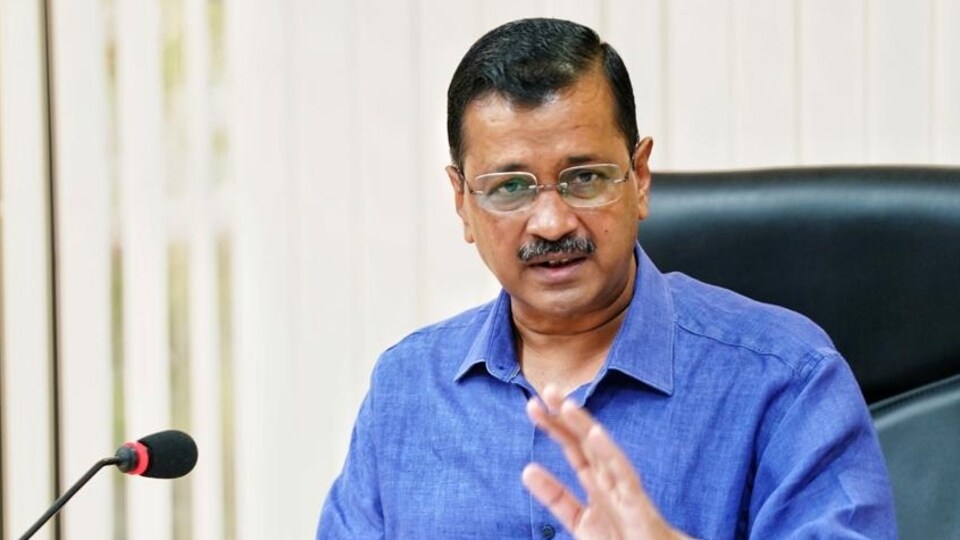
Delhi chief minister Arvind Kejriwal (HT Photo)

Where has AAP grown electorally since its inception?

In the 10 years since the AAP fought its first state-level elections in Delhi, the party has contested assembly elections in 20 states. However, it has won assembly constituencies (ACs) in only four of them: Delhi, Punjab, Goa, and Gujarat. These are also the only four states where the party has been able to win at least 5% vote share in state elections. Of the remaining 16 states, it has been able to win more than 1% vote share in only the Uttarakhand and Himachal Pradesh elections held last year. These trends are also reflected in the party’s performance in Lok Sabha elections. The only states where AAP crossed the 5% vote share mark in both 2014 and 2019 are Punjab and Delhi; and it has won seats only in Punjab.

AAP’s Delhi growth is almost completely on the ruins of the Congress

Delhi is the first place where the AAP broke political ground. While the AAP has achieved landslide victories in the 2015 and 2020 elections in Delhi reducing even the BJP to single digits, vote share numbers suggest that the AAP has actually grown at the cost of the Congress. The BJP’s lowest vote share since 2013 in Delhi is 32.2%, not much below its previous low of 35.2%. On the other hand, the Congress vote share in Delhi has been in a free fall since 2013. Before 2013, the Congress’s lowest vote share in Delhi was 34.5%. It decreased to just 4.3% by 2020.

The Congress could have had another state government if AAP had not won Punjab

AAP’s Punjab performance is not as straightforward a function of Congress’s decline as it is in Delhi. The Congress won almost a two-thirds majority, its highest in the state, when the AAP first fought a state election in Punjab in 2017. The Congress also did not end up in the third spot like in Delhi even when the AAP won last year. The Congress seat share of 15.4% was much more than the 6% combined seat share of all other parties. However, it has reason to believe that the AAP has hurt it more than it hurt the Shiromani Akali Dal (SAD) and the BJP in the state. In the 92 ACs that the AAP won last year, the Congress was second in 44, the SAD in 37, the BJP in six, SAD’s new factions in three, and former Congress chief minister Amarinder Singh’s Punjab Lok Congress (PLC) in one. This suggests that it was the AAP which was the primary beneficiary of anti-incumbency in Punjab and not existing opposition parties. Given the fact that the BJP and SAD alliance ended before the 2022 elections and SAD has been in an ideological disarray, the Congress leadership in the state has reason to believe that they could have retained power if not for the AAP.

AAP is threatening the Congress’ position in Gujarat

The Congress has even less reason to blame the AAP for the 2022 Gujarat results. The BJP’s unprecedented performance last year was due to a very high vote share. It won 102 seats with a vote share of more than 50%. This means the BJP would have won three seats more than in 2017 even if all anti-BJP votes went to the Congress. This does not mean that the AAP did not hurt the Congress in the state. The overall decline in Congress’s vote share of 14 percentage points since 2017 is roughly matched by the 13-percentage point gain in AAP vote share. The Congress decline in vote share has a moderate correlation with AAP gains even at the AC-level.

When seen with the fact that the AAP has seriously hurt the Congress in two states it used to dominate and is threatening to replace it as the primary opposition party in another, it is not very difficult to understand why local Congress leaders are against the party showing solidarity with the AAP. The resolution of the inner party dynamic and inter-party dynamic between the AAP and the Congress will play an important role in the ongoing efforts to build a large unity against the BJP.

Get the latest India News, breaking headlines and real-time updates from across the country. Stay informed about politics, government policies, crime, weather and major national developments.