E-Paper



How Biparjoy has thrown the monsoon off course
What explains this unusual rainfall pattern in the monsoon? An HT analysis suggests Biparjoy might have played a big role in throwing the monsoon off course
Updated on: Jun 20, 2023, 16:56:16 IST

 Prefer HTon Google
Share via


Copy link

The charts that matter
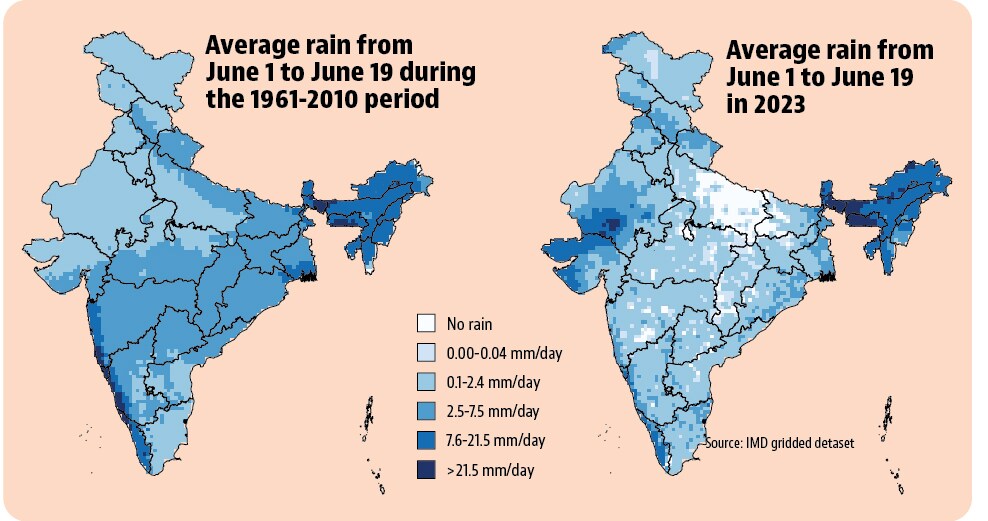
 It hasn’t rained where it should have and has rained where it shouldn’t haveIf the monsoon were following its usual pattern, it should have covered Bihar, north-eastern Uttar Pradesh, and Uttarakhand in the east, and Madhya Pradesh and Maharashtra in the central and western regions by now. This can be seen in the map for the average rain from June 1 to June 19 during the 1961-2010 period, the benchmark for normal rainfall. These parts of the country average at least 2.5mm rain per day for this part of June. The west coast and north-eastern states average at least 7.5mm per day partly because the monsoon arrives in these parts even earlier. The India Meteorological Department has names for these categories of rain. Rain of 0.1-2.5mm in a day is called “very light”, that of 2.5-7.6mm per day , “light”, and that of 7.6-35.5mm per day, “moderate”. However, it has not rained with the usual intensity this year so far in June. The eastern and central regions of the country have either received no rain or rain that averages “very light” up to June 19. On the other hand, rain in significant parts of Rajasthan and Gujarat has been “moderate” up to June 19.
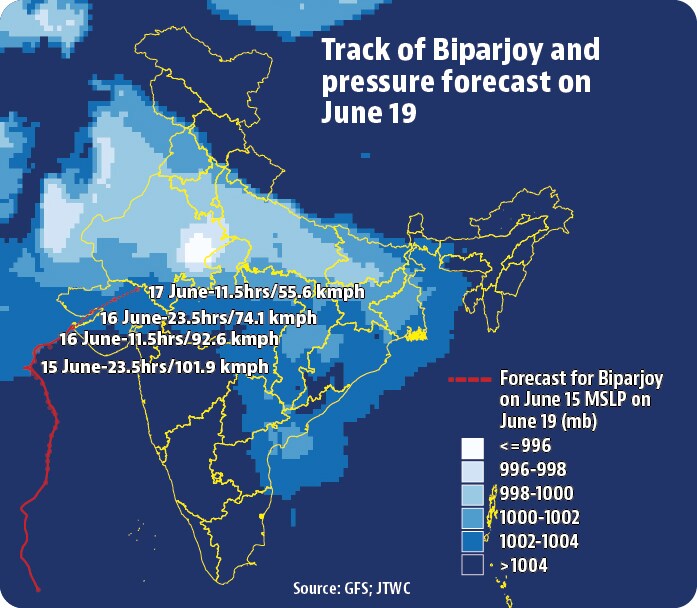
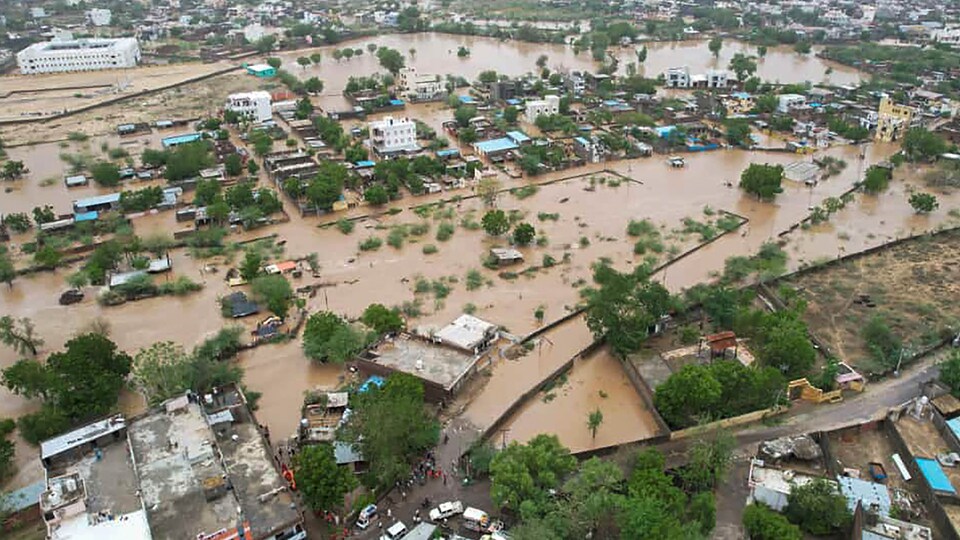
- Some of this is because of Cyclone Biparjoy that pulled moisture westwardsSome of the low intensity of rain in eastern and central India is because the monsoon was expectedly delayed. It started over Kerala on June 8, seven days after its usual date of arrival of June 1, and four days after the IMD forecast of June 4 (with a model error of +/- 4 days). The extra delay, that pushed its arrival to the far limit of the IMD’s forecast was because of a depression (a low- pressure area) that developed in the Arabian Sea around the time of monsoon’s arrival. As this depression turned into Cyclone Biparjoy, it pulled moisture away from the interior parts of the country and halted the monsoon’s progress. Instead, north-western India received rain of higher intensity than the eastern and central regions as the cyclone made landfall on the Gujarat coast and then turned into just a low-pressure area over Rajasthan. The high intensity rain in Gujarat and Rajasthan was not monsoon rain. This is one reason Gujarat is expected to have a deficit in rain in the week ending June 29 according to IMD’s forecast although the monsoon resumed its progress from June 18.
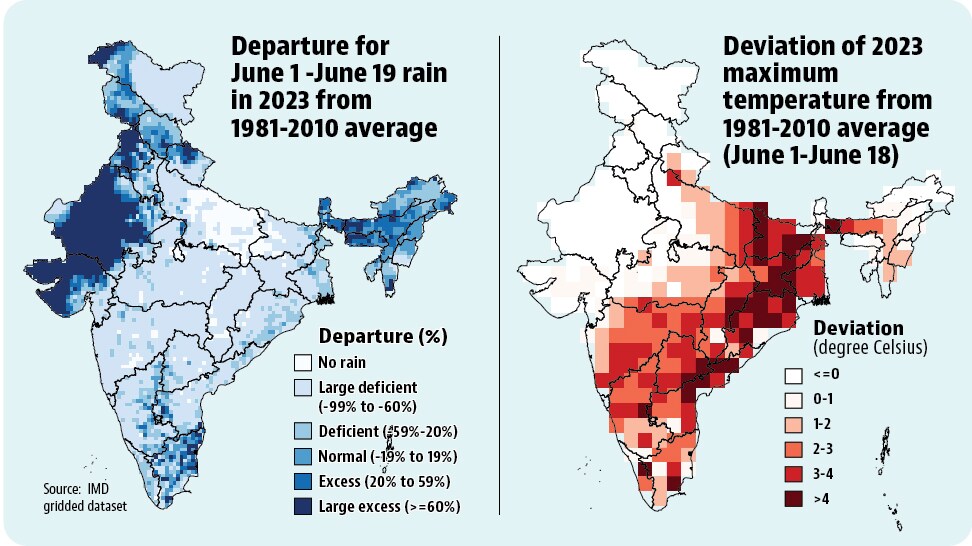
- Therefore, over two-thirds of the country has big deficits in rain and is warmer than normalThe monsoon’s slow progress means that almost three-fourth of the country is suffering from significant deficits in rain for the first 19 days of June. IMD classifies a deficit of 20%-60% as “deficient” and a deficit of 60% or higher as “large deficient”. As of June 19, 15% of India’s total area had received June rain in the “deficient” category and 56% had received rain in the “large deficient” category. Even the west coast, which received rain during Cyclone Biparjoy’s progress, is in the latter category. To be sure, part of the “large deficient” category here also includes area that has not received any rain, most of which lies in Uttar Pradesh. About 6% of the country in total is without rain so far in June. The area with normal rain (departure of -19% to 19%) is just 9%; and 20% of the country has received either “excess” or “large excess” rain, with the last category largely concentrated in Rajasthan, Gujarat, and Punjab. This makes sense because north-western regions have received rain at a time when monsoon does not usually arrive there. However, with no monsoon or cyclone rain in the rest of the country, 68% of the country has been warmer than the 1981-2010 average maximum (benchmark for temperature) so far in June, with 42% of India warmer by more than 2 degrees Celsius and 13% warmer by more than 4 degrees. As is expected, it is places where the monsoon is delayed and that are far away from the west coast that have warmed up the most.