
 E-Paper



How Heart of Asia meet survived Indo-Pak hostility
The sixth ministerial conference of Heart of Asia - Istanbul process to help the political and economic transition of Afghanistan on Sunday managed to sidestep Indo-Pak rivalry that often derails regional initiatives.


The sixth ministerial conference of Heart of Asia - Istanbul process to help the political and economic transition of Afghanistan on Sunday managed to sidestep Indo-Pak rivalry that often derails regional initiatives.
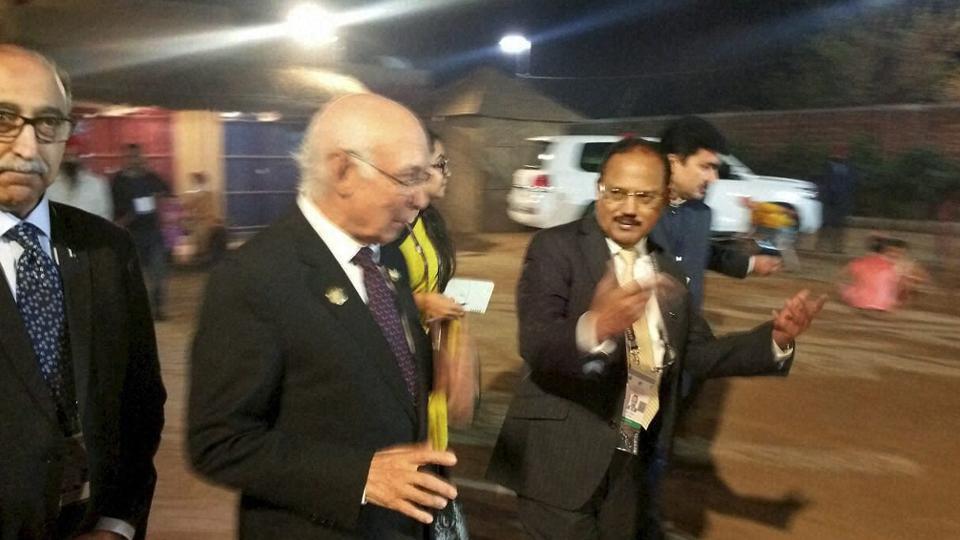
The conference in Amritsar which was attended by over 40 delegations took place under the shadow of rising tension between India and Pakistan. The conference was also held when Afghanistan’s ties with Pakistan are slipping on the trust factor. However, some give and take ensured the conference actually materialized and the process remains on track.
Pakistan Prime Minister Nawaz Sharif’s foreign affairs advisor Sartaj Aziz attended the meet, including the post ministerial dinner, which India appreciated. He had earlier planned to skip the dinner. Last year, Prime Minister Sharif had insisted that external affairs minister Sushma Swaraj attend the same ministerial meeting in Islamabad which India obliged. So the two countries could work on the premise that when it comes to Afghanistan they can keep their differences away.
Issues of terrorism took centre stage at the event. While Prime Minister Narendra Modi pointed at terrorism emanating from Pakistan without naming it, Afghan president Ashraf Ghani minced no words, accusing Pakistan of launching an undeclared war on his country.
The summit declaration too had some give and take element. The Amritsar declaration commended “the government of Afghanistan in successfully pursuing peace talks with Hizb-e-Islami Gulbuddin Hekmatyar resulting in the signature of a peace agreement that sets a good precedent for future peace talks with all other armed groups”.
Hekmatyar who was hiding in Pakistan for a long time, is a former Mujahideen leader and was a darling of the Americans when he was fighting the Russians. More importantly, from Indian point of view, he has been close to the Pakistan establishment. Pakistan was hoping to use the Hekmatyar card against India.
Both India and Afghanistan were rooting for a regional anti-terrorism framework to be adopted at the ministerial. But the framework was referred to an expert committee as there was no consensus for its adoption at Amritsar.
When it came to including terror groups, prominent outfits like Tehrik-i-Taliban Pakistan, Jaish-e- Mohammed and the Lashkar-e-Taiba (LeT) were mentioned in the joint statement


