
 E-Paper



How Trump's ‘Big Beautiful Bill’ affects Indians: From sending money to making investments, and crossing borders
Since the 900-page details of what Trump has named ‘One Big Beautiful Bill’ are now in, let's break down the immediate impact on Indians

 Prefer HTon Google


After the US Congress cleared President Donald Trump's massive legislation about government spending, focus is now on its impact not only in the US but on the world. For India, one of the most visible and direct impacts will be on remittances, that is, the money sent to or invested in India by NRIs. Migration is also in focus.
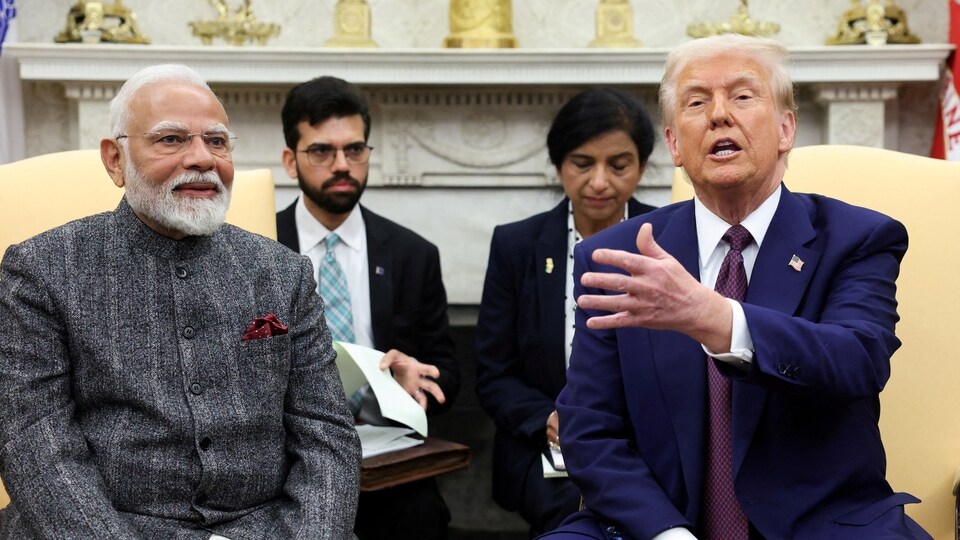
Since the 900-page details of what Trump has named ‘One Big Beautiful Bill’ are now in, let's break down the immediate impact on Indians.
Charges on sending money home
The originally proposed 5 per cent tax on remittances sent from US to foreign countries was slashed to just 1 per cent in the final draft, which has now passed. There are about 4.5 million or 45 lakh Indian citizens or persons of Indian origin in the US, many of them big earners for families back in India.
“US bank and card-based remittances remain exempt, but NRIs who make high-value or recurrent transfers may need to reconsider their financial plans,” Ram Naik, co-founder and director, The Guardians Real Estate Advisory, told HT. This comes into affect from January 1, 2026.
Tax on foreign income
While the bill deals with a humungous number of things – some of which even led to fights between Trump and his ex-BFF Elon Musk – there are no changes to the existing rules on foreign-source rental income earned by US residents, including NRIs holding a green card or US citizenship.
“Such income will continue to be taxed under current law,” says Sandeep Bhalla, Partner, Dhruva Advisors, a tax and regulatory advisory services firm. This means tax paid in India can be claimed as tax credit in the US, as before, to avoid double taxation on the same income.
Border crackdown
Immigrants from India, especially undocumented border-crossers and those who take the ‘donkey route’, are not immune to the crackdown proposed in Trump's bill. It gives about billions of additional funds towards immigration-control and national security efforts, in line with Trump’s pledge to carry out the “largest mass deportation operation in American history.”
The US is reported to have identified about 18,000 Indian nationals who entered illegally. The Indian government has said it would take back these people and break the "human trafficking ecosystem".
Unauthorised immigrants make up 3% of the US population, as per research cited by the BBC. The number of Indians among them is contested, however: estimates vary from 2.2 lakh as per US government data, to 7 lakh as per the Pew Research Center, making them the third-largest group after Mexico and El Salvador. Yet Indians make up only a small share of the overall unauthorised migrant population in the US.
A 2025 Johns Hopkins University research paper essentially says illegal Indian population in the US grew in numbers and as a percentage of total unauthorised migrants: from 0.8% in 1990 to 3.9% in 2015, before dropping to 2% in 2022 as per latest data available.
Fees for applications
Trump's bill raises the costs for those trying to stay in the US legally too.
Bloomberg reported that the bill increases the fees for work permits, asylum applications and other humanitarian protections. Cuts to Medicaid and other government safety-net programmes will also impact immigrants and low-income groups.
Fees include a minimum $100 to apply for asylum, $550 for employee authorisation applications, $500 for Temporary Protected Status and $1,000 for humanitarian parole. There is to be a fine of $5,000 for anyone caught crossing the border between ports of entry. There are to be no fee waivers for low-income applicants either.
These appear to be some of the immediate impacts, while medium- and long-term effects in Indians and the Indian economy remain to pan out.


