
 E-Paper



HT THIS DAY: November 3, 2000 — Direct-to-home TV okayed
DTH TV service obviates the need for your friendly neighbourhood cable operator. For an investment of around ₹12,000 on a decoder and a pizza-sized dish antenna, a DTH subscriber will be able to receive global channels.


New Delhi- PHEW! Nearly three years after well-heeled Indian television viewers were tantalised by the prospect of unrestricted access to hundreds of global channels, the Union Cabinet today finally cleared Direct-to-Home (DTH) broadcasting.
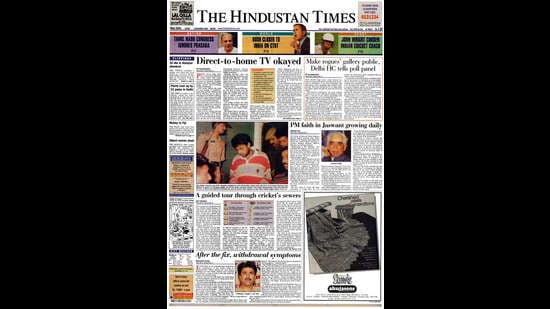
DTH service obviates the need for your friendly neighbourhood cable operator. What you get will be what you pay for. For an investment of around ₹12,000 on a decoder and a pizza-sized dish antenna, a DTH subscriber will be able to receive global channels.
The Centre has, however, built in safeguards against the creation of broadcasting monopolies, compromise of national security and distortion of public taste.
There is to be a 49 per cent cap on foreign equity in DTH service providers. Of this, up to 20 per cent is to be foreign direct investment and the rest is to be foreign institutional investors, overseas corporate bodies and non-resident Indian investments.
Briefing reporters after the Cabinet meeting, Information and Broadcasting Minister Sushma Swaraj said DTH was the first major step towards convergence but extra caution had been taken to ensure that no vertical monopolies were created.
“For security reasons, DTH players will have to beam from the home soil through earth stations within the country. They will also have to adhere strictly to the advertisement and programme codes laid down by the Ministry,” she said.
For similar reasons, the chief executive officer and a majority of directors of DTH companies would have to be resident Indian citizens.
Mrs Swaraj said to obviate creation of monopolies, the share of existing broadcasting companies and cable network owners would be restricted to 20 per cent in the DTH ventures. The new companies will also have to keep the I&B Ministry informed about any changes in the equity pattern.
There will be no restriction on the number of DTH licenses to be issued by the I&B Ministry for a 10-year period.
While companies will have to furnish an initial deposit of ₹10 crore, they will have to pay ₹40 crore as bank guarantee for the 10-year license period. At least 10 per cent of the total revenue generated will have to be shared with the Government.
In case of violation of rules, apart from the threat of revocation of the license, the errant companies will have to shell out penalty to the tune of ₹50 crore. They will be required to preserve for at least 90 days, recordings of all programmes to be able to make those available for Government scrutiny.
Mrs Swaraj said Doordarshan could also provide DTH service but the final decision in the matter rested with Prasar Bharati. Companies keen on using the technology for other services like fax and internet will have to obtain separate licenses.
DTH service providers will have to show Doordarshan channels on the must-carry mode.


