
 E-Paper



IAF chief backs co-ordination between forces, wary of air defence command
Air Chief Marshal Vivek Ram Chaudhari argued air defence operations are closely related to offensive aerial operations, and separating them could affect execution of any joint strategy.

 Prefer HTon Google


The Indian Air Force (IAF) chief on Friday backed close coordination between all elements of the armed forces to counter a range of aerial threats, but said the creation of a separate air defence command “may prove counterproductive”.
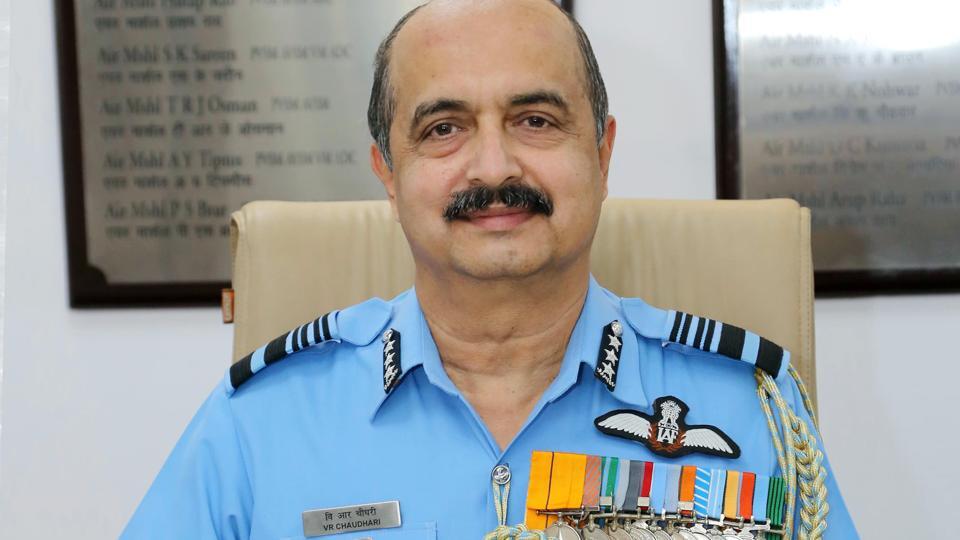
The remarks by Air Chief Marshal Vivek Ram Chaudhari, made while addressing a seminar organised by the think tank Centre for Joint Warfare Studies, assume significance against the backdrop of a move to create six theatre commands to integrate the capabilities of the three services, including an air defence command and a maritime theatre command in the first phase.
Chaudhari argued that air defence operations are closely related to offensive aerial operations, and separating the two could affect the execution of any joint strategy.
READ | IAF chief says air force needs to prepare for intense, short duration ops
At the same time, he emphasised the need to develop measures to protect national assets from a wide range of aerial threats such as miniature drones and precision weapons.
“While there is a need for close coordination between all elements within the same airspace to ensure aerospace safety as well as effective air defence, creation of a [air defence] command may prove counterproductive because air defence operations are inextricably linked to counter air operations and all offensive [operations], as the success or failure of one will dictate the demands on the other,” he said while speaking on the theme “Air and missile defence.”
READ | Fighter pilot father-daughter 1st in Indian aviation to fly in formation
“Air defence and offensive missions are interdependent and if executed in isolation, these would not only be disjointed but also ineffective in design or execution of the joint strategy,” he said.
The proposed air defence command will control air defence resources of the three services and be responsible for protecting vital assets from airborne threats. It will be headed by a three-star IAF officer, and will be based in Prayagraj. Creating the theatre commands will involve merging the 17 existing single-service commands spread across the country.
IAF’s resistance to theaterisation has been articulated by its top leadership in the past. IAF has had concerns about the model for division of its air assets, the leadership of theatre commands and dilution of powers.
The theaterisation drive slowed down after former chief of defence staff (CDS) Bipin Rawat’s death. Rawat, who was killed in the crash along with 13 others, was spearheading the theaterisation drive to best utilise the military’s resources for future wars. Last year, Rawat had asked three services to submit comprehensive reports on theaterisation and joint structures by April, but the timeline was not met.
READ | Theaterisation to be top priority for the next CDS
The government’s announcement in June regarding the new eligibility criteria for the CDS stoked hopes that it will soon name an officer to the senior-most military post in the land, and accelerate the theaterisation drive and enhance synergy in the armed forces.
Chaudhari noted that dealing with air and missile defence as two separate entities will be “like creating additional silos within the air defence vertical” and made several other arguments regarding the IAF’s lead role in air defence.
While the increasing demand of joint operations requires interoperability among multiple domains, budget constraints imply that technological choices based on reliable, future ready and open architecture systems, independent air defence systems in the field will have “very little relevance in tomorrow’s wars” unless they are a part of a larger integrated air defence system, he said.
Any independent systems are “more likely to cause self-harm due to lack of common identification and communication protocols”, Chaudhari said.
“To prosecute the land, maritime or air strategy independently will almost certainly lead to failure because the enemy will fight a joint and integrated war. The enemy air and missile forces will be brought to bear on the fielded forces albeit from stand-off ranges and will adversely affect the progress of land or maritime battles. Therefore, control of air will remain paramount for success of any operation,” he added.
An integrated air defence system comprises “defensive counter air, passive air defence and offensive counter air”, and IAF has the ability to monitor and identify all air elements through its integrated air command and control system (IACCS). “We are making all efforts to share IACCS-generated recognised air situation picture with all stakeholders down to the tactical level. Integration of our networks will surely enhance our ability to share information and augment our collective air defence capabilities,” he said.
With IACCS as the terrestrial network, airborne platforms will be fully networked with induction of software defined radios and work is underway to integrate the space segment to have a “truly networked integrated air defence system”, he said. “Hence, amalgamation of terrestrial, aerial and space domains into a common network will be a fundamental requirement of modern war fighting,” he said.
“Towards this, we must look at operationally integrating the ballistic missile defence capability into the integrated air defence system. IAF’s existent technical expertise, integrated radar network, established pan-India communication and congruence of airpower and space doctrines provide us a vital solution in deployment and operationalisation of a comprehensive defence mechanism against air and space threats,” Chaudhari added.
HT tried to reach out to defence minister Rajnath Singh’s office but was unable to get a response.


