E-Paper



IIT Council discusses PhD reforms, research commercialisation, AI in curricula
The IIT Council also discussed stronger alumni engagement, promotion of student mental wellbeing, and expansion of global collaborations

 Prefer HTon Google


New Delhi: Reforms in Ph.D. programmes, acceleration of research commercialisation, integration of AI into curricula, stronger alumni engagement, promotion of student mental wellbeing, and expansion of global collaborations through the IIT R&D Fair, international students, and foreign faculty support were among the key issues discussed at the IIT Council meeting, held at IIT Delhi on Monday after a gap of more than two years.
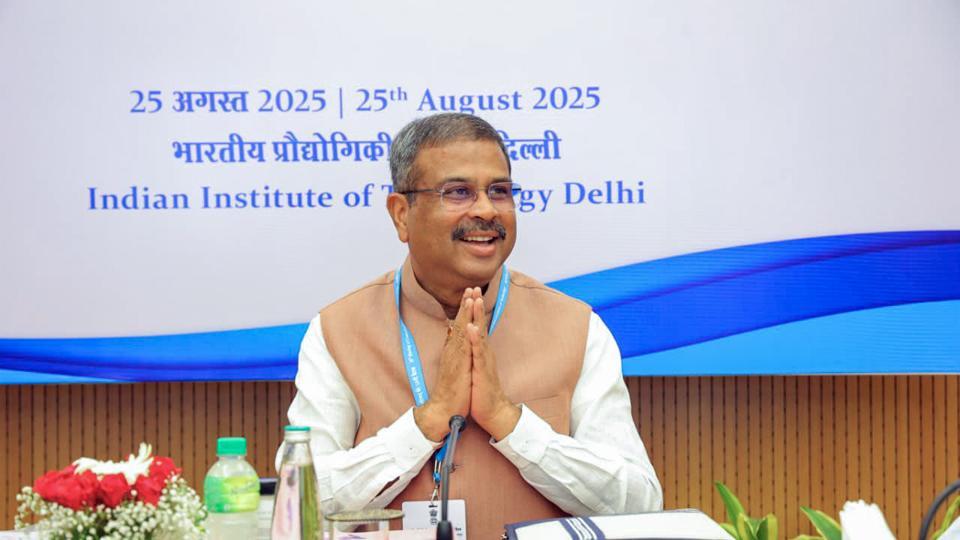
The 56th Meeting of the Council of the Indian Institutes of Technology (IITs), the apex coordination body of all the 23 premier engineering institutes held its meeting under the chairmanship of Union education minister Dharmendra Pradhan. The 55th IIT Council was held at IIT Bhuwaneswar on April 18, 2023.
According to officials, IIT council members discussed ways for reforming Ph.D. education to enhance quality, global relevance, and research outcomes, boost global rankings, attract top-tier talent, and strengthen the IITs’ reputation as hubs of advanced research.
“Extensive deliberations were held on the commercialisation of research within Higher Education Institutions (HEIs),” said the education ministry in a press statement.
The council stressed the need to adapt curriculum and pedagogy in real time with the rise of AI and set up a Task Force to draft an action plan for higher and school education. It also acknowledged the global impact of IIT alumni and called for leveraging their networks for mentorship, industry linkages, and student development.
The Council underscored the role of IITs in translational research aligned with national priorities, stressing stronger industry-academia-policy linkages, and decided to frame a policy within a month to boost campus-based research and product development for an Atmanirbhar Bharat (Self-reliant India).
Different IITs shared various models to promote mental well-being of students.
“The minister told institutions to see students as their families and engaged with them individually. He said faculty must interact closely with students—talk to them on WhatsApp, share meals in the mess, and understand what is going on in their lives, so that their small issues do not grow into serious problems. He stressed the need for a compassionate approach to ensure students are happy on campus. The minister also suggested to promote healthy living habits inside the campuses, as well as to have an annual health check up,” said an education ministry official.
At least five student deaths have been reported at IITs till August 1, 2025, with four of them at IIT Kharagpur alone.
The council also discussed efforts to promote regional languages through courses, translations and mentoring to ensure inclusive learning for students from diverse language backgrounds.
“The minister said that students should be given the freedom to learn in the language of their choice, and institutions must plan accordingly to support them,” said the ministry official.
The council discussed the issues related to recruitment under the Central Educational Institutions (CEI) Act, ways to elevate the IIT R&D Fair as a global platform, and measures to support international students and foreign faculty.
After the meeting, Pradhan told the media, “We discussed how IITs can produce job creators, not job seekers, by solving real-world problems, and promoting translational research in critical technologies of national importance. We discussed how IITs can promote Indian languages by introducing regional languages in addition to English as the medium of instruction of courses for inclusive growth.”