E-Paper



IIT Kanpur SATHEE registrations surge after Modi’s online coaching announcement
SATHEE recorded 154,000 new registrations between August 15 and 22, compared with 200-300 daily before Modi’s announcement

 Prefer HTon Google


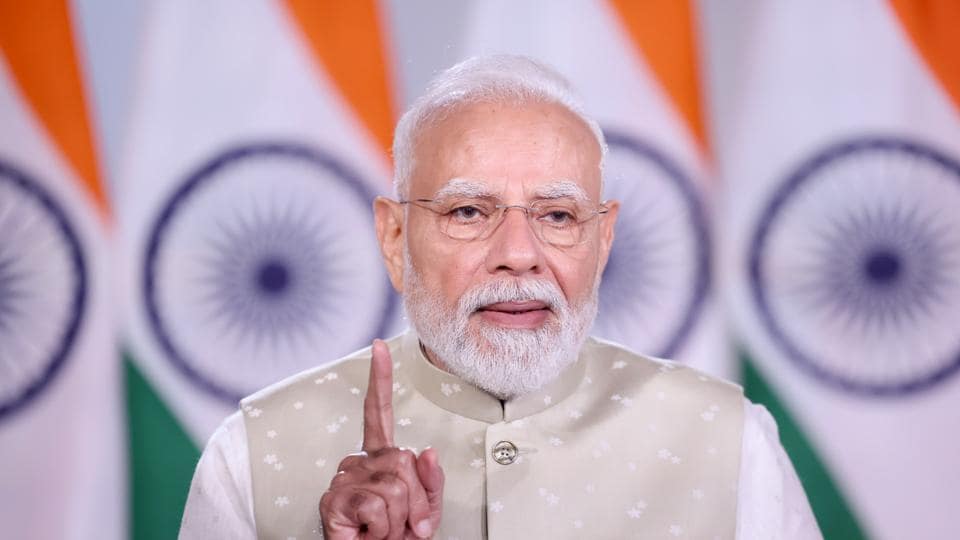
Registrations for the Indian Institute of Technology (IIT) Kanpur’s free online coaching platform Self-Assessment, Test and Help for Entrance Exams (SATHEE) have surged since Prime Minister Narendra Modi’s August 15 announcement of a national network for free online coaching.
The institute is working with the Union education ministry to develop a new platform building on SATHEE’s experience, with upgraded content, user interface, artificial intelligence (AI) and infrastructure. The ministry officials said the new platform is expected to be launched as early as October 2.
SATHEE recorded 154,000 new registrations between August 15 and 22, compared with 200-300 daily before Modi’s announcement. Registrations peaked at 41,600 on August 18, up from 5,100 on August 15, before falling to 7,100 on August 22.
IIT Kanpur professor Amey Karkare, the SATHEE project in-charge, said the surge in registrations increased pressure to scale up quickly. “We have to increase the quality of our lectures, make them more engaging, and retain learners. The ministry is helping us by providing all the required resources and support,” Karkare said. He added that the initiative would require more mentors, technical experts, better animation, and greater infrastructure capacity.
Karkare said they have over 2.1 million registrations so far. “For this year, we have 700,000 to 800,000 students actively on the SATHEE portal. Nearly 300,000 visit the website daily to watch videos, download content, and solve questions.”
SATHEE’s registration data show that its reach remains concentrated among aspirants for a few examinations and states. Joint Entrance Examination (JEE) and National Eligibility cum Entrance Test (NEET) account for 91.5% of the 2.16 million examination-wise registrations, with 1.33 million for the former and 646,000 for the latter. Punjab accounts for 670,000 registrations (30.9%), followed by Uttar Pradesh (7.7%), Madhya Pradesh (5.8%), Delhi (5.6%) and Maharashtra (5.5%). Together, the five states account for 55.5% of all registrations.
Karkare attributed the concentration partly to the “preference” for engineering and medical careers and differences in state-level support.
In Punjab, SATHEE content is used in over 500 government schools, where students get two hours every alternate day to access the platform in classrooms.
“A majority of students are using our platform for engineering and medical entrance examination preparations,” said Karkare. He added that recruitment and other examinations account for a much smaller share.
Karkare said verified JEE qualifiers in Punjab increased from 49 in 2024 to 84 in 2025 and 134 in 2026. NEET qualifiers rose from 335 in 2024 to 497 in 2025, before falling to 441 in 2026.
SATHEE was launched in November 2023 in collaboration with the department of higher education. It faces challenges in expanding its reach in southern and northeastern states. “We are working with state governments to expand our reach in these states. Discussions with them are underway,” Karkare said.
IIT Kanpur has begun setting up physical SATHEE Kendras for students with limited access to smartphones or reliable internet. Ten such centres are operational and have around 1,000 students. Five more are under development.
SATHEE has over 80,000 practice questions and has conducted over 400,000 mock tests.
It does not have a compulsory final examination or certificate, making it difficult to measure course completion and outcomes across its user base. Students receive performance reports after mock tests, while reporting of actual examination outcomes is voluntary.
Karkare said the new platform could introduce stronger outcome tracking by using government IDs to validate students and working with the National Testing Agency and other examination bodies to verify results.
The new platform is being developed in consultation with the education ministry. IIT Kanpur is leading the initiative with technical experts from IIT Madras. Existing SATHEE learners will eventually be migrated, although the mechanism is still being worked out.