
 E-Paper



In Supreme Court verdict, 11 occasions army’s women officers distinguished themselves
The top court also ordered the government to extend permanent service - which has only been applicable to men so far - to all women officers, signalling a move towards gender parity in the traditionally male bastion.

 Prefer HTon Google


The Supreme Court on Monday ordered the government to consider women for command roles in the army, rejecting the Centre’s push for limiting the roles that women officers should be allowed to perform in the armed forces. In its 54-page verdict, the Supreme Court severely criticised the government for its stand that it ruled, perpetuated “gender stereotypes”, was “disturbing” and treated women as the “weaker sex”.
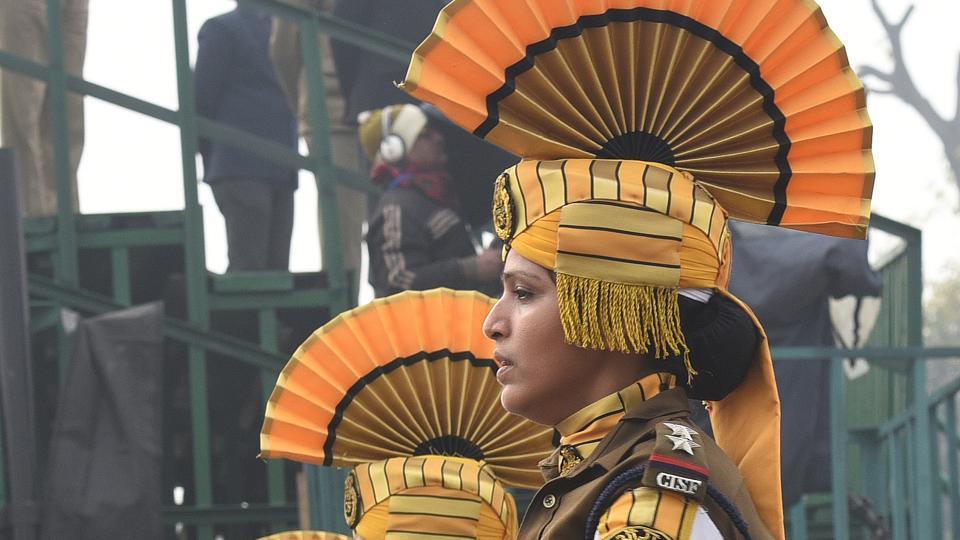
The top court also ordered the government to extend permanent service - which has only been applicable to men so far - to all women officers, signalling a move towards gender parity in the traditionally male bastion. This would allow women to get the same opportunities and benefits as their male colleagues, including ranks, promotions and pensions, and be allowed to serve longer tenures.
The court, which took a dim view of the Centre’s arguments in its appeal against the Delhi High Court’s 2010 verdict, said the government lawyers had sought to dilute the role of women in the army “by the nature of their biological composition and social milieu”.
Such a line of submission is disturbing as it ignores the solemn constitutional values which every institution in the nation is bound to uphold and facilitate, the bench held and listed “some of the distinctions which women officers have achieved”. It listed 11 of them.
1. Lieutenant Colonel Sophia Qureshi (Army Signal Corps) is the first woman to lead an Indian Army contingent at a multinational military exercise named, ‘Exercise Force 18’. This is the largest ever foreign military exercise hosted by India. She has served in the United Nations Peacekeeping Operation in Congo in 2006 where she, along with others, was in charge of monitoring ceasefires in those countries and aiding in humanitarian activities. Her job included ensuring peace in conflict affected areas.
2. Lieutenant Colonel Anuvandana Jaggi served as the Women’s Team Leader of the United Nations Military Observers Team in the UN mission in Burundi. She was awarded the United Nations Force Commander’s Commendation and an Appreciation Epistle from the Chief of Army Staff for her commendable effort.
3. Major Madhumita (Army Education Corps) is the first woman officer in the country to receive the Gallantry Award (Sena Medal) for fighting Taliban terrorists in Afghanistan. Despite adversity, she continued and her speedy rescue and evacuation efforts saved many lives.
4. Lieutenant Bhavana Kasturi recently led a contingent of the Indian Army Service Corps, becoming the first woman to lead an all-men Army contingent in the history of India. Similarly, Captain Tania Shergill recently became first Indian woman Parade Adjutant to lead an all-men contingent in New Delhi on 15 January, 2020.
5. Lieutenant A Divya, who was awarded the Sword of Honour in the Officers Training Academy, Chennai in September 2010. Lt Divya was awarded the honour from 170 male officers and 57 women officers who trained with her at OTA, the only training center for Short Service Commission male and female officers.
6. Women officers have been made part of the Quick Reaction Teams, where women and male officers perform similar duties by virtue of a 8 September 2009 order.
7. The Indian Army entrusts women officers with complex tasks of transporting convoys of between thirty to fifty vehicles in militant-prone areas in Leh, Srinagar, Udhampur and the North East. An example was provided of the movement order from Leh to Pathankot dated 15 September 2010 issued to one of the respondents, Major Gopika Bhatti who, in the role of a convoy commander, handled junior commissioned officers, jawans (drivers and supporting staff), vehicles (filled with logistics, arms and ammunitions) and other military equipment.
8. Major Gopika Ajitsingh Pawar was awarded the United Nations Peacekeeping Medal by the Secretary General of the United Nations in recognition of her role as a military member of the United Nations Interim Force in Lebanon.
9. Major Madhu Rana, Preeti Singh and Anuja Yadav were awarded the United Nation Medal completing the qualifying service as military members of the United Nations Mission in the Democratic Republic of Congo.
10. Captain Ashwini Pawar (Army Ordnance Corps) and Captain Shipra Majumdar (Army Engineer Corps) were awarded the Sewa Medal by the President of India in 2007.
11. Women officers from the Indian Army have been participating in the UN Peacekeeping Force since 2004 and have been deployed in active combat scenarios in Syria, Lebanon, Ethiopia and Israel.
The bench said to cast aspersion on the abilities of women on the ground of gender “is an affront not only to their dignity as women but to the dignity of the members of the Indian Army – men and women – who serve as equal citizens in a common mission”.
India began recruiting women to non-medical positions in the armed forces in 1992.
Defence Minister Rajnath Singh welcomed the top court verdict and stressed how the induction of women in the army had gone up during the NDA government’s tenure.
“Before 2016, women made up just 2.5 percent of India’s armed forces, working in mainly non-combat roles. As of Jan 2019, 3.89 percent of the army personnel comprised women, while 6.7 percent of the navy and 13.28 percent of the air force personnel were women as of June 2019,” he tweeted.


