India has now delivered over 100 million booster doses of Covid-19 vaccines, the Union health ministry said on Friday, as data showed that there has now been a perceptible increase in the number of people turning up for their third shots after a significant lag earlier this year.
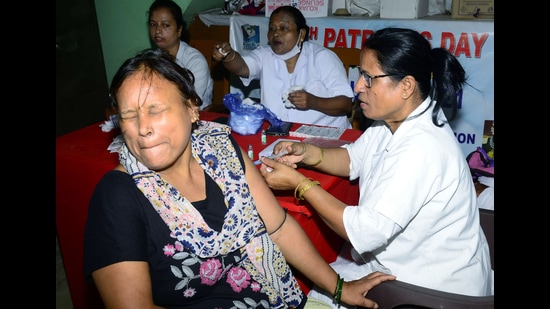
The first groups of people, deemed at a greater risk for their age or jobs, became eligible for booster doses, or precautionary doses as the government calls it, and began getting the shots on January 10. It has taken a total of 207 days to reach 100 million.
“This has been achieved by collective efforts. India has administered over 10 crore (100 million) precautionary doses. 10 crore people now have an extra layer of safety. Under PM Narendra Modi ji’s leadership, ‘Covid vaccination Amrit Mahotsav’ is going on in full swing to provide free precaution dose for all adults,” Union health minister Mansukh Mandaviya said in a tweet on Friday.
Also read: Delhi daily Covid tally remains above 2,000-mark for third day, positivity rate at 12.95%
The government on July 15 opened a 75-day window for third doses to be given for free at government hospitals. At the time, close to 92% of people eligible to get their precaution doses were late for their doses. By Thursday, this number had dropped to 86%.
{{/usCountry}}The government on July 15 opened a 75-day window for third doses to be given for free at government hospitals. At the time, close to 92% of people eligible to get their precaution doses were late for their doses. By Thursday, this number had dropped to 86%.
{{/usCountry}}The pick-up in the booster doses can also be seen another way: the most recent 25 million doses were administered in 10 days, while the 25 million doses before that took 14 days. The first 25 million doses took the longest, at 95 days, followed by 88 for the cumulative figure to reach the first 50 million. The slow early pace is not surprising since the mandatory gap at the time was nine months after people had taken their second doses, a condition that was relaxed to six months.
Senior officials from the Union health ministry said that while there wasn’t much vaccine hesitancy among people in India with the first and the second doses, the coverage of the precautionary doses was slow. This, they said, was primarily because of complacency, followed by the lower severity of infection once the Omicron variant took over.
“The numbers are proof that the government’s initiative of the Amrit Mahotsav has been a good strategy. Cases are rising again in a few states and our advice to people would be that anyone who has not received their precautionary dose must do so as early as possible,” said this official, who asked not to be named.
Also read: Over 13k families in Pune to get Covid relief funds
Health experts said that this was an accomplishment by the government and more measures should be taken to improve coverage of the precautionary doses.
“This is a commendable achievement by the government. To make vaccines available to every section of society, making them free of cost and also creating awareness among people is not an easy feat. Now people need to come forward and get their booster doses. People have been a little complacent but the booster drive is also delayed because of the high infection of Covid among people,” said Dr KK Talwar, former chairperson of the Medical Council of India and the chairperson of the Institute of Cardiac Sciences at PSRI Hospital in Delhi.