E-Paper



India bars jute import from Bangladesh via land, permits only Nhava Sheva port
India said the import of woven fabrics of jute, and twine, rope, sacks and bags of jute would be allowed only through Maharashtra’s Nhava Sheva sea port

 Prefer HTon Google


NEW DELHI: India has restricted imports of jute-based products from Bangladesh to the Nhava Sheva port only, and barred imports of these goods through all land border ports. This move came two months after similar restrictions were imposed on ready-made garments from the neighbouring country.
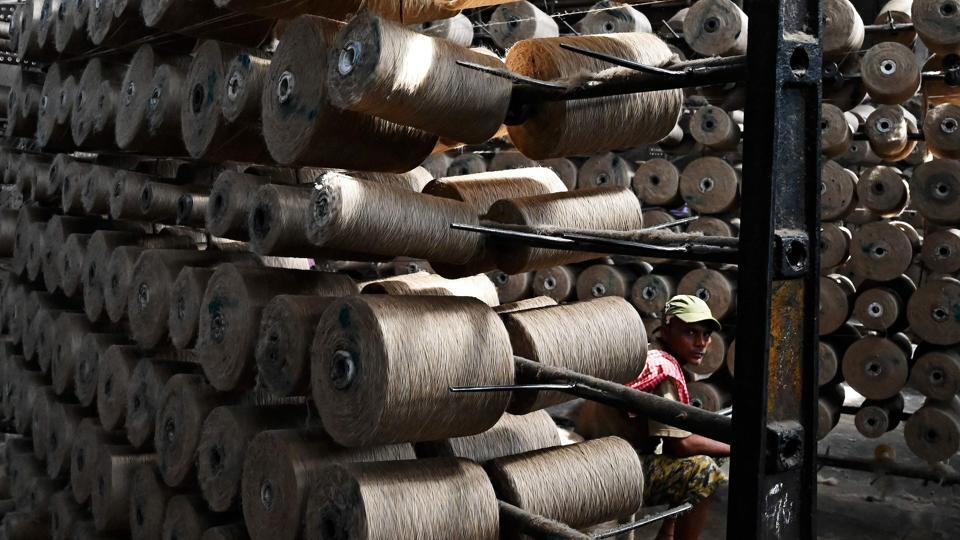
The restrictions were announced through a notification issued by the commerce ministry on Monday. They came against the backdrop of continuing strains in bilateral relations, which cratered after former premier Sheikh Hasina was ousted by student-led protests in August 2024 and the interim government headed by Muhammad Yunus assumed office.
The notification stated that imports of bleached and unbleached woven fabrics of jute, and twine, rope, sacks and bags of jute would not be allowed “from any land port on the India-Bangladesh border”, and will be allowed only through the Nhava Sheva sea port in Maharashtra.
The move was aimed at plugging certain loopholes that remained following restrictions imposed on jute-based products from Bangladesh on June 27, people familiar with the matter said on condition of anonymity.
On May 17, India restricted imports of ready-made garments from Bangladesh to only Kolkata and Nhava Sheva ports, and barred imports of a range of consumer goods through 11 land border posts in the northeast in response to restrictions adopted by Dhaka.
Earlier, India ended a nearly five-year-old arrangement for trans-shipment of Bangladeshi export cargo to third countries via Indian airports and ports on April 9.
Reports in the Bangladeshi media cited industry sources as saying that only 1% of the country’s jute-based product exports to India are shipped by sea, while the rest are sent through land border posts. The new restrictions effectively shut the most accessible route for these exports, the reports said.
According to figures from the Export Promotion Bureau of Bangladesh, the country’s exports to India during FY 2023-24 were worth $1.57 billion, while imports from India were valued at $9 billion, mostly raw materials and intermediate products.
Officials said earlier that the Indian side was forced to impose restrictions in response to Bangladesh imposing port restrictions on Indian exports, particularly
at land customs stations and integrated check posts bordering the seven northeastern states, and adopting other non-tariff barriers that impacted Indian exports.
For instance, Bangladesh stopped yarn exports from India through land ports from April 13, 2025, and Indian exports were subjected to rigorous inspection, thereby causing substantial delays.
The Indian side was also irked by Yunus’s remarks at a business meeting in China, which appeared to leverage the geographical isolation of India’s northeastern states while seeking Chinese investments. Yunus said India’s landlocked northeast, which shares a nearly 1,600-km border with Bangladesh, has no way to reach the ocean except through his country. “This opens up a huge possibility; this could be an extension of the Chinese economy,” he said.
In a riposte to Yunus, Prime Minister Narendra Modi subsequently said the northeastern region, with its geographical location, “lies at the heart of Bimstec”. External affairs minister S Jaishankar too told a meeting of Bimstec foreign ministers that India’s northeast can become a regional connectivity hub.