E-Paper



India becomes 3rd nation with private orbital launch after Vikram-1 success
As tall as a seven-storey building, the multi-stage launch vehicle is designed to carry small satellites weighing up to 350kg to LEO

 Prefer HTon Google


India became the third country in the world with private orbital launch capability after Vikram-1 rocket successfully undertook its maiden flight from the Satish Dhawan Space Centre at Sriharikota on Saturday, paving the way for commercial space flights from Indian soil.
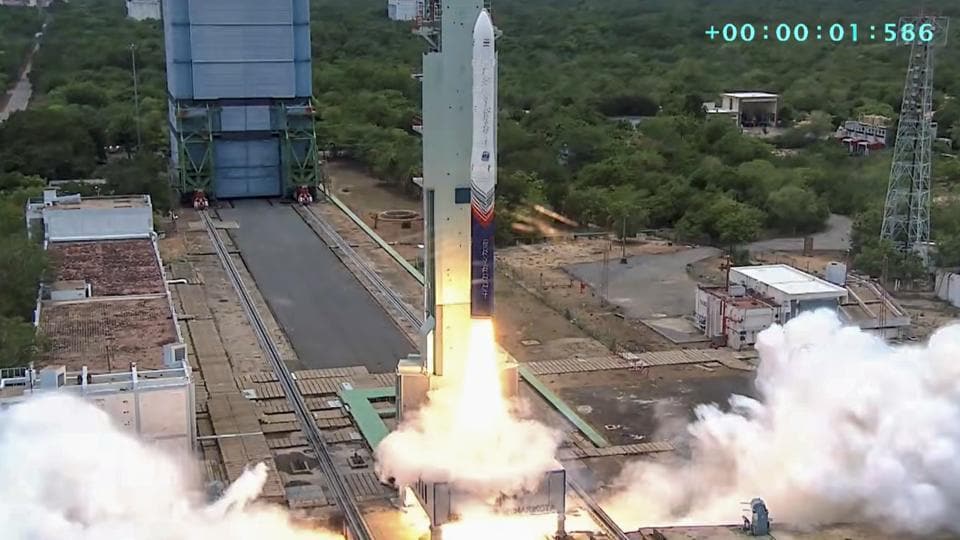
At 12.10pm, the indigenously developed launch vehicle by Skyroot Aerospace injected four technology demonstration payloads on at an altitude of 450km at a 60-degree orbital inclination in the earth’s lower orbit (LEO).
“We have created a global milestone from India,” said co-founder and CEO Pawan Chandana who founded the Hyderabad-based firm with Bharath Dhaka, both alumni of the Indian Institutes of Technology and former ISRO scientists turned entrepreneurs. “I thought it won’t be possible. A big shout out to the phenomenal team that made it happen.”
Shortly after the launch, Prime Minister Narendra Modi spoke to the team of Skyroot Aerospace and congratulated them on the successful launch of Vikram-1.
“This is a defining moment in India’s space journey. The growing participation of our private sector is opening new frontiers and accelerating innovation. This achievement will encourage countless youngsters to dream bigger and innovate fearlessly,” Modi said in a post on X.
Calling Mission Aagman as a “historic new frontier for India’s space journey”, Modi, a few hours before the launch, posted on X, “This mission highlights the talent, determination and entrepreneurial spirit of our youth. It also shows how our space-sector reforms are unlocking new opportunities for innovation and enterprise...May Vikram-1 soar high, create history and inspire a generation of innovators.”
Also Read:Sky is no longer the limit: Vikram-1 launch is a leap for India’s private space sector
As tall as a seven-storey building, the multi-stage launch vehicle is designed to carry small satellites weighing up to 350kg to LEO. The rocket is built with an all-carbon composite structure and powered by in-house propulsion systems, including 3D-printed engines and high-thrust solid-fuel boosters.
The mission will gather data across propulsion, stage separation, guidance, navigation, control and overall vehicle performance, supporting Skyroot’s evolution into a commercially operational launch company.
Speaking to HT earlier this month, Pawan Kumar Chandana, co-founder and CEO of Skyroot, had said Vikram-1 is “100% designed in India, 100% manufactured in India”.
“We have built it from scratch. That means hundreds of systems have to be developed and tested. Everything has to work together to a level where right now we’re able to stack it up on the launch pad, and ready to go off and shoot it. Building a rocket is the toughest feat in engineering, and it is a very deep technological product. That’s why it is called rocket science,” he said.
The success of the mission assumes important given the global space industry is valued at almost $600 billion, with India’s current share at $8 billion and an ambition to grow this to $44 billion by 2032.
The four technology demonstration payloads from Indian and international companies include Solaras S3 satellite developed by Grahaa Space, which is a Bengaluru-based space start-up and incubated at the Indian Institute of Space Science and Technology; an in-orbit debris-clearing robotic arm called Embrace developed by Hyderabad- based start-up Cosmoserve Space, Scope satellite by Skyroot; and an in-orbit demonstration from DCUBED, a German NewSpace hardware manufacturer.
Additionally, microscopic 18 carat gold rocket-holding sculptures of renowned Indian scientists Sir C.V. Raman, Dr. Vikram Sarabhai, and Dr. A.P.J. Abdul Kalam, each smaller than a grain of rice, created by Ajay Kumar Mattewada, and Cosmos Diamonds’ artwork Cosmic Bloom flew alongside the payloads.
Aagaman — meaning “the arrival” — is Skyroot’s second mission, following the suborbital flight of Vikram-S on 18 November 2022, the first private rocket to reach space from Indian soil.