
 E-Paper



China’s early harvest plan on Sikkim border has no takers in India
India, China Special Representatives talks on boundary issue is expected to happen either around the end of the year or in January 2020.

 Prefer HTon Google


The 22nd meeting of the Special Representatives (SR) of India and China on the boundary issue is expected to happen either around the end of the year or in January 2020, with New Delhi not exactly enthused by Beijing’s so-called early harvest proposals, which pertain only to Sikkim where the Indian Army dominates the border. The early harvest proposals were submitted by China to India in August this year, with Beijing claiming that these would lead to early resolution of the vexed boundary issue. Early harvest proposals are those which the country believes can be easily closed.
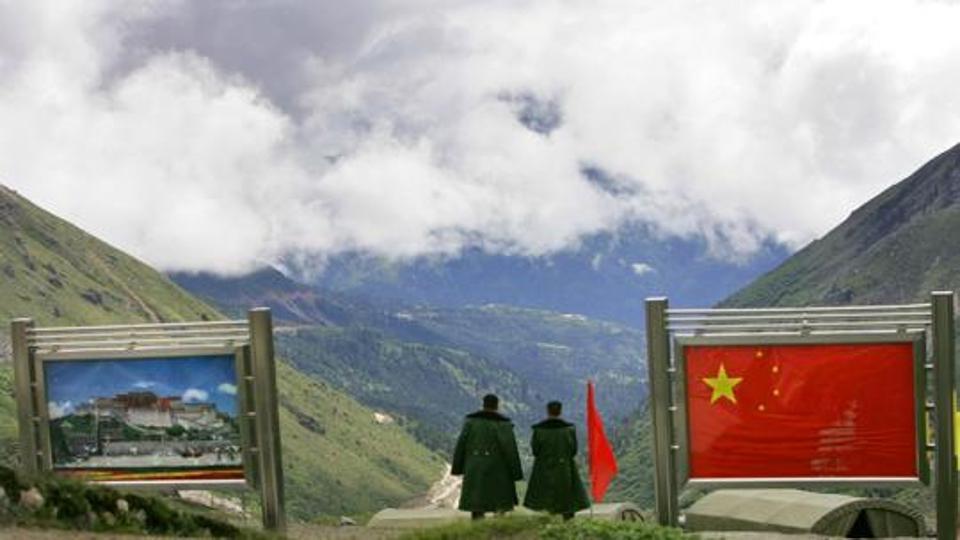
South Block officials who asked not to be named said that even though dates for the talks between National Security Adviser Ajit Doval and State Councillor Wang Yi for the SR dialogue are being mutually discussed, the boundary dispute is far away from resolution. They admitted that there is little hope that the 22nd round will move things substantially forward. The main reason for this, according to Indian officials and army brass who spoke on condition of anonymity, is because China continues to use the unresolved border issue as a pressure point to destabilise India.
According to the officials, the only place where China has proposed an early resolution is Sikkim – where the Indian Army dominates the Chumbi Valley with the Bhutanese Army on the other side. According to a former Indian Army chief, an Eastern Army commander, and a former III Corps commander, the Chinese Peoples’ Liberation Army (PLA) contests its Indian counterpart in the Finger Area of north Sikkim and the India-China-Bhutan Trijunction Area near Batang La. At both places, the Indian Army holds dominating heights with a 20km clear observation channel of the Tibetan plateau and at Doka La, south of Nathu La, leading to Dolam or Doklam plateau. The Chinese claim on the trijunction is Gyemochen, further south of Batang La and at the start of Jhampheri ridge.
China watchers in the Indian Army say that due to its vulnerability in Chumbi Valley, PLA has built a road cutting into the western part of Bhutan. In the Finger Area, the Guru Dongmar lake is under Indian control. This is the place where Guru Nanak is said to have stabbed the frozen lake with his stick. To date, a 9x9 sq ft part of the lake remains ice-free even during peak winter.
The officials also said there is unlikely to be a formalisation of coordinated patrolling with the Chinese PLA on Fish Tail I and II in the easternmost part of Arunachal Pradesh. “How can we formalise any patrolling that leads to further strengthening of Chinese dominance in the area. Fish Tail I and II are Indian territory and there is no reason to allow the PLA to come in?” one of the officials added.
India and China have a 3,488-km long unresolved border with 13 mutually agreed disputed points and other sensitive points. China is strengthening its border defences, and India finally replaced mule trains with truck convoys to replenish Indian Army positions at Daulet Beg Oldi near the Karakoram pass. India has also been working on alternative route if the DBO road is cut off, through Saser La, Saser Brangsa, Murgo, and Gapshan. Work on this route is proceeding at pace, the officials said.


