India has crossed 300 GW (gigawatt) of installed non-fossil electricity capacity, the Centre said on Sunday, adding that this was yet another key milestone in the country’s green energy transition. This is over 60% of the 500 GW capacity target the government has set – to be achieved by 2030.
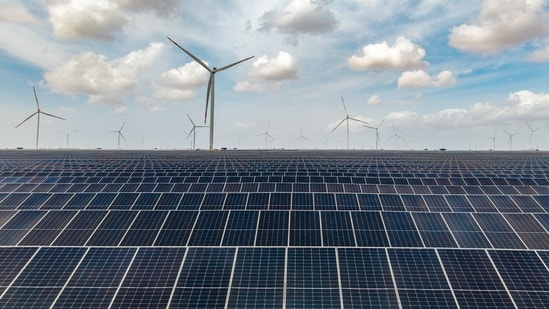
Data shared by the ministry of new and renewable (MNRE) showed as on July 31, 2026, India’s total non-fossil electricity capacity stood at 300.50 GW, comprising 164.59 GW from solar power, 58.14 GW of wind power, 57.24 GW of large and small hydropower, 11.75 GW of bio-power and 8.78 GW through nuclear power.
“The share of non-fossil fuel electricity capacity in the country’s total electricity generation capacity (which is around 552 GW at present), has reached over 54%. Backed through the key policy enablers provided by the Government for this transformation, this monumental achievement highlights India’s rapid progress towards building an Aatmanirbhar energy ecosystem and securing the target of 500 GW non-fossil capacity by 2030,” the ministry said in a statement on Sunday.
Also read: For India to achieve sustainability, nuclear power must scale
Solar leads India’s non-fossil capacity growth
{{/usCountry}}Also read: For India to achieve sustainability, nuclear power must scale
Solar leads India’s non-fossil capacity growth
{{/usCountry}}The rapid uptick has particularly been strong in the solar sector. India’s solar capacity has increased from just 2.8 GW in 2014 to 164.59 GW at present, while wind capacity has grown from around 21 GW to 58.14 GW over the same period.
“Renewable energy generation has risen from 190.96 billion units in 2014-15 to 477.79 billion units in 2025-26, demonstrating that the transition is being reflected not only in installed capacity but also in actual electricity generation. The pace of expansion continues to accelerate. During 2025-26 alone, India added a record 55.29 GW of non-fossil electricity capacity, including 44.6 GW of solar and 6 GW of wind capacity, the highest annual addition of non-fossil capacity recorded in the country,” the ministry added.
Also read: Bathinda MC to build Punjab’s first solar-powered, zero-waste civic office
Floating solar scheme targets 5,000 MW
While the transition has been led by key initiatives like the PM Surya Ghar: Muft Bijli Yojana are to bring renewable energy to household rooftops and PM-KUSUM for the agriculture sector, the Union cabinet had on July 31 approved a new ‘Pradhan Mantri Surya Sarovar Yojana (PM-SSY)’ – a scheme to install floating solar panels across the country’s reservoirs and water bodies.
Also read: ‘100,000 houses installing solar systems a week under PM Surya Ghar’
The scheme envisages installing 5,000 MW of floating solar panels across the country, with each project mandatorily installing a minimum storage capacity of two hours (10,000 MWh).