E-Paper



India exploring underwater mineral resources under Deep Ocean Mission: Centre
The first exploration contract, signed in 2002, covers polymetallic nodules in a 75,000 sq km block in the Central Indian Ocean Basin.

 Prefer HTon Google


The ministry of earth sciences (MoES) has launched the Deep Ocean Mission (DoM) to explore the mineral wealth in the deep seabed beyond national jurisdiction through two exploration contracts with the International Seabed Authority (ISA) in the Indian Ocean, the government informed the Lok Sabha on Wednesday.
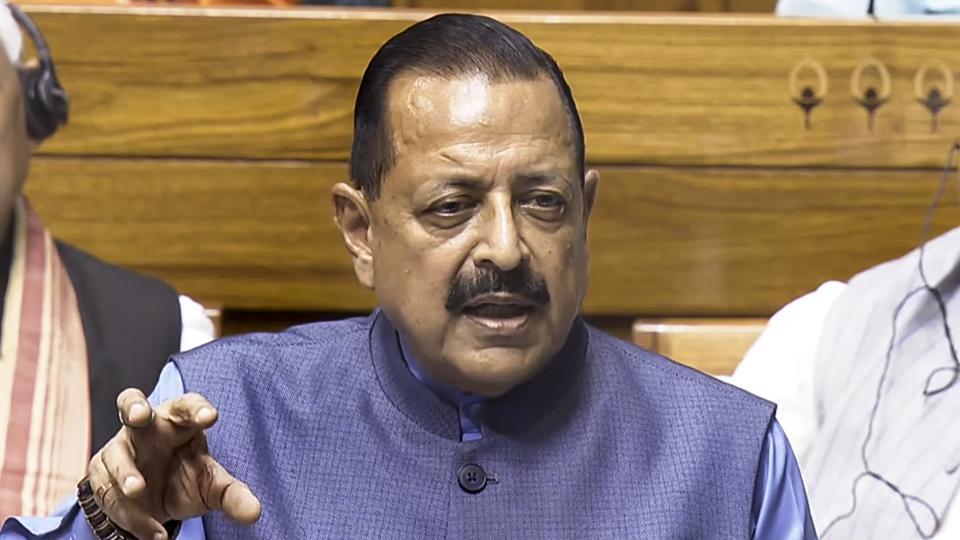
MoS for earth sciences Jitendra Singh said the first exploration contract, signed in 2002, covers polymetallic nodules in a 75,000 sq km block in the Central Indian Ocean Basin. Another, signed in 2016, involves polymetallic sulphides (PMS) exploration in a 10,000 sq km area along the Indian Ocean Ridge.
Polymetallic nodules contain metals such as copper, nickel and cobalt, while PMS deposits include copper, zinc, lead, iron, silver and gold. Singh said seabed mineral exploration is conducted strictly under ISA’s approved work plans, which include survey and exploration, environmental impact assessment, technology development for mining, and metallurgical extraction.
At present, ISA regulations restrict activities to the exploration stage only. Singh highlighted India’s recent advances, which include manned submersible technology development, demonstration of collecting over 100 kg of cobalt-rich polymetallic nodules from a depth of 1,173 metres in the Andaman Sea in 2024, and identification of two active hydrothermal vent fields in the Central Indian Ocean. Vulnerability maps for coastal areas facing climate change impacts have also been developed.
He was replying to questions by BJP MPs Manish Jaiswal, Sudheer Gupta and Chavan Ravindra Vasantrao on government measures to strengthen climate preparedness and explore ocean resources.
The minister said the Centre for Marine Living Resources and Ecology (CMLRE), Kochi, under the MoES, has undertaken six research cruises in the Arabian Sea and Bay of Bengal, surveying biodiversity across 19 seamounts. About 1,300 deep-sea organisms were collected, catalogued and studied, with genomic analysis of select specimens and the discovery of 23 species new to science.
Further, the National Centre of Polar and Ocean Research (NCPOR), Goa, has carried out deep-ocean surveys in the Central and Southwest Indian Ridges. These led to the discovery of four active hydrothermal vent fields and two mineralised polymetallic sulphide zones.
Responding to a separate question on the status of India’s first manned submersible project, Singh said the design and integration of the human-occupied vehicle MATSYA-6000 — capable of carrying three persons to a depth of 6,000 metres — has been completed by the National Institute of Ocean Technology (NIOT), Chennai, under MoES.
The vehicle underwent successful wet harbour trials in January–February 2025 at L&T Shipbuilding Facility in Katupalli, near Tamil Nadu. Singh said MATSYA-6000 will be equipped with scientific payloads aligned to India’s research goals, including studies of biodiversity, mineral resources, and deep-sea ecosystems.
On August 15, Prime Minister Narendra Modi announced the National Deep Water Exploration Mission to address India’s energy security needs. “We are preparing to extract deep ocean resources such as reserves of oil and gas,” Modi said in his Independence Day address, describing the initiative as a “Samudra Manthan” (mythical churning of the sea) to be executed in mission mode.
India is the world’s third-largest consumer of crude oil after the US and China, importing 232.7 million tonnes worth $157.5 billion in 2024–25. The country meets over 88% of its crude oil demand through imports but also exports refined petroleum products.
Officials said the twin-track approach of mineral exploration and energy extraction will strengthen India’s long-term resource security. While exploration remains tightly regulated by ISA, advances such as MATSYA-6000 and hydrothermal vent mapping provide India with technological readiness once deep-sea mining shifts to commercial operations.
The Deep Ocean Mission, integrated with the National Deep Water Exploration Mission, is expected to boost India’s capabilities in both strategic resources and climate resilience. Singh said the government remains committed to aligning these initiatives with global best practices while ensuring environmental safeguards in fragile deep-sea ecosystems.