E-Paper



India expresses grief over missile attack on Iranian girls’ school
India expressed grief over the death of children in a US missile strike on an Iranian girls’ school, urging civilian safety amid West Asia conflict

 Prefer HTon Google


India on Thursday expressed grief over the death of scores of children in a US missile attack on a girls’ school in Iran, and emphasised the need to prioritise the safety of civilians amid the conflict in West Asia.
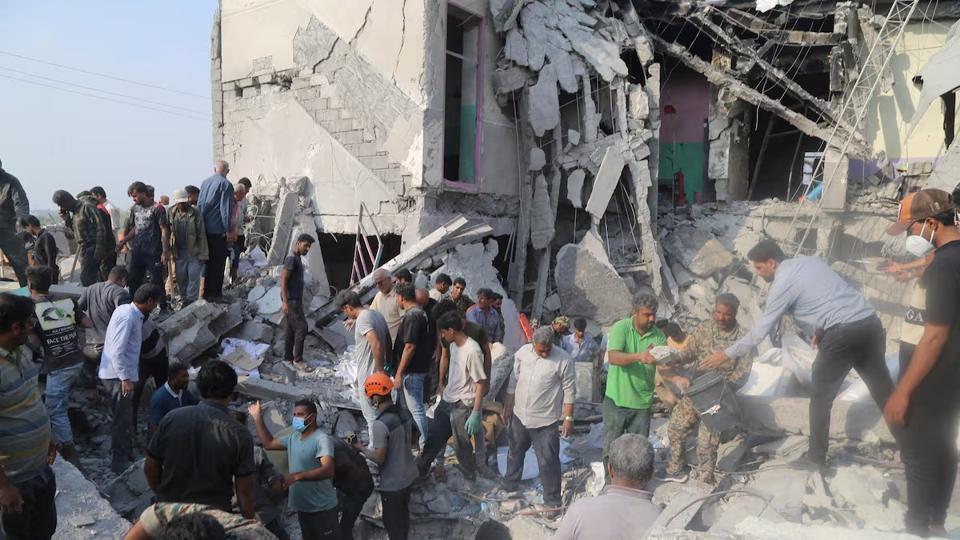
Iranian officials have said 175 people, most of them children, were killed in the attack on Shajareh Tayyebeh girls’ elementary school in Minab city on February 28, the first day of the conflict. US media reports have cited American officials as saying that an ongoing military investigation has determined that the US was responsible for the deadly Tomahawk missile strike on the school.
“As far as the question of the school children…is concerned…we have issued several statements on the ongoing conflict. We have underlined the need for prioritising the safety of all civilians,” external affairs ministry spokesperson Randhir Jaiswal told a weekly media briefing.
“We regret the precious lives lost and express our grief in that regard,” he said.
According to reports, a missile struck the Shajareh Tayyebeh girls’ school during school hours. The victims were mostly girls aged between seven and 12, and large parts of the building were destroyed while classes were underway. Reports have also pointed out that the US is the only country using the Tomahawk missile in the conflict.
US media reports have also said that the strike on the school was the result of a targeting mistake by the US military, which planned to hit an adjacent Iranian military base that the school building was formerly a part of. Military officers created the target coordinates using outdated data from the Defense Intelligence Agency.
Jaiswal also said that India was among 135 countries which co-sponsored a Gulf Cooperation Council (GCC)-led resolution at the UN Security Council that condemned “egregious attacks” by Iran against Bahrain, Kuwait, Oman, Qatar, Saudi Arabia, the United Arab Emirates and Jordan. The resolution, adopted with 13 votes in favour and two abstentions (China and Russia), said these attacks amounted to “a breach of international law and a serious threat to international peace and security”.
The resolution, Jaiswal said, reflects several of India’s positions. “We have a large diaspora in the GCC countries and their well-being and welfare is of utmost importance. The Gulf is also very important for our energy security needs,” he said, referring to the 10 million Indians living in West Asian states.