E-Paper



India has 11 million coronavirus warriors: Govt database
A dashboard, available on covidwarriors.gov.in, accounts for doctors and nurses as well as dentists, auxiliary health staff, Ayush practitioners, Asha and Anganwadi workers and those that belong to the uniformed youth groups such as NSS and NCC.

 Prefer HTon Google


India has at least 3 million medical professionals and roughly 8 million others who can be drafted for disease containment work such as contact tracing, according to the Union government’s stocktaking of human resources that can be deployed if the coronavirus disease (Covid-19) outbreak grows.
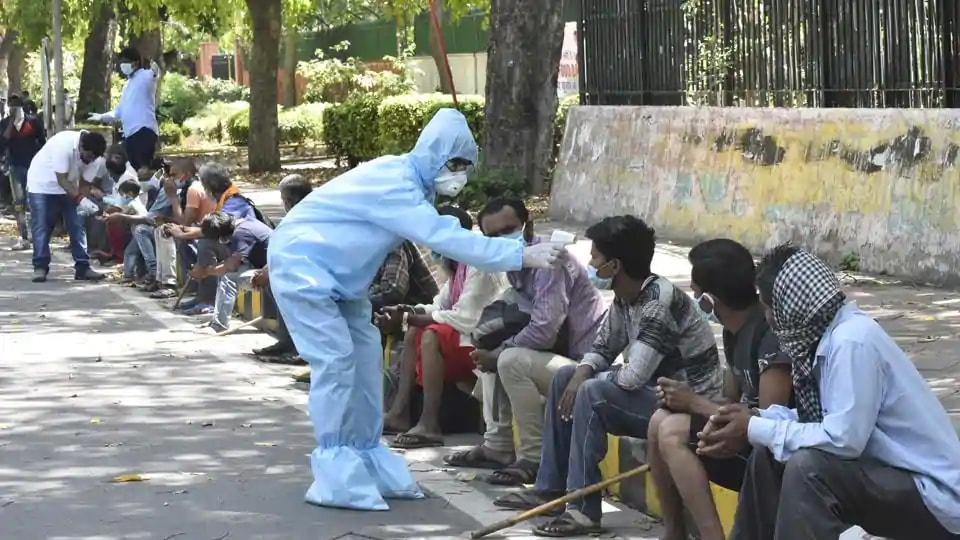
The exercise comes amid worries that a runaway epidemic could overwhelm India’s health care system, much like it has in the United States and parts of Europe, prompting experts and authorities to consider an all-hands-on-deck scenario.
India has one doctors for every 1,457 of its population, which is lower than 1:1,000 ratio recommended by the World Health Organization (WHO). The US has an average of 2.54 doctors for every 1,000 of its population.
The resources in addition to the health staff will be deployed for tasks such as supervising quarantine facilities, surveillance of contacts, and to help authorities implement lockdown measures.
“We don’t just need doctors, but also non-medical professionals who can be quickly trained to manage other aspects of the Covid-19 situation. There is need for manpower to manage the lockdown effectively, and now that there is relaxation of curbs, local authorities will require people to maintain social distancing in banks, ration shops, check on people whether they are observing infection control practices publicly, etc,” said Arun Panda, secretary, ministry of micro, small and medium enterprises (MSME), who heads the special group of bureaucrats responsible for augmenting human resources and capacities.
“The civic bodies will also need people to manage movement of people and other things. This is an attempt to have everything at the click of a mouse for the convenience of everyone,” Panda added.
A dashboard, available on covidwarriors.gov.in, accounts for doctors and nurses as well as dentists, auxiliary health staff, Ayush practitioners, Asha and Anganwadi workers and those that belong to the uniformed youth groups such as NSS and NCC.
For the exercise, the government collaborated with several ministries, councils, NGOs and civil society groups to gather details. “The idea behind a dashboard was for people to quickly figure out where the need was to deploy people, and which was the nearest place where manpower was in excess that could be transported to the other place where it was required more. You can see it all in real time,” said Panda.
The data on the website lists resources by state.
For quick training of these personnel, the MSME ministry has also come up with about 105 training modules that can be readily accessed at anytime.
“There are web modules created to teach, for example, bio-medical waste management, how to dispose personal protection equipment, infection control and hygiene practices, etc. These have been created in a quick, easy-to-learn format,” the secretary said.
“We have gone as granular as we could be and it is a work in progress because it will be updated on a regular basis and can be utilised even after the outbreak has subsided. These are people who are willing to work, and can be utilised later on as well,” he added.
Experts in the field say it helps to have an exact knowledge of manpower at hand in an outbreak situation so that the workforce can be accordingly deployed.
“Doctors, nurses and paramedics are one part of it but the other, and more important, part is to ensure preventive measures are put in place effectively so that cases do not go up. At such places we need volunteers, who can go to villages and towns to help local administrations in ensuring people strictly follow the government directive. There is a large number of people who would want to work, and to have an exact idea about them is great,” said Dr KK Talwar, former head of PGI Chandigarh.