
 E-Paper



India outlines focus areas at meeting on Covid-19 Global Action Plan
Foreign secretary Harsh Shringla said the country can extend the Indian SARS-CoV-2 Genomics Consortium (INSACOG) network of laboratories for genomic sequencing and surveillance in the neighbourhood


NEW DELHI: India will contribute to a Covid-19 Global Action Plan launched on Monday by strengthening global supply chains and working with partners and the World Health Organization (WHO) to improve sub-optimal approval and regulatory processes that are impeding stable supplies.
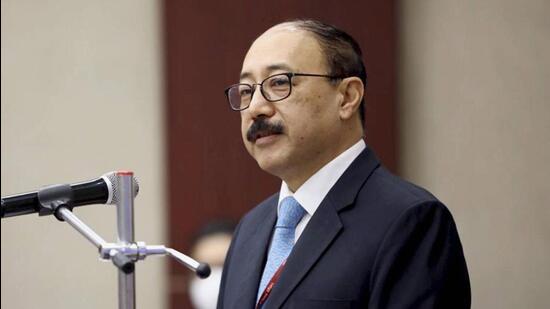
New Delhi’s focus areas for the Global Action Plan were outlined by foreign secretary Harsh Shringla while participating in a Covid-19 global action meeting convened virtually by US secretary of state Antony Blinken, people familiar with the matter said.
The move to launch the Global Action Plan, meant to enhance engagement and coordination for the Covid-19 response, was first announced in a joint statement issued after a meeting of foreign ministers of the Quadrilateral Security Dialogue or Quad last week. Blinken said at the time that the Global Action Plan will drive coordination across regions and sectors to end the pandemic.
The virtual meeting, which lasted two hours, focused on coordinating global action for the Covid-19 response, especially in vaccination, supply chain resilience, supporting healthcare workers, addressing information gaps, ensuring non-vaccine interventions, and strengthening health security architecture around the world.
The meeting was attended by foreign ministers and senior representatives of several countries and international organisations. India was represented by foreign secretary Harsh Shringla as external affairs minister is away on a visit to the Philippines.
The people cited above said that Shringla, during his intervention at the meeting, outlined India’s focus areas for the Global Action Plan, including strengthening and securing global supply chains and working with partners and WHO to address sub-optimal approval and regulatory processes that are impeding stable and predictable supplies.
India will also work to implement the TRIPS waiver for Covid-19 vaccines and therapeutics that it co-sponsored with South Africa at the World Trade Organization (WTO) in order to diversify local manufacturing in regional markets, the people said.
New Delhi will use its experience in testing, treating and vaccinating large numbers of people to create customised and tailor-made capacity building and technical training programmes for frontline workers in Asia, Africa and Latin America. This will complement India’s work under the Quad Vaccine Partnership, the people added.
India has already conducted 17 training sessions for more than 60 countries focused on the entire spectrum of Covid-19 management as part of a development assistance package amid the pandemic. India has also supplied more than 162 million vaccine doses to 97 countries and two UN organisations and is collaborating with its partners in the Quad to deliver a billion vaccine doses in the Indo-Pacific region in 2022.
The Indian side also informed the meeting that the country can extend the Indian SARS-CoV-2 Genomics Consortium (INSACOG) network of laboratories for genomic sequencing and surveillance in the neighbourhood, the people said.
The people said Shringla also outlined steps taken by India to protect its population from Covid-19, including administering more than 1.7 billion doses to fully vaccinate 70% of the adult population. India has offered its digital certification platform, CoWin, as an open-source digital public good and is in talks with WHO for an MoU for sharing the platform globally through the C-TAP initiative.
Blinken told the meeting that the pandemic is “far from over”. He said WHO had set a goal of vaccinating 70% of people in every country across every income level by September 2022, but the world community was “well below our target”.
He added, “One recent analysis found that while nearly 80% of people are vaccinated in upper, middle, and high-income countries, the number falls to less than 11% in low-income countries. And last month, the WHO warned that nearly 90 countries from around the world are not on track to reach the 70% goal.”
Blinken said the Global Action Plan will take on what the world community has identified as the biggest barriers in the fight to end the pandemic. The roadmap lays out six key lines of effort that will help achieve the goals of vaccinating the world and preparing the world for future pandemics, he said.


