
 E-Paper



India rejects Court of Arbitration's Indus Waters Treaty award: ‘Illegally constituted, has no jurisdiction’
The MEA said the Hague-based court has no jurisdiction to pronounce on India’s sovereign decisions and that the treaty will remain in abeyance.

 Prefer HTon Google


India on Monday rejected the Permanent Court of Arbitration’s (PCA) order setting aside its decision to suspend the Indus Waters Treaty with Pakistan, saying it had never recognised the existence of the “illegally constituted” court in The Hague.
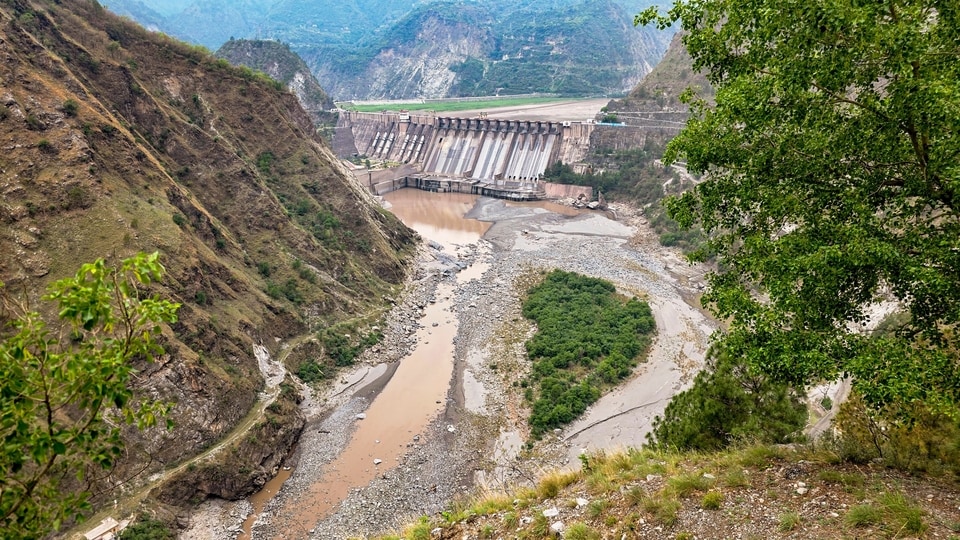
The Indian government also rejected the court order on interim measures prohibiting New Delhi from building certain structures of the Ratle hydroelectric project in Jammu and Kashmir.
“India’s decision to hold the Indus Waters Treaty in abeyance remains in force,” the external affairs ministry said in a statement that rejected the Court of Arbitration’s awards.
Also Read | Hormuz to Indus: The new water weapon isn't scarcity. It's uncertainty
India held the Indus Waters Treaty in abeyance as part of a package of punitive diplomatic and economic measures unveiled in April 2025 in response to the Pahalgam terror attack, which was carried out by a proxy for Pakistan-based Lashkar-e-Taiba (LeT). Pakistan, which has said any denial of its share of waters of cross-border rivers will be considered an act of war, approached the court in The Hague in March this year to determine the status of the water-sharing treaty.
The external affairs ministry described the “so-called Court of Arbitration” as illegally constituted and said: “This so-called Court was constituted by the World Bank in patent breach of the terms of the Treaty and India categorically rejects its so-called award, just as it has firmly rejected all prior pronouncements by this illegally constituted body.”
India has “never recognised the existence in law of this illegally-constituted and so-called Court of Arbitration”, and has always said the “very establishment of this alleged arbitral body constitutes a grave violation of the Indus Waters Treaty”, the statement said.
“Accordingly, India has never appeared before this body and has refused to take any cognisance of its earlier pronouncements,” it said.
The Court of Arbitration has “no jurisdiction whatsoever to pronounce on India’s sovereign decisions” and its “pronouncements, now or in the future, will have no effect on India’s actions in connection with the projects being undertaken by India”.
Also Read | ‘India could use water as weapon’: Pakistan minister warns amid Indus Water Treaty row
Since it suspended the treaty, the Indian side has stepped up work on several hydropower projects in Jammu and Kashmir that Pakistan opposed under the provisions of the 1960 pact. Among these are the Ratle and Kishenganga hydropower projects, over which Pakistan had sought the formation of a court of arbitration.
In a statement, the Permanent Court of Arbitration (PCA) said that the court considered the meaning of India’s decision to suspend the treaty, “finding that it could only be a claim that the Indus Waters Treaty is either suspended or terminated”.
The court examined the potential grounds on which India can suspend or terminate the treaty, including grounds cited by New Delhi in its public statements. “In a unanimous decision, the Court found that none of these grounds could justify suspension or termination of the Treaty. Accordingly, the Indus Waters Treaty remains fully in force, and India must observe its obligations under the Treaty, including those relating to the design and operation of its hydro-electric projects on the Western Rivers,” the court said in a press release.
The Indus Waters Treaty, brokered by the World Bank, allocated the western rivers – Indus, Jhelum, Chenab – to Pakistan, and the eastern rivers – Ravi, Beas and Sutlej – to India. It also allowed each country certain uses of the rivers allocated to the other.
In its order on interim measures, the court considered Pakistan’s request for limiting construction works at the Ratle hydropower project pending a neutral expert’s decision on whether the project’s design complies with the treaty.
“In a unanimous decision, the Court decided to impose measures prohibiting India from concreting the RHEP dam wall and power intake structure above certain levels until 90 days after the Neutral Expert’s final decision, which is expected in July 2027,” the PCA press release said.
“The Court also imposed a reporting measure relating to the RHEP Construction Schedule until shortly after the Neutral Expert’s final decision,” it said.
The court also declined to grant two other measures requested by Pakistan – one that India would bear the risk of having to discontinue, modify or dismantle components of the Ratle hydropower project, and another that India should return to “full compliance” with the treaty pending the court’s decision on Pakistan’s application related to the status of the pact.
The court further said its decisions will be published on PCA’s website after completing a process with the two countries to “identify confidential information for redaction”.
The court of arbitration was chaired by Sean D Murphy of the US and its other members are Wouter Buytaert of Belgium, Jeffrey P Minear of the US, Awn Shawkat Al-Khasawneh of Jordan, and Donald Blackmore of Australia.
In July 2023, the court ruled it was competent to take up Pakistan’s case after rejecting India’s objections to its competence.
While Pakistan initially sought the appointment of a neutral expert to address objections to the Kishenganga and Ratle projects in 2015, it unilaterally retracted this request in 2016 and sought a court of arbitration. In 2016, the World Bank appointed both a neutral expert and the court of arbitration.
India attended meetings convened by the neutral expert till the treaty was suspended in 2025. It completely stayed away from proceedings of the court of arbitration, which it never recognised.
The proceedings before the neutral expert in relation to the Kishenganga and Ratle hydropower projects are ongoing, and the latest work programme issued by the expert envisages circulation of the final decision around July 16, 2027, the press release said.
The court said that while India did not participate by making written or oral submissions during proceedings, it took into account India’s positions on the issues “to the extent they could be discerned from India’s statements and conduct outside of these proceedings (including Indian government communications to Pakistan and to the neutral expert, and public statements made by Indian officials)”.
The court further noted that it looked “extremely seriously” into India’s allegation that “Pakistan’s sponsorship of cross-border terrorism had impeded its utilisation of rights” under the Indus Waters Treaty. “However, the Court found that even if India’s allegation was assumed to be true, they would not establish a material breach of the Treaty by Pakistan,” the press release said.
The treaty “does not address terrorism or the use of force and expressly indicates that it governs only the rights and obligations of the Parties with respect to the use of the waters of the Indus Rivers System”. The court said it “did not find evidence that the alleged terrorism had impeded India’s ability to construct its HEPs on the Western Rivers and instead noted that India has built and is building many such HEPs”.



