E-Paper



India rubbishes Pakistan foreign minister’s allegations on attack that killed 9 Chinese nationals
The July 14 attack on the bus carrying workers to a hydropower project site at Dasu in Khyber-Pakhtunkhwa province resulted in the death of nine Chinese nationals and four more people.

 Prefer HTon Google


India on Friday rejected the Pakistan foreign minister’s claim that the Indian and Afghan spy agencies were behind a suicide attack on a bus last month that killed nine Chinese nationals, saying it was an attempt to deflect global attention from Pakistan’s “role as the epicentre of regional instability”.
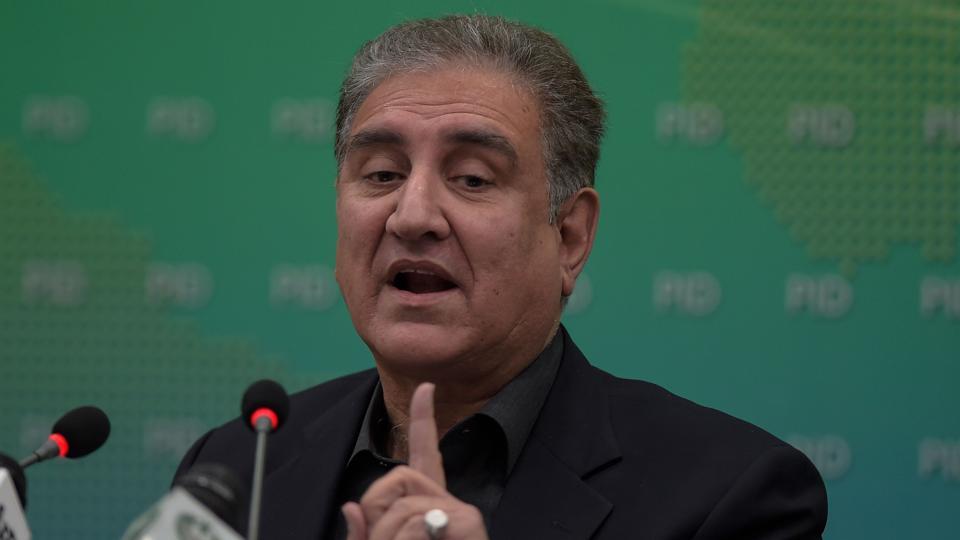
Pakistan’s foreign minister Shah Mehmood Qureshi had contended on Thursday that the bombing was carried out by terrorists backed by the Indian and Afghan intelligence agencies. He claimed an investigation revealed a “nexus of Indian RAW and Afghan NDS” in the attack, referring to the intelligence agencies of the two countries.
Qureshi told a news conference that the Pakistani Taliban carried out the attack. “As per our investigation, the Afghan soil was used for this incident...about its planning and its execution, we’re seeing a clear nexus between NDS and RAW,” he added.
External affairs ministry spokesperson Arindam Bagchi rubbished Qureshi’s allegations and described them as “absurd comments”. He added, “This is yet another attempt by Pakistan to malign India, in a bid to deflect international attention from its role as the epicentre of regional instability and a safe haven for proscribed terrorists.”
Bagchi said India has been at the forefront of global efforts against terrorism in partnership with the international community, “which is well aware of Pakistan’s credentials when it comes to terrorism”. He added, “Such desperate attempts by Pakistan at peddling lies and propaganda will therefore find few takers.”
The July 14 attack on the bus carrying workers to a hydropower project site at Dasu in Khyber-Pakhtunkhwa province resulted in the death of nine Chinese nationals and four more people. Pakistani authorities have made several flip-flops on the attack, claiming hours after the blast that it was caused by a mechanical failure that resulted in a gas leak.
The Chinese side said immediately after the attack that the bus was hit by a blast. After traces of explosives were found at the site, Pakistani authorities said an attack couldn’t be ruled out. On Thursday, Qureshi said the bus blast was a suicide bombing and that the Chinese side was satisfied with the investigation done by Pakistani authorities.
The incident had prompted Chinese Premier Li Keqiang to urge his Pakistani counterpart last month to hold the culprits accountable for what he described as a terrorist attack. Both Qureshi and the Inter-Services Intelligence (ISI) chief had visited Beijing last month to placate the Chinese side.
On Friday, Chinese foreign ministry spokesperson Hua Chunying expressed appreciation for Pakistan’s investigation into the attack. She reiterated Pakistan’s contention that planning for the attack was done in Afghanistan and it was executed by the Pakistani Taliban. Hua also said: “The terrorist network the attacker is associated with has received support from Indian and Afghan intelligence agencies.”
The developments come at a time when India’s relations with Pakistan and China are strained. Indian troops have been engaged in a standoff with Chinese forces along the Line of Actual Control (LAC) in Ladakh for more than a year, and relations between New Delhi and Islamabad have been troubled over a string of terror attacks in recent years.