
 E-Paper



India says no discussions on deploying warships to Strait of Hormuz
India will continue its discussions with several stakeholders on this matter, Jaiswal said, adding that external affairs minister S Jaishankar had also spoken about it in an interview with Financial Times

 Prefer HTon Google


India hasn’t engaged in bilateral discussions with the US regarding deploying naval vessels to ensure the safe passage of merchant shipping through the Strait of Hormuz, the external affairs ministry said on Monday against the backdrop of President Donald Trump’s call for countries to send their warships to keep the critical waterway open.
Trump said in a social media post that he hoped China, France, Japan, South Korea, the UK and other countries, which are affected by the “artificial constraint” of Iran’s attempted closing of the Strait of Hormuz, will send warships to the area to keep the waterway “safe and open”. However, there have been no immediate commitments by the countries named by Trump.
Also Read: India says ‘no bilateral discussion’ with US on combined force to reopen Strait of Hormuz
When external affairs ministry spokesperson Randhir Jaiswal was asked at a media briefing whether the US had approached India to send its warships to the region and New Delhi’s stance on the matter, he replied: “We are aware of this particular matter being discussed by several countries. We have not yet discussed it in a bilateral setting.”
India will continue its discussions with several stakeholders on this matter, Jaiswal said, adding that external affairs minister S Jaishankar had also spoken about it in an interview with Financial Times. Jaishankar said does not have a “blanket arrangement” with Iran for Indian-flagged ships to transit the Strait of Hormuz, though talks with Tehran on the safe passage of Indian vessels were “ongoing” and “yielding results”.
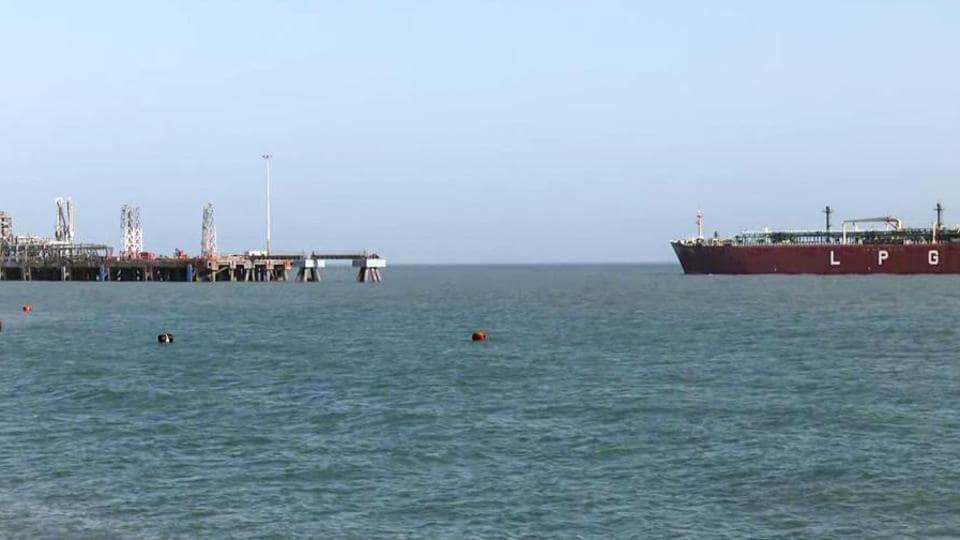
Two Indian-flagged LPG carriers, Shivalik and Nanda Devi, with 92,712 metric tonnes of LPG crossed the Strait of Hormuz early on Saturday following phone calls between Prime Minister Narendra Modi and Iranian President Masoud Pezeshkian and foreign ministers Jaishankar and Seyed Abbas Araghchi.
People familiar with the matter pointed out that India has not joined multilateral naval forces to protect merchant shipping in the Red Sea or Strait of Hormuz during hostilities, though the Indian Navy has deployed warships to escort Indian-flagged vessels while acting in coordination with the navies of other countries.
Jaiswal reiterated the external affairs minister’s remarks about a history of engagement between India and Iran and said New Delhi had not provided anything in exchange for the safe passage of Indian vessels through the strait. “That has been the basis of our engagement and it is not an exchange issue,” he said.
The Indian side has explained its position on the war launched by Israel and the US against Iran in official statements issued on February 28, March 3 and March 9. “We have and we continue to call for de-escalation, for exercise of restraint and for countries to adopt the path of dialogue and diplomacy so that there can be an early end to this conflict. We have also said that sovereignty and territorial integrity of all states must be respected,” Jaiswal said.
Jaiswal said Jaishankar had travelled to Brussels for a meeting with his European Union counterparts and the developments in West Asia are expected to be “high on the agenda”. He added, “All issues of importance [will be discussed] – we have a large diaspora to take care of, we also have a responsibility on the side of energy security…for our people.”
Rajesh Kumar Sinha, special secretary in the shipping ministry, told the briefing that he had no information as to when 22 Indian-flagged vessels currently located to the west of the Strait of Hormuz in the Persian Gulf will be able to sail home. He said all 611 Indian seafarers on these vessels – including six LPG carriers, an LNG carrier and four crude oil tankers – are safe.


