The national Adverse Events Following Immunisation (AEFI) committee has taken up an exercise to compare age-specific death rates in the inoculated population with the estimated death rate in the same population group that was not immunised against the coronavirus disease (Covid-19), people aware of the matter said on Thursday.
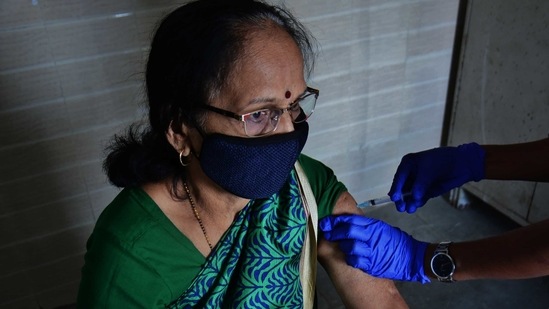
The World Health Organization (WHO) defines AEFI as any untoward medical event that follows vaccination and that does not necessarily have a causal relationship with the usage of the vaccine.
The AEFI analysis will be being done in the age groups of 20-40, 40-50, 50-60, and 60 years and above.
“This is a massive exercise that was started today (Thursday) morning to put people’s minds at ease regarding Covid-19 vaccines. Even though no deaths post vaccinations have been causally linked to vaccines in our review, we are trying to analyse deaths in people who were given Covid-19 vaccination differently. The data is being analysed to know if there are more deaths taking place in the population group that’s given vaccine than in the same age group that’s not given vaccine but die due to other reasons,” said a senior member of the committee, requesting not to be identified.
The central government began a review of AEFI data from across the country last week after some countries in the European Union temporarily suspended the use of the Oxford-AstraZeneca Covid-19 vaccine as a precautionary measure based on reports of rare blood clotting events in people receiving the vaccine.
{{/usCountry}}The central government began a review of AEFI data from across the country last week after some countries in the European Union temporarily suspended the use of the Oxford-AstraZeneca Covid-19 vaccine as a precautionary measure based on reports of rare blood clotting events in people receiving the vaccine.
{{/usCountry}}“This is being done to overcome any vaccine hesitancy among the masses,” said Dr NK Arora, member, National Covid Task Force, and national AEFI committee.
In India, the Serum Institute of India (SII) is manufacturing the Oxford-AstraZeneca Covid-19 vaccine as Covishield, one of the two vaccines approved for use. Bharat Biotech’s Covaxin, which it has co-developed with the Indian Council of Medical Research (ICMR), is the other vaccine approved for use.
India launched the Covid-19 vaccination drive on January 16, 2021, and since then, the country has administered at least 36 million vaccine doses.
As India immunises a large number of children annually under its national immunisation programme, there is a dedicated AEFI secretariat functional in the country which looks at vaccine-related adverse events.
“Only a few countries in the world have this kind of secretariat with a specialised task force; so we will be making use of these technical experts to do the required analysis. If the death rate is more than it should be, it is a cause for concern but if it is the same or lower, then people will understand that it is not Covid-19 vaccines that are causing deaths. This is being done purely for the ease and comfort of people,” the first person quoted above said.
The experts will collect all cause mortality data of different age groups from 2018-19 before the Covid-19 pandemic hit the country for comparison with mortality data in the vaccinated group.
The results are expected to be out in a few days. Prima facie review of 71 deaths in people having received Covid-19 vaccines does not link any of the deaths to the shots.
Public health experts are of the opinion that this exercise would help in building vaccine confidence.
“It will be good to have this kind of data at the population level,” said Dr K Srinath Reddy, founder, Public Health Foundation of India.
WHO, in its latest statement, has recommended that vaccinations should continue. “WHO is in regular contact with the European Medicines Agency and regulators around the world for the latest information on COVID-19 vaccine safety. The WHO COVID-19 Subcommittee of the Global Advisory Committee on Vaccine Safety is carefully assessing the latest available safety data for the AstraZeneca vaccine. Once that review is completed, WHO will immediately communicate the findings to the public. At this time, WHO considers that the benefits of the AstraZeneca vaccine outweigh its risks and recommends that vaccinations continue,” the WHO statement read.