
 E-Paper



India to host top security officials of seven countries for dialogue on Afghanistan
India will bring together top security officials of seven countries, including Iran and Russia, for a dialogue on Afghanistan aimed at forging a cooperative approach for tackling threats such as terrorism and radicalisation in the aftermath of the Taliban takeover


India will bring together top security officials of seven countries, including Iran and Russia, for a dialogue on Afghanistan aimed at forging a cooperative approach for tackling threats such as terrorism and radicalisation in the aftermath of the Taliban takeover.
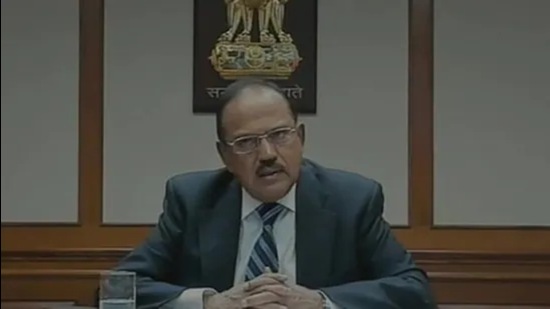
The Delhi Regional Security Dialogue on November 10, to be chaired by National Security Adviser (NSA) Ajit Doval, will be attended by Iran’s Supreme National Security Council secretary Rear Admiral Ali Shamkhani, Russia’s Security Council secretary Nikolai Patrushev, and NSAs or security council secretaries of Kazakhstan, Kyrgyzstan, Tajikistan, Turkmenistan and Uzbekistan.
Though this is the first such meeting on Afghanistan to be chaired by India, the dialogue is a continuation of a mechanism whereby Iran hosted two meets in 2018 and 2019. Pakistan and China were also invited to this week’s meeting but will not be present.
Pakistan NSA Moeed Yusuf said earlier this month that he would not attend, and people familiar with the matter said on Monday that the Chinese side had informed India it would be unable to participate because of “scheduling difficulties”. The Chinese side also said it was open to maintaining contacts with India on the situation in Afghanistan through bilateral or multilateral channels, they said on condition of anonymity.
The dialogue on November 10 will focus on forging consensus on the challenges currently emanating from Afghanistan and finding common ground on a way forward, the people said.
According to an Indian assessment, the five main threats and challenges following the Taliban takeover of Kabul on August 15 are - terrorism within Afghanistan and across its borders, radicalisation and extremism, cross-border movements which are a key concern for Central Asian states, drug production and trafficking, and the threat emanating from vast amounts of weapons and military gear left behind in Afghanistan by US troops.
The people said the regional countries attending the dialogue had similar concerns, especially about the uncertainty in Afghanistan, and India is confident about achieving unanimity on the problems being faced by the Afghan people.
“The most important deliverable [from the meeting] will be that the key countries of the region agree on the threats that we all face, and also agree on what should be done in the future. Sometimes, the difficulty is that you do not have a consensus on the threats you face,” one of the people cited above said.
The people noted that none of the countries participating in the meeting had recognised or legitimised the Taliban set up in Kabul. They also pointed out the Delhi Regional Security Dialogue is different from other mechanisms on Afghanistan because it involves senior security officials.
While some regional countries such as Russia and Iran are more engaged with the Taliban, they still have a high degree of convergence with India on points of concern and objectives in Afghanistan, such as respecting diversity and rights of minorities and inculcating a culture of moderation, the people added.
The Central Asian states also have concerns about the implications of the Taliban takeover on their societies, such as emboldening of “hotheads”, the person cited above said. “They are not ready for any export of ideology from Afghanistan into their societies,” he added.
The people also said it was unfortunate that Pakistan had opted not to participate in the meeting, and noted that there is a “credibility gap” between Pakistan’s actions and intentions for Afghanistan. If Pakistan was truly sincere about helping Afghanistan, it should have allowed the routing of India’s humanitarian aid through its soil, they said.
Pointing to Pakistan’s support for the Taliban over the years, including providing resources and bases, the people said most regional countries recognise Pakistan as a source of the problem though some are not inclined to say this publicly.
The external affairs ministry said in a statement that the dialogue will review the security situation in the region arising from developments in Afghanistan. It will deliberate on measures to address security challenges and support the Afghan people in promoting peace, security and stability.
“India has traditionally enjoyed close and friendly ties with the people of Afghanistan and has called for a unified international response to address the security and humanitarian challenges facing Afghanistan. The forthcoming meeting is a step in that direction,” the statement added.


