E-Paper



India urges Saudi Arabia to mind ‘sensitivities’ after Pakistan deal
The defence agreement signed by Islamabad and Riyadh says that “any aggression against either country shall be considered an aggression against both”.

 Prefer HTon Google


India expects Saudi Arabia to take into consideration “mutual interests and sensitivities” in the bilateral strategic partnership, the external affairs ministry said on Friday in the context of the mutual defence agreement signed by Pakistan and Saudi Arabia that has significant ramifications for regional security.
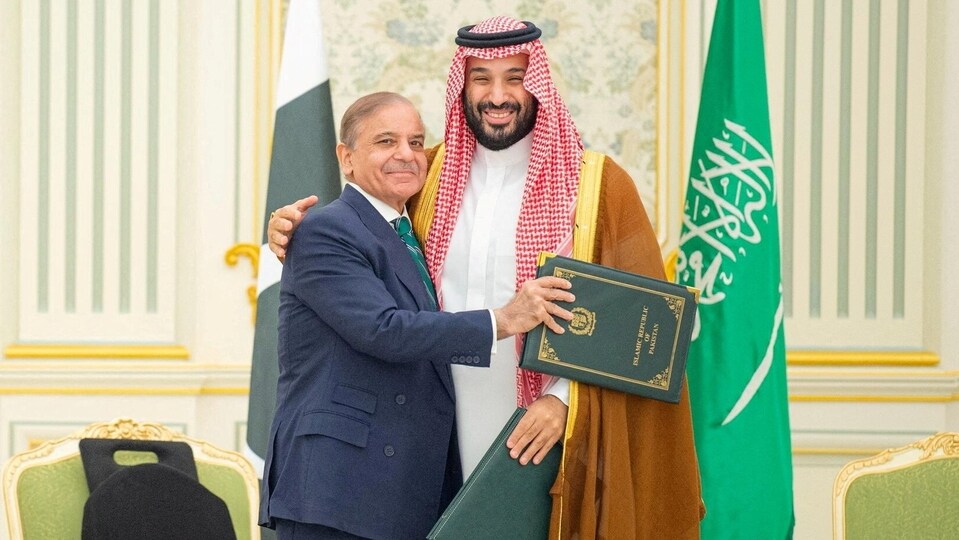
Pakistan Prime Minister Shehbaz Sharif and Saudi Crown Prince Mohammed bin Salman signed the “Strategic Mutual Defence Agreement” on Wednesday, close on the heels of Israel’s military strikes on Hamas leaders in Qatar, and the treaty states that “any aggression against either country shall be considered an aggression against both”.
India, which perceives West Asia as part of its extended neighbourhood, said in its initial response to the Pakistan-Saudi Arabia agreement that it will take all steps to protect the country’s national interests and ensure comprehensive national security.
ALSO READ | Behind New Delhi’s cautious approach to Saudi-Pak pact
Asked about the Pakistan-Saudi Arabia pact at a weekly media briefing, external affairs ministry spokesperson Randhir Jaiswal said: “India and Saudi Arabia have a wide-ranging strategic partnership which has deepened in the last several years considerably. We expect that this strategic partnership will keep in mind mutual interests and sensitivities.”
The mutual defence pact came against the backdrop of Arab states questioning the reliability of the US as a security partner, especially in the face of Israeli aggression in recent months, including military strikes on Iran and Qatar. The pact also has ramifications for New Delhi, especially if Pakistan chooses to invoke it during any hostilities with India.
ALSO READ | 'What we have…': What Pakistan said on sharing nuclear program with Saudi Arabia
Saudi Arabia has had long-standing defence and security relations with Pakistan, though Riyadh has played a greater role in recent years in helping Islamabad cope with its economic problems through financial bailouts. At the same time, Saudi Arabia’s strategic cooperation with India has deepened over the past decade and the two sides recently began conducting joint army and navy exercises.
The external affairs ministry also said on Thursday that India was aware Pakistan and Saudi Arabia had been considering such a pact to formalise a long-standing arrangement between the two countries. Indian officials have also said they are studying the implications of the pact for national security and regional stability.
The new agreement formalises existing understandings between Pakistan and Saudi Arabia though the timeline could have been accelerated by Israel’s attacks in Qatar, people familiar with the matter said.
ALSO READ | Pak-Saudi pact: India says it will take steps to protect national interests
The text of the agreement has not been made public and the reference to collective defence has been made only in a joint statement, the people pointed out. Thus, the legal obligation regarding collective defence will need to be assessed, the people said.
Jaiswal responded to a separate question about the possibility of other countries such as the United Arab Emirates (UAE) and Qatar becoming party to the Pakistan-Saudi Arabia pact by saying that India has wide-ranging ties with these two West Asian countries. Jaiswal noted that Prime Minister Narendra Modi had recently spoken to the Emir of Qatar, Sheikh Tamim Bin Hamad Al-Thani, and that UAE’s minister of state for foreign affairs, Reem Al Hashimy, visited New Delhi for talks with foreign secretary Vikram Misri.
Describing India’s relations with the UAE and Qatar as “expansive”, Jaiswal said: “These conversations continue to happen.”
Pakistan’s defence minister Khawaja Asif said on Thursday that the “doors are not closed” for other Arab states to join the mutual defence pact with Saudi Arabia. He said there was no clause in the agreement that ruled out the entry of any other country.
Asif responded to a question during a television interview on whether Pakistan’s nuclear weapons could be used under the agreement by saying: “What we have, our capabilities, will absolutely be available under this pact.”