
 E-Paper



PM Modi in Japan for G7, set to meet Zelensky
PM Modi will attend the Quad Leaders Summit in Japan on Saturday, followed by a bilateral meeting with Ukrainian President Volodymyr Zelensky.

 Prefer HTon Google


Prime Minister Narendra Modi will participate on Saturday in a Quad Leaders Summit on the margins of a G7 meet in Japan and is slated to hold a bilateral meeting with Ukrainian President Volodymyr Zelensky, their first since the start of the Russian invasion, people familiar with the matter said on Friday.
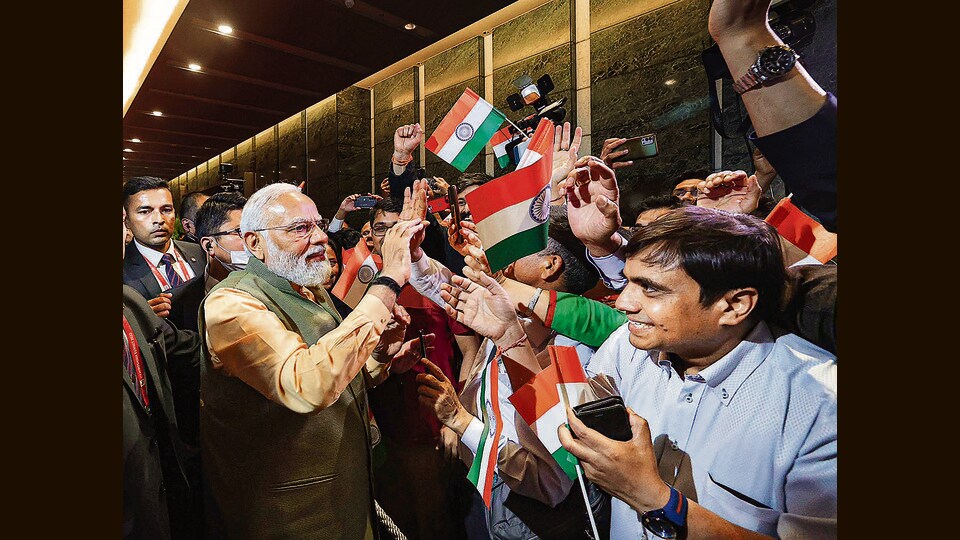
On Friday, Modi flew into Hiroshima, the venue of the G7 Summit and the first stop on his three-nation tour that will also take him to Papua New Guinea and Australia. Modi and leaders of seven other guest countries will join outreach sessions at the G7 Summit and he will hold several bilateral meetings.
Also read: PM Modi to have over 40 engagements during 3-nation visit
There was no official word from the Indian side about the meeting between Modi and Zelensky, though the people cited above said this will be one of five bilateral meetings the Indian premier will hold on Saturday, the others being with the leaders of Japan, South Korea, Vietnam and France. Oleksiy Danilov, secretary of Ukraine’s National Security and Defense Council, confirmed Zelensky will attend the G7 Summit in-person.
The situation in Ukraine and efforts to find a negotiated end to the hostilities that began in February 2022 are expected to figure in the meeting on Saturday evening, the people said. Indian and Ukrainian officials began exploring the possibility of a meeting once it became clear that Zelensky would be present in-person in Hiroshima.
Modi has spoken to Zelensky and Russian President Vladimir Putin several times since the start of the conflict, pushing India’s position that the sovereignty and territorial integrity of all states must be respected and that there should be a return to diplomacy and dialogue. At a meeting with Putin on the margins of the Shanghai Cooperation Organisation (SCO) Summit in Uzbekistan last September, Modi nudged the Russian leader to end the conflict by telling him this is “not the era of war” — a call that found mention in the joint communique issued after the G20 Summit in Indonesia.
In April, Zelensky sent Ukrainian first deputy foreign minister Emine Dzhaparova to New Delhi with a message for Modi, seeking a greater role for India in efforts to end the war and inviting the Indian premier to visit Kyiv.
India has not publicly criticised Russia’s actions despite considerable pressure from the US and European countries. It has also ramped up its purchase of discounted Russian crude, a move criticised by some Ukrainian leaders.
Zelensky addressed the Arab League Summit hosted by Saudi Arabia in Jeddah on Friday as part of a fresh push for his 10-point peace plan, seeking to get the support of more countries for the formula he first outlined at last year’s G20 Summit. “We will not submit to any foreign country or colonisers... What is happening in our country is a war, not just a conflict. Ukraine is forced to continue fighting,” he said.
The G7 leaders strongly denounced Moscow’s actions at a meeting on Friday and announced new sanctions to “starve Russia of G7 technology, industrial equipment and services that support its war machine”. A joint statement issued after the meeting urged Russia to stop its aggression and “immediately, completely and unconditionally withdraw its troops” from Ukraine. They described Russia’s “irresponsible nuclear rhetoric... and stated intent to deploy nuclear weapons in Belarus” as dangerous and unacceptable.
With the Quad Leaders Summit originally scheduled for May 24 in Sydney being cancelled because of US President Joe Biden’s decision not to go ahead with a visit to Australia due to a domestic debt ceiling crisis, the leaders of the grouping will meet in Hiroshima on Saturday evening.
The Indian side is expecting “several deliverables” to emerge from the Quad Summit, which will also push the grouping’s agenda for an open, stable and prosperous Indo-Pacific governed by rules and norms. The Quad leaders are also expected to focus on the region’s most pressing challenges, including China’s assertive actions across the region.
Also read: PM Modi to inaugurate new Parliament building on May 28
In an interview with Nikkei Asia ahead of his arrival in Japan, Modi pledged to “amplify the voices and concerns of the Global South” at the G7 Summit and “foster synergy” with the G20 that India is hosting. He said he looks forward to discussing global challenges in areas such as energy, digital technology and supply chains. “I will emphasise India’s role as a reliable partner in addressing these challenges,” he said.
Asked if India can act as a mediator in the Ukraine crisis, he said: “India stands on the side of peace, and will remain firmly there... We maintain communication with both Russia and Ukraine. Cooperation and collaboration should define our times, not conflict.”
Besides the bilateral engagements, Modi will speak at three outreach sessions of the G7 Summit. The first of these will focus on food, health, development and gender equality, and the second on climate, energy and environment. The third session has the theme of “Peaceful, stable and prosperous world”. He will also unveil a bust of Mahatma Gandhi in Hiroshima on Saturday.



