E-Paper



India-Russia trade hit by ‘over-cautiousness’ of Indian banks: Russian envoy
Alipov said he is hopeful the understanding within India’s banking community will grow that it is safe, correct and just to work with various countries

 Prefer HTon Google


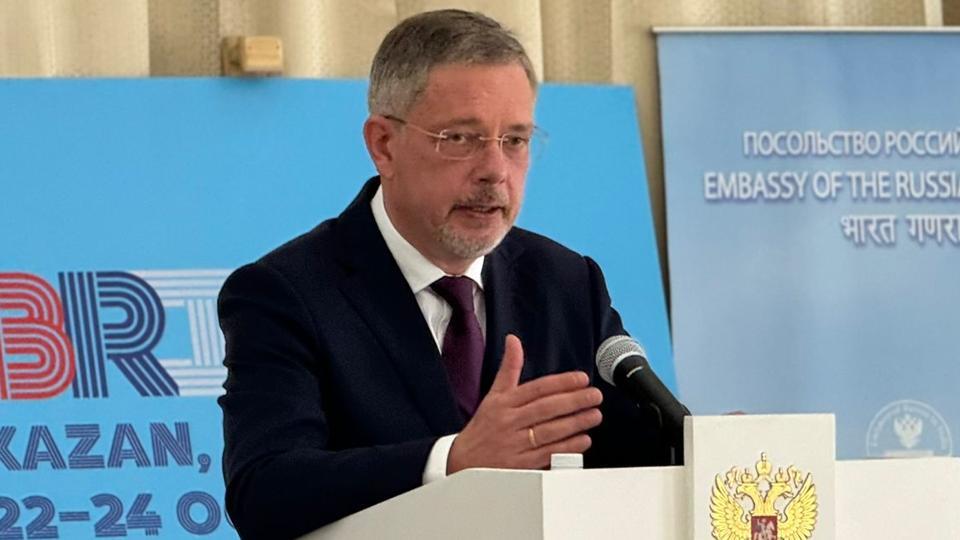
NEW DELHI: India-Russia trade has been impacted by “over-cautiousness” among Indian banks that are fearful of exposure to US secondary sanctions and this issue emphasises the need for Brics member states to have a greater say in global financial cooperation, Russian ambassador Denis Alipov said on Monday.
The envoy’s remarks came against the backdrop of Prime Minister Narendra Modi and President Vladimir Putin setting a bilateral trade target of $100 billion by 2030 at their summit in July. The two sides have already achieved trade worth $30 billion before the target year of 2025, though India has concerns about its exports being worth less than $5 billion in the overall figure of $65.7 billion in 2023-24.
More than the lack of a direct exchange rate between the rupee and the rouble, the “biggest problem” in bilateral trade has been the “over-cautiousness of Indian banks towards engagement with Russia”, Alipov told a media briefing at the Russian embassy.
“We understand the reasons, the main reason being the desire not to do anything detrimental to the capacities of the banks, which also have accounts in US dollars,” he said, adding the US is “very meticulous” in tracking transactions between Indian financial institutions and banks and their Russian counterparts and “threatening immediately with secondary sanctions”.
Alipov described this as part of the “domination of some countries in global financial issues” and said Brics states should have an equal say on issues of global economic cooperation. “India’s voice should be taken into account, just as the US voice should be taken into account, as Russia’s voice should be taken into account on an equal footing,” he said.
He questioned whether the US can pressure India to sever economic ties with Russia or other countries: “Tomorrow, the US would say it is necessary for India to curb its relationship with Bangladesh, for example. What would India and Indian banks do in that situation?”
Alipov said he is hopeful the understanding within India’s banking community will grow that “it is safe, correct and just to work with various countries without fearing the coercive measures from the US”. At the same time, he pointed out that India accepts only UN-mandated sanctions and not “unilateral and coercive measures”.
Russia remains optimistic about relations with India as 2024 has been “particularly productive”, especially after the annual summit between Modi and Putin in July, while trade has “grown exponentially” because of the focus on economic cooperation, Alipov said.
Both sides want to expedite a free trade agreement (FTA) between India and the Eurasian Economic Union as this will be a “substantial and serious step forward in facilitating an increase in bilateral trade”. They are also eyeing the potential for cooperation through the Northern Sea Route and in the Arctic, as well as the development of logistics routes between India and Russia such as the Vladivostok-Chennai maritime route.
Besides building six reactors at the Kudankulam nuclear power plant, where two more reactors are set to be connected to the national power grid, Russia has a strategic plan to expand cooperation in the nuclear sector, Alipov said.
“We have huge plans for the future,” he said, adding that the two sides preparing for a meeting of the inter-governmental commission on trade, economic, scientific, technological and cultural cooperation in New Delhi on November 12, and working towards an early session of the inter-governmental commission on defence.
Dismissing Ukrainian President Volodymyr Zelensky’s comments about the Brics Summit in Kazan being a failure as “completely delusional”, Alipov said the bloc has emerged as a “dedicated platform for the Global South” that reflects current realities and is “not anti-West but non-West”.