E-Paper



India’s electronics scheme draws ₹1.15L cr investment commitments, nearly twice the target: Vaishnaw
The 249 applications received, project a production value of ₹10.3 lakh crore—more than twice the scheme’s original target of ₹4.56 lakh crore

 Prefer HTon Google


New Delhi: The government’s Electronics Component Manufacturing Scheme (ECMS), launched in April this year, has attracted investment commitments of over ₹1.15 lakh crore—almost double the original target of ₹59,350 crore, Information Technology (IT) minister Ashwini Vaishnaw said on Thursday.
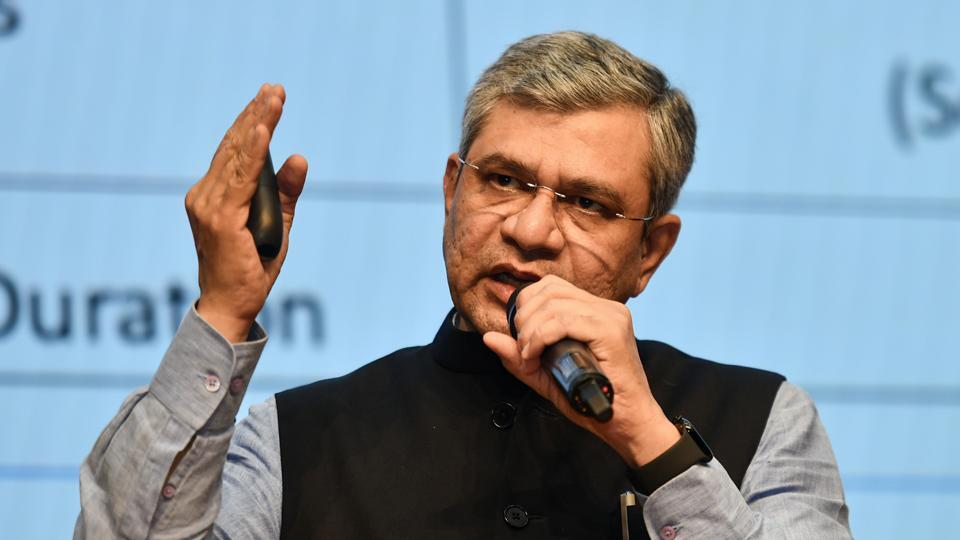
“Unprecedented applications have come in the ECMS. This shows that the global trust in India for electronic manufacturing is being converted into investments, production, and employment,” Vaishnaw said.
Applications for the scheme closed on September 30, 2025, with no plans to invite any more applications—except for capital equipment and components for sub-assemblies and bare components, which will remain open until April 30, 2027, Vaishnaw added.
Earlier this year, the union cabinet approved the ECMS with a funding of ₹22,919 crore, aimed at strengthening India’s self-reliance in the electronics supply chain.
According to official data, the 249 applications received, project a production value of ₹10.3 lakh crore—more than twice the scheme’s original target of ₹4.56 lakh crore. The scheme is also likely to create around 1.41 lakh jobs, compared to the initial target of 91,600.
Also Read: CM for implementation of UP Electronics Component Manufacturing Policy
Highlighting strong participation from medium and small manufacturing enterprises (MSMEs), Vaishnaw said, “About 60% of applications are from MSME players, and that is very heartening.” He added that the next phase of India’s electronics push will focus on manufacturing specialized materials used in components. Most components under the ECMS scheme do not require rare earth elements, he noted, with only two applicant companies needing them for their products.
“The basic idea here is to deepen the value chain in India and ensure that overall, the domestic value-added component is substantially increased—at least double from the present,” said IT secretary S. Krishnan, adding that the goal is to integrate with global value chains in electronics. Currently, domestic value addition in India stands at 15–20% for electronic goods.
The electronics ecosystem is divided into active components (semiconductors) and passive components (non-semiconductors), explained the secretary. While the focus on the active side has been on schemes like the India Semiconductor Mission (ISM) 1.0 and its upcoming 2.0 iteration, Thursday’s briefing centered on developing the passive component ecosystem under the ECMS. On the passive side, the government is also driving growth through other schemes like the PLI for mobiles and PLI for IT hardware.
The applications under the ECMS scheme span various segments, including display modules, camera modules, printed circuit boards, lithium-ion cells, and enclosures for mobile and IT hardware products. The largest single-company investment commitment under the scheme is about ₹22,000 crore. The IT ministry has declined to name the company at this stage.
Also Read: Centre approves ₹417-cr electronics manufacturing cluster under Yamuna Expressway
Officials said this is the first time India has attracted investments in areas such as surface-mount device (SMD) passives, flexible printed circuit boards (PCBs), and capital equipment for electronics.
Vaishnaw noted that the industry has also responded positively to the government’s call to invest in design capabilities and is setting up teams of varying sizes.
The government is now in the process of scrutinising the applications and has promised to fast-track approvals.
“The manufacturing of sub-assemblies and components will firmly be established in the country now, substantially increasing India’s manufacturing prowess and global competitiveness. This scheme is secular and horizontal for all verticals of electronics, and thereby building core competency and capacity,” India Cellular & Electronics Association (ICEA) chairman Pankaj Mohindroo said.
“It is very encouraging to see over 60% participation by MSMEs, enabling large-scale employment growth,” added Mohindroo.