E-Paper



India’s laptop import restrictions is not a bad move
A look at why the decision to impose an import license on computers, if implemented intelligently, may not be a bad move

 Prefer HTon Google


On August 3, the government of India issued a notification announcing the introduction of import licenses for laptops, personal computers and servers. The decision was deferred until October 31 on August 4.
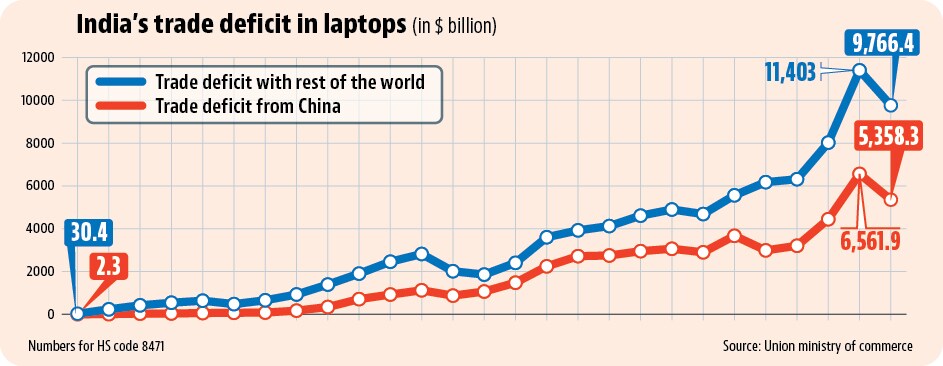
While the policy has multiple exemptions, including import of such devices when they are required as capital goods (this will make sure that businesses, especially in the service sector, are not disrupted) or imports by individuals, it is bound to change the business landscape for computer sellers in a big way. The Directorate General of Foreign Trade (DGFT) notification does not mention any reason for the change in rules but experts have described it as a nudge towards promoting domestic manufacturing of these devices. Government officials have also cited concerns related to national security. Whatever the reason, a HT analysis of relevant numbers shows that, if implemented intelligently, this is not a bad move. Here are some charts which explain this in detail.
 India’s trade deficit in laptops has been growing consistentlyAnnual trade data from the Ministry of Commerce shows that India’s trade deficit in computers has been increasing consistently. This number has increased from just above half a billion dollars at the beginning of 2000s to about $10 billion in 2022-23. Most of this trade deficit is with China.
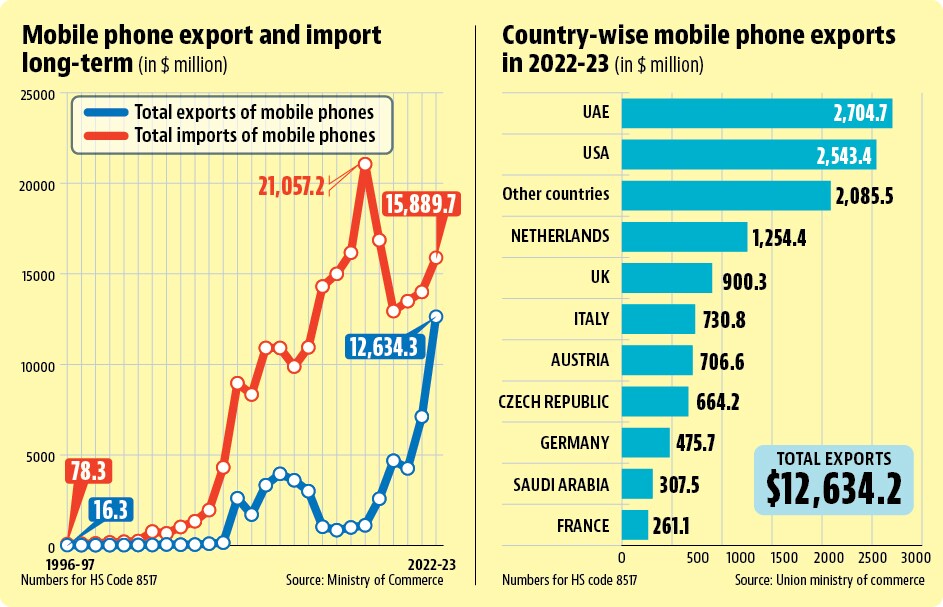
- India’s mobile phone trade deficit story was similar until PLI happened in 2020Trade data shows that India’s trade deficit in mobile phones once followed a similar trajectory as computers. It increased from just about 0.2 billion dollars at the beginning of 2000s to reach an all-time high of $20 billion by 2017-18. This number started coming down in the period after that but the reduction in trade deficit has been huge 2021-22 onwards, which is the period after roll-out of Production Linked Incentive (PLI) scheme for manufacturing of mobile phones in India. It is important to underline the fact that the reduction in trade deficit in mobile phones in the post-PLI phase has been driven by an increase in exports and not just a fall in imports. A country-wise examination of export data shows that India’s mobile phone exports are also going to high income and so-called leading exporter countries. This is perhaps a reflection of high-end phone manufacturers such as Apple making specific models in India and then exporting them to the rest of the world. For example, Mint reported that iPhone exports from India were almost half of total mobile phone exports in the month of May 2023. The fact that one can crack export markets in such devices by targeting just top manufacturers makes it an easier policy challenge than targeting a sector with a lot of players. The laptop industry – if the import restrictions are motivated by a desire to boost domestic manufacturing – is not very different from mobile phones in this regard. Interestingly, there were initially not too many takers for a similar PLI-scheme for laptops, but news agency PTI has reported renewed interest in the scheme (the deadline for which is August 30).
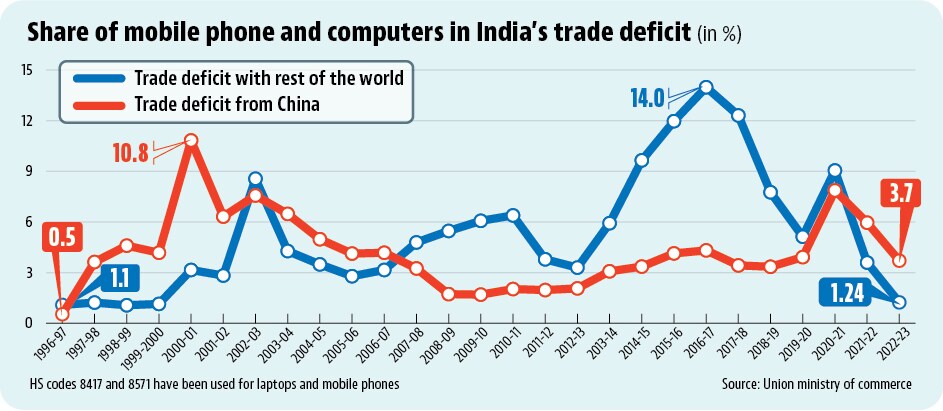
- Good but not game-changingIrrespective of the criticism about the latest move taking India back to the controlled regime days, the fact remains that laissez-faire manufacturing growth is a story which is found more in textbook economics than real world economies. There is more than enough literature to show that countries which have done well in manufacturing have often gained from state nudging such developments with a host of policies. Of course, such policies carry the risk of some private players gaining disproportionately and/or precious fiscal resources being wasted in such pursuits. While such risks are in the realm of the hypothetical, the bigger challenge facing such policies for a country like India is that even if they are successful, their overall macroeconomic impact will likely be very limited. To give an example, the combined share of mobile phones and laptops in India’s total merchandise trade deficit is very small. Similarly, the share of manufacturing in India’s overall Gross Value Added has actually come down marginally to 14.7% in 2022-23 from 15.84% in the previous year, despite success stories such as mobile phone manufacturing. The point of giving these statistics is not to undermine the potential of PLI push in these sectors but reiterate the obvious: India’s structural transformation challenge, which requires a big push to manufacturing, will take a lot more than such sector-specific success stories.