
 E-Paper



IndiGo crisis exposes a broken regulatory system
The question that needs to be asked is whether this situation could have been avoided. The unequivocal answer to this is, yes.

 Prefer HTon Google


Last week’s aviation fiasco — continuing this week but beginning to ebb — may have been piloted by the country’s leading airline IndiGo, but it was fuelled by a system designed to fail. It has highlighted several gaps that need to be plugged if India is to achieve the goal of Viksit Bharat (developed India).
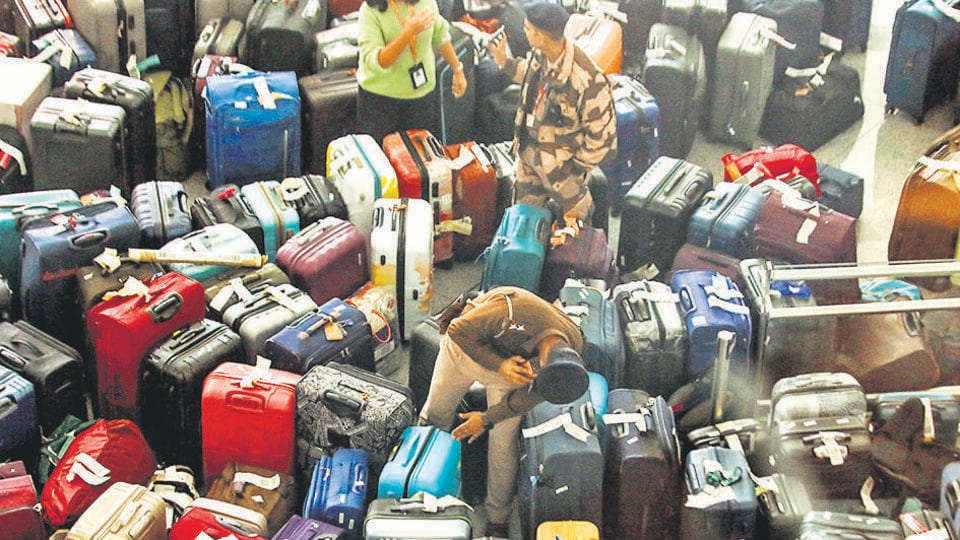
Indian passengers paid a heavy price -- with some resorting to climbing on counters in airports and others reduced to tears -- thanks to the duopoly (the market leader, IndiGo has around 60% share, and Air India and its affiliates have around 25%) that is the aviation market. All the dangers of a duopoly in full force when market leader IndiGo miscalculated (or chose to deliberately miscalculate as is being alleged openly by its own staff) its crew requirements post the new rest and duty guidelines that came into force on November 1, after the court’s intervention.
This led to a breakdown of the roster through the month of November, leading to innumerable delays and a total of 1200 flight cancellations during the month. Matters reached a head on Friday, December 5, when a total of 1500 out of the 2200 daily flights stood cancelled. Scenes of passenger despair, massive congestion, utter chaos at airports and even a protest decrying the airline played out on screens . As passengers tried to find alternatives, fares across airlines skyrocketed.
The question that needs to be asked is whether this situation could have been avoided. The unequivocal answer to this is, yes; this is a crisis of the airline’s own making with support from a regulatory system that is fundamentally broken.
It was in October-November 2023 -- after it came under pressure following a spate of deaths and incidents involving fatigued crew -- that the airline safety regulatory DGCA came out with a fresh set of duty hours guidelines and new CAR (civil aviation requirements) . The country’s pilot community was absolutely convinced that these would not be implemented by the regulator since it would place an additional financial burden on airlines -- and that was precisely what happened. CAR was kept in abeyance and it was only after Federation of Indian Pilots (FIP) raised the matter in court in 2024 that things changed (with a lag).
To allow the pilots the kind of rest that was being proposed would mean massive additional hiring. Pilots, crew and even airline management said that until then, DGCA had turned a blind eye to the worsening work conditions for pilots and crew, and allowed airline operators to push them to their limits. The allegation was that DGCA was far more sensitive to “commercial considerations of airlines than safety considerations of passengers”. After several court hearings and delays, it was finally agreed that the implementation would happen in two phases : in July this year, and then November 1.
It is clear that IndiGo failed to hire and calibrate its rosters despite being fully aware and seized of the matter for the last few years, presumably on the assumption that it would prevail and manage to further delay implementation. The entire episode which played out last week is perhaps the biggest endorsement of the allegation that India has in place a failed regulatory system which is working more at the behest and in the interests of the airlines than on ensuring safety. The backdown (IndiGo was granted the reprieve it sought) was further capitulation by the regulator.
There’s also the subsidiary question of why DGCA cleared the airline’s additional flights for its winter schedule, if it was aware of the fact that the airline didn’t have the requisite crew, keeping in mind that both the airline and the regulator were fully apprised of the November implementation and subsequent need for enhanced crew.
The lessons from the above are clear : regulators can do more harm than good unless they are fully autonomous from government control and influence, have teeth to enforce regulation and are manned by those who have true expertise in the field. The practice of Indian Administrative Service (IAS) officers -- without questioning their sterling administrative capabilities -- to try to ascertain the cause of a crash of the magnitude of AI171, or last week’s fiasco needs to be actively discouraged.
As the crisis escalated, a second glaring gap became visible. Hapless passengers who tried to book tickets on other airlines found the prices had skyrocketed and those who tried to seek redressal (refunds, alternate flights, hotels to stay, lost baggage or even basic information) from IndiGo had nowhere to go. This highlights the need for a grievance redressal body independent of DGCA in its current form. With India poised to soon be the world’s third largest aviation market, turning to the safety regulator for each and every little and big matter is untenable to say the least. This poses an even bigger risk since the body in charge of safety is constantly distracted from its main remit.
To repeat, India urgently needs an ombudsman or a regulatory authority that deals solely with consumer grievances and non safety matters, which are growing at a faster pace than capacity addition by airlines. If this latest fiasco doesn’t convince policy makers of this need, nothing will.
But last week’s events also demand that IndiGo’s operations come under greater scrutiny. Last week’s crisis was perhaps the biggest the airline has faced in its 19 year old history but it would be fair to say that it is one that has been coming for a while. There is a feeling among many airline industry watchers that the essence of what IndiGo as a brand, business and company represented in the past has been lost in this almost two decade journey. The IndiGo of 2005-06 is unrecognizable from the IndiGo of 2024-25. While to some extent this can be attributed to evolution, the journey has been marked by a decline in some of the key values and metrics that the airline stood for in the early days.
Setting aside this latest fiasco (which would immediately catapult it to the top of today’s unpopularity charts), the airline, which has its own set of steadfast loyalists , has, over the years, managed to garner a surfeit of “thumbs downs”from growing sections of the flying public. Why this should be so is worth a closer examination by its management.
Many might dismiss this “hatred” of IndiGo as a manifestation of the public’s anger towards other systemic failures which is then redirected towards the airline they fly often but the now deceased Jet Airways never found itself in this predicament. Jet loyalists loved the airline and many employees loved the hands-on founder Naresh Goyal despite whatever failings he might have had .
On social media, aviation analysts (including many who worked in senior positions in airlines) have already commented on IndiGo founder Rahul Bhatia’s distant and aloof style of functioning and asked whether this episode would have played out the way it did had co-founder Rakesh Gangwal -- known for his deep understanding and love for aviation -- still been on board and involved in the carrier’s management.
Perhaps what should worry the management and board of the airline even more is that if the flying public dislikes it, its own pilots and staff appear to loathe it. Two letters from staff that circulated widely as the crisis played out should leave no doubt on the lows the relationship between crew and ground staff on one side, and the management on the other has reached. The fact that the airline has needed to resort to every trick in the book to retain its commanders, who have been leaving for West Asian airlines and others in a steady trickle should give its board and management somethingto chew on. Had its pilots and commanders loved their airline as did Jet’s, the crisis might have been far milder than what transpired.
And last but not least , many (including the staff in one letter) have raised the aspect of “the foreign element” which seems to have afflicted the airline , although, to be fair, it is also a matter of concern in its closest rival Air India. Senior management and old loyalists (primarily Indians) are beginning to resent what they see as a colonial take over from foreigners brought in after IndiGo acquired its Dutch CEO, many of whom now call the shots.
The lessons for the airline are clear : instead of trying to game the system (which any large company has the power to do) and get its way externally, it might be time to inspect all factors at play and resolve those that can be fixed internally. All is not well at IndiGo and it hasn’t been so for some years now. Profits achieved from leveraging the duopoly it finds itself in are not the only benchmark of success.
As we head into the New Year, the AI crash in June followed by this breakdown of the whole edifice will mar whatever progress India’s aviation made in the year 2025. It’s a gloomy start to 2026.
But it may well be the smell-the-coffee moment the mandarins in the civil aviation ministry need.
Anjuli Bhargava writes about governance, infrastructure, and the social sector. The views expressed are personal


