E-Paper



Indore water contamination: Govt confirms 3 deaths; official sacked, 2 suspended
Zonal officer Shaligram Shitole and in charge assistant engineer Yogesh Joshi were suspended and in charge deputy engineer Shubham Srivastava sacked

 Prefer HTon Google


An official was sacked, and two others suspended in connection with water contamination in Indore’s Bhagirathpura, even as the authorities on Wednesday confirmed three deaths, and said the cause of five more fatalities in the area was yet to be ascertained.
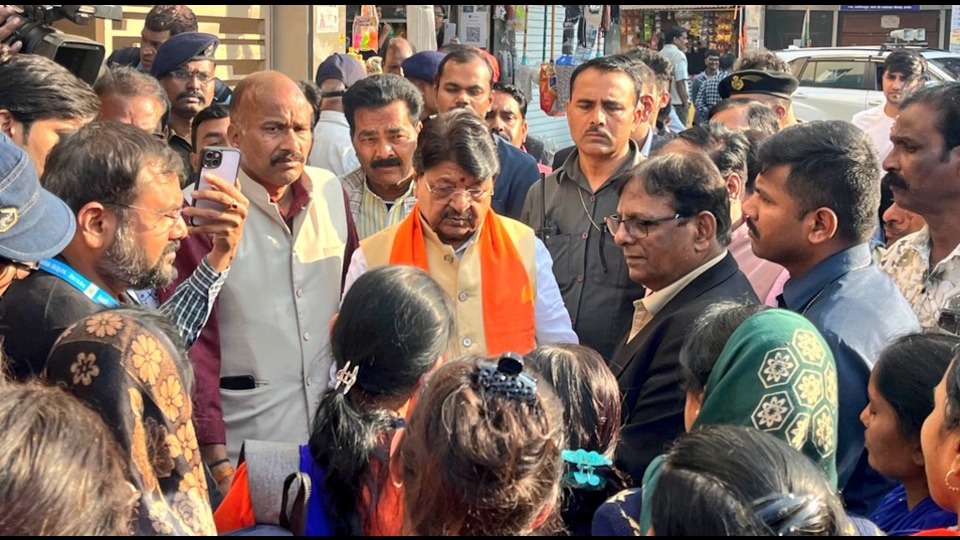
Chief medical and health officer Madhav Prasad Hasani said 2,703 households were surveyed and around 12,000 people were examined after reports of contamination-related diarrhoea outbreak. “As of now, three deaths due to diarrhoea have been confirmed. The cause of death of others is yet to be ascertained. The patients said they suffered from vomiting, diarrhoea, and dehydration after drinking contaminated water,” he said.
Officials said Nandlal, 70, Urmila Yadav, 60, and Tara Kori, 65, died due to diarrhoea. The probe was going on to determine the causes of deaths of Gomti Rawat, 50, Uma Kori, 31, Santosh Bigolia, Manjula, 74, and Seema Prajapat, 50. At least 111 people were hospitalised, while 1,146 people reported mild symptoms.
Hasani said a leak in the main water line beneath a toilet is suspected to have contaminated the water.
Mayor Pushyamitra Bhargava said action has been taken against those officers. Zonal officer Shaligram Shitole and in charge assistant engineer Yogesh Joshi were suspended. In charge deputy engineer Shubham Srivastava was sacked.
Bureaucrat Navjeevan Panwar will lead a three-member inquiry committee constituted to look into the matter. The committee will also include superintending engineer Pradeep Nigam and Maharaja Yashwantrao Hospital associate professor Dr Shailesh Rai.
Residents blamed the municipal corporation’s inaction for the eight deaths. Jitendra Prajapat said his sister, Seema, fell ill on Monday after having contaminated water. “She was rushed to a hospital, where she died. My sister’s family is affected, but the administration is yet to confirm her death due to diarrhoea.” Prajapat said foul smell in drinking water was common in the area.
Another resident, Manish Pawar, said several complaints were made over clogging and the supply of contaminated water. “But no action was taken. The municipal corporation officers are responsible for deaths.”
Urban development minister Kailash Vijayvargiya said over 70 water samples have been collected. “This is a serious matter as the water got contaminated due to leakage. The repair work is going on, and water has been provided through tanks. The municipal corporation, district administration, and health department teams are holding camps to control the situation,” he said.
Chief minister Mohan Yadav has announced a compensation of ₹2 lakh each for the families of those who have died.
Kamal Baghela, the local councillor, said residents complained that the water supplied on December 25 had an unusual smell, and people may have fallen ill after consuming it. “The problems were going on for the past few weeks, but aggravated on December 25.”