
 E-Paper



Strengthening compliance on red notices a key focus area: Interpol secretary general
We are strengthening compliance and review mechanism of red notices against fugitives, Interpol secretary general Jurgen stock said in an interview


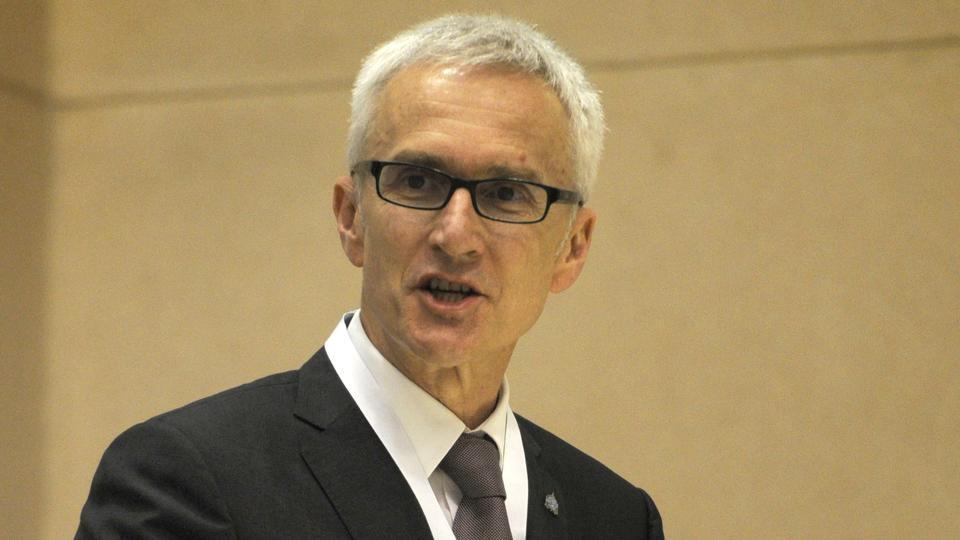
Interpol is strengthening its compliance and review mechanism of red notices against fugitives, Jurgen Stock, secretary general of the international police agency, said in an exclusive interview, as he asserted that the system is “productive” and controversial cases such as that of diamantaire Mehul Choksi or Islamic televangelist Zakir Naik form a minuscule minority.
Read here: Amit Shah bats for ‘unified front’ to deal with some global forces that use tech for social harm
“We have been strengthening the compliance mechanism in the general secretariat. We are also including the CCF (Commission for the Control of Interpol’s Files), which is a kind of appeals and data protection body that is part of the Interpol system, but independent within the secretariat,” Stock said on Friday (August 11).
There is no problem in 95-96% of Interpol cases, and the agency is “helping everyday make significant arrests all around the world”, he said. “We have a very small number (3% or 4%) of cases where indeed sometimes member countries are not happy with the decision we are taking,” Stock said in response to concerns of Indian agencies regarding fugitive offenders like Choksi or Naik getting relief in the Interpol.
Choksi’s red notice was cancelled earlier this year, while attempts to issue a red notice against Naik have failed. Stock was in Kolkata to attend the G20 anti-corruption ministerial meet. A red notice is a request by Interpol to law enforcement worldwide to locate and provisionally arrest a person pending extradition, surrender or similar legal action.
Considering the size of India and the evolving nature of crimes, Stock said Interpol is looking to increase its presence in this region and is holding discussions on it. “We are in discussions here also in the region as to how Interpol can strengthen its support,” he said, adding that the global policing body needs financial support from member countries.
Besides, Stock said discussions are on for taking lines of information to front line police officers beyond the national central bureaus (NCBs). The Central Bureau of Investigation (CBI) is the NCB of Interpol in India and any request to and from Interpol goes through it.
“In our global early warning system, in which you can check all the international travelers who are coming in international airports, seaports against Interpol’s data for stolen and lost travel documents to identify the movement of foreign terrorist fighter or other dangerous criminals. We are currently discussing with all our member countries to bring information beyond the NCBs, coordinated by the NCBs so there isn’t a chaotic situation. We have plenty of projects around the world, including India where this extension of our services to frontline policing beyond the NCB is already going on,” he said.
Asked if Interpol has identified any organised groups, particularly behind repeated cyberattacks on critical infrastructure in India, Stock said that “intensive collaboration” is going between Indian agencies, Interpol and other members in this regard.
There is a new model of organised crime, where mafia groups, even those run by families, “are renting the tools from the underground economy to conduct a distributed denial of service attack, or a ransomware attack”, he said.
Elaborating further on underground economy, Stock said it is a kind of yellow pages for crimes as service. “From the whole spectrum from programming intrusion to money mules and laundering, all can be rented by these mafia type groups for very little money,” he said.
Read here: Interpol issues red corner notices against 2 fugitive gangsters based in UK, UAE
He was pitching to the Indian leadership and other members to invite Interpol as a kind of operational arm of G20 for policing, helping operationalize policy work that has been done besides funding for its e-mutual legal assistance and e-extradition projects, Stock said. It will help in faster dissemination of information through Interpol’s tools, he added.
On better cooperation with India in the recent times – over 40 fugitives have been brought to India with the help of Interpol in last two years – Stock said India has experienced officers. India is also represented in the Interpol’s executive committee by Indian Police Service officer Praveen Sinha, former CBI special director currently in the office of National Security Advisor Ajit Doval.


