
 E-Paper



Amit Shah bats for ‘unified front’ to deal with some global forces that use tech for social harm
Shah underlined threats emanating from cyber criminals using the darknet, metaverse, deepfakes, ransomware and toolkit-based misinformation campaigns


Union home minister Amit Shah said on Thursday pushed for “uniformity” in global laws and a “united front” to deal with cyber threats, adding that some antisocial elements and global forces are using technology to cause economic and social harm to citizens and governments.
Also read: ‘Veiled threat from HM?’ Opposition leaders after Amit Shah's ‘dynasts’ jab
The home minister underlined threats emanating from cyber criminals using the darknet, metaverse, deepfakes, ransomware and toolkit-based misinformation campaigns, and who target critical information and financial systems. He asked members of the G20 to have a “dedicated common channel” to prevent financial irregularities through the use of digital currencies.
“Our vision for the internet should neither compromise the security of the nation by allowing excessive freedom nor should it adopt an isolationist structure like digital firewalls,” he said, explaining the need for a balanced vision for the internet.
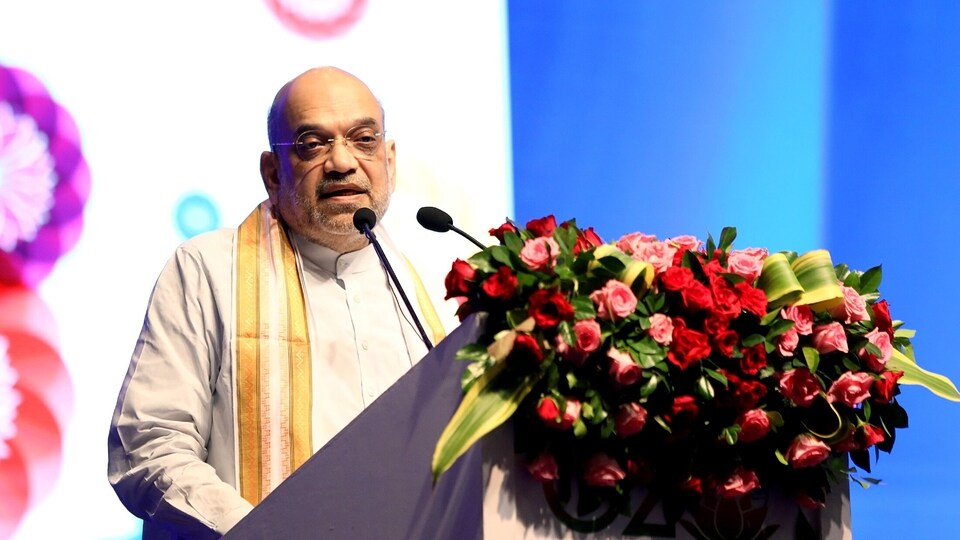
“Today, we live in a big global digital village. Although technology is a positive development in bringing human beings, communities, and countries closer, there are also some antisocial elements and global forces that are using technology to cause economic and social harm to citizens and governments,” Shah said while inaugurating the two-day “G20 Conference on Crime and Security in the Age of NFTs, Artificial Intelligence and Metaverse“ in Gurugram.
Over 900 participants from G20 countries, nine special invitee countries, international bodies such as Interpol, and technology leaders and domain experts from India and across the world are attending the conference.
While the home minister did not name any country, there have been instances of cyberattacks by China-backed hackers on India’s key establishments in the recent past, including the hacking of All India Institute of Medical Sciences servers last year.
Asserting that the metaverse may create new opportunities for terrorist organisations, primarily for propaganda, recruitment, and training, Shah said, “This will make it easier for terrorist organisations to select and target vulnerable people and prepare material according to their vulnerabilities.”
“Cybercriminals are perpetrating incidents ranging from ransomware attacks, sale of critical personal data, online harassment, and child abuse to fake news and misinformation campaigns with ‘toolkits’. At the same time, there is also a growing tendency to strategically target critical information and financial systems. Such activities are a matter of national concern, as their activities have a direct impact on national security, law and order, and the economy. If such crimes and criminals have to be stopped, then we have to think and also act by rising above the conventional geographic boundaries,” Shah said.
The home minister noted that terrorists are leveraging technology, which is becoming a challenge for law enforcement agencies. “The transformation of our security challenges from ‘dynamite to metaverse’ and ‘hawala to crypto currency’ is a matter of concern for countries across the world. Terrorists are finding new ways to perpetrate violence, radicalise youth and raise financial resources. New methods in the form of virtual assets are being used by terrorists for financial transactions”.
Cryptocurrencies are not recognised as payment instruments in India and the government is yet to take a call on whether to restrict the conversion of rupees to any of the cryptocurrencies -- which effectively amounts to a complete ban. It does, however, apply a 30% tax on inward conversions, and has urged at international forum a concerted decision on how these currencies can be used.
“And all of us, together, have to devise a common strategy against it,” Shah added.
Emphasizing that no single country or organisation can combat cyber threats alone, Shah said that “it requires a united front”.
“We aim to create a ‘cyber success world’ and not a ‘cyber failure world’. Together, we can harness the potential of these technologies while ensuring a ‘secure and prosperous digital future for all. Let us seize this opportunity to collaborate, share our ideas and forge international partnerships,” he said.
Commenting on the rise in cybercrime involving digital currency, Shah said the nature of the cyber threat landscape has spread across national boundaries, necessitating cooperation and sharing of information by nations, organizations and stakeholders to effectively combat cybercrimes. “Time has come to build a ‘transparent and accountable AI and emerging technologies governance framework’ to ensure responsible use. There is a need for a ‘dedicated common channel’ among nations to prevent such financial irregularities”.
Citing World Bank data, the home minister said that cyber attacks could have caused losses to the tune of $5.2 trillion to the world from 2019-2023.
“There must be efforts to bring some uniformity in the laws of all countries made to counter digital crimes. Keeping in mind the borderless nature of cybercrimes, we must put in place a response mechanism under different laws of the countries. Global cooperation in this area will help in harmonising cyber security benchmarks, best practices, and regulations,” Shah said.
Also read: On Amit Shah's 'who is ED chief not important' remark, Kapil Sibal asks: 'Then why the extension?’
The need of the hour, he stated, is to share real-time cyber threat intelligence among member countries with active support from industry and academia to secure the nation’s critical infrastructure.
“There should be greater coordination among cyber agencies of all countries in reporting and action on cyber incidents. Cooperation in the investigation of cross-border cyber crimes through joint efforts to build a ‘peaceful, secure, deterrent and open’ information and communication technology environment is extremely necessary today,” he added.


