E-Paper



Interview: Skeptical about US waiver for Russian oil purchases, says Norway's deputy FM
Kravik said in an interview with HT that most global problems cannot be discussed or resolved without participation of India


New Delhi: Norway is skeptical about a US sanctions waiver that permits India to continue buying oil from Russia amid the intensifying conflict in West Asia, Norwegian deputy foreign minister Andreas Motzfeldt Kravik has said, adding the conflict should be settled through diplomatic means as it is having “dire effects” on regional security and trade flows,
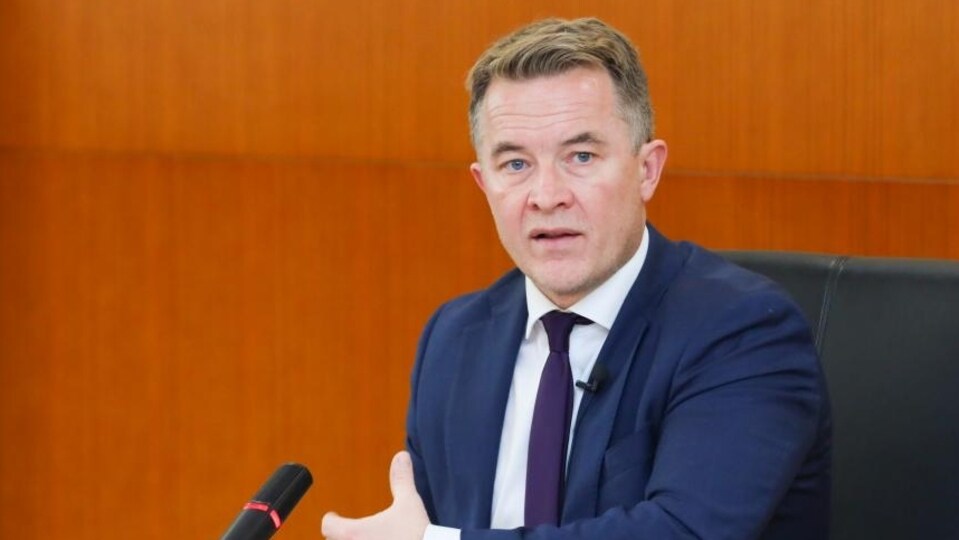
Kravik said in an interview with HT that most global problems cannot be discussed or resolved without participation of India, which has become more important as a trade and investment destination following the free trade agreement signed by the The European Free Trade Association (EFTA), which brings together Norway, Iceland, Liechtenstein and Switzerland.
Q. The Iran-US war has come very close to India with the sinking of an Iranian ship. How does Europe and Norway view these developments?
A: The last thing the Middle East needed now is another war and this is a war between the US, the world’s most formidable military power, and Israel, a very robust military power, and Iran, also a powerhouse of military capabilities. This is extremely unfortunate. Our sympathies predominantly lie with the Iranian people. They have suffered for too long under a brutal repressive authoritarian regime. Whatever comes out of this war, we hope that finally they can be treated with dignity and have their human rights respected and that Iran can at least be put on a path towards democracy.
But we've also flagged concerns with regards to the war. We have said we don't think the war was initiated by the US and Israel in a way that comports with the UN Charter. We have stated the way in which Iran has responded by going after third countries in an indiscriminate fashion, is extremely problematic from the standpoint of international law and should be condemned. On top of that, you have all these global ramifications in terms of upsetting markets, slowing down growth, energy prices going up. There are only downsides to this. We're hoping we can reach a diplomatic solution at the earliest because this is having dire effects on so many topics.
Q. An issue being debated is the killing of a head of state without war being declared and some believe this further weakens the global rules-based order. Your thoughts?
A: Obviously, there are additional concerns that the war is spreading, and now with this [Iranian] vessel being hit – this just showcases how these things can get out of control. So we need to find a way back to the negotiation table. There's a reason why this is front and centre in the UN Charter – that states have an obligation to try to resolve these disputes in a peaceful manner. This is something we think should be taken very seriously by both sides.
Q. How does Norway view the US providing a sanctions waiver to allow India to buy Russian oil, especially in the context of the war in Ukraine?
A: Our position on Russia and its war of aggression against Ukraine is very clear and unequivocal. We have condemned that to the fullest extent possible. It's a blatant violation of the UN Charter, it has undermined the principle of territorial integrity and sovereignty. This has global ramifications but it has consequences for Europe. We have been very adamant in supporting Ukraine. We are one of the top donors in terms of military, economic and political support and we will keep supporting Ukraine to the fullest extent possible.
We have tried to the best of our ability to sanction Russia. We think we need to do everything we can in order to undermine the Russian economy as long as the economy is being directed at undermining Ukrainian sovereignty. We would be skeptical towards any development which allows Russia to sell its products and to prosper and grow its economy, as we think this gives Russia more capabilities and abilities to fight and undermine Ukrainian sovereignty and territorial integrity.
Q. There are many expectations from the upcoming India-Nordic Summit. What will be the focus areas and the big takeaways?
A: The India-Nordic Summit will be an enormous opportunity for us to discuss issues of mutual interest. We will be discussing commercial opportunities, how we can bring our enterprises together for finding solutions to global problems, producing new technology, exporting in ways that benefit our respective populations.
Obviously, given India's position in the global community, this will be an opportunity to discuss salient low geopolitical issues such as the war between the US and Israel, if that is still ongoing when this meeting occurs, but other topics such as Israel, Palestine, Ukraine, Russia. We don't think that any problem at this point can be discussed and decided or resolved without the participation of India.
We would want to discuss reform of the WTO, UN reform is another important topic…There will be important takeaways and the outcomes of this meeting will give direction to our relationship going forward.
India-EFTA trade deal
Q. Now that the India-EFTA trade deal is done, what will be the focus areas for the bilateral relationship in 2026?
A: We are [discussing] various topics, one of them being economic areas. We relatively recently entered this free trade agreement with India that gives important opportunities for our commercial community in Norway. I'm here to advertise various Norwegian companies, what they can bring to the table and to listen to perspectives from their counterparts. The fact that we have been able to enter into such a framework is important for both countries as it gives predictability, and consolidates and advances our relationship.
Q. In terms of the FTA, are there specific areas that you would like to get a quick start on for Norway?
A: There are many topics – technology and industries related to the climate crisis and green technology is obviously something which is important. We still are involved in extractive industries, but we recognise that we have to transform our economy and we're in the process of doing that. In order for that to go forward, we want to partner with Indian stakeholders who have the necessary expertise and know-how to enable us to be even more effective as we transform to a greener economy.
We're looking at the blue economy. We are both seafaring nations and there are lots of opportunities within the fisheries sector, for instance, fisheries management. Salmon is one of the things that is being exported without tariffs now from Norway in the context of this FTA.
Q. A component of the India-EFTA FTA is investments and Norway is a significant investor with its sovereign fund. Is there anything you're looking at in India?
A: The sovereign wealth fund is not under my purview. Those are decisions taken by those responsible for the fund’s investments. It's clear that given the size of the Indian market, given the fact that India is growing by 7% to 8 % per year, this provides lots of investment opportunities…We have seen an uptick in private investments but also investments within the context of the sovereign wealth fund. We want to help facilitate that but at the end of the day, these are decisions made by entities which I'm not responsible for.