
 E-Paper



Inundated, Covid-19 helplines crumble
Data from helplines across Delhi, Mumbai, Lucknow and Chennai, shows that the numbers have increased by almost 400% to 1,000% in the past week, even though the number of volunteers has stayed the same.

 Prefer HTon Google


On April 12, Waheb Hussaini’s 60-year-old mother tested positive for Covid-19. Since then, the resident of Lucknow’s Vikas Nagar has been calling the central helpline to have his mother admitted in a hospital. Till Saturday evening, he was still waiting for admission.
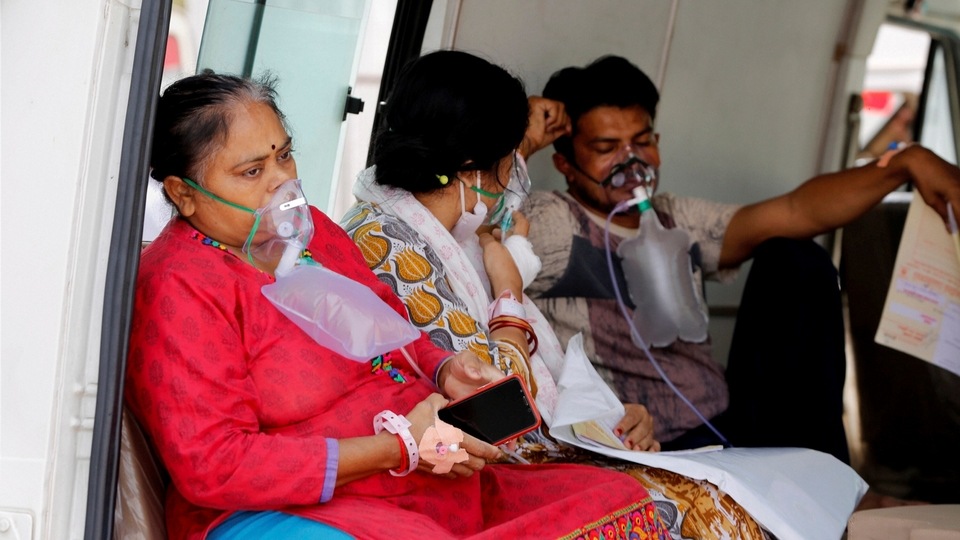
Lucknow’s helpline is different from those in other cities because it is part of a command centre that decides who gets admitted and who doesn’t. But even in cities where hospital admissions haven’t been centralised, helplines, like all other parts of the public health infrastructure, have been overwhelmed.
That shouldn’t surprise anyone given the sheer volume of cases. Delhi saw 24,375 cases on Saturday; Mumbai, 8,811, and Bengaluru, 11,404. Everything is in short supply: ambulances, remdesivir, oxygen, and ICU beds. And the calls keep coming.
“It is a difficult situation and we are trying our best,” said the official in-charge of call centres in Mumbai.
Dr Rajinder Rai, in-charge, of home isolation monitoring through call centre at Haryana’s Ambala, said there is so much distress that “people are crying over phone. We are trying our best, but the distress calls are very high.”
The result is also long waiting times. “Phones are ringing continuously and eight to 10 people are on wait all the time,” said a volunteer at Delhi Covid helpline, who did not wished to be named. Anuradha Singh, a call centre volunteer in Lucknow, said every call is being attended and answered. “On an average, every person on duty in the helpline is attending around 300 calls a day,” said a volunteer at Prayagraj call centre, Madhu Singh, adding that 20 volunteers are working around the clock. Singh said most operators are working 13-14 hour shifts. According to Delhi government data, till March-end, the 24x7 control room was receiving a maximum of 500 calls a day, a number that has since doubled.
Also Read | Every 4th sample in Delhi Covid +ve, Capital adds 24,375 new cases in 24 hours
Data from helplines across Delhi, Mumbai, Lucknow and Chennai, shows that the numbers have increased by almost 400% to 1,000 % in the past week, even though the number of volunteers has stayed the same.
Most users also have other issues with the helplines, whose volunteers, they accept, are doing their best.
Melvin Natesan, a resident of Bengaluru’s HAL, made several calls to get a bed for his aunt and even after the bed was allocated, 30km away from patient’s home, it was not clear whether it was oxygenated. “What is frustrating is that those taking the calls didn’t even ask what her condition was, from what I understood, they were looking at the portal and allotting the hospital. There was no time or option to seek clarifications,” he said.
Khyati Chheda, 32, a resident from Mumbai’s Bandra was one of the lucky few who managed to find a hospital bed through a helpline although it took him 36 hours. “I am sure authorities are doing their best, but it is still not enough ,” he said.
Different cities have sought to address challenges differently.
In Mumbai, for instance, the administration has decided to dedicate separate call centres for each zone in the city. In Bengaluru, the Bruhat Bengaluru Mahanagara Palike decided to create an integrated helpline, by pooling call operators from the Bangalore Electricity Supply Company Limited (Bescom) to attend to a flurry of calls.
Malini Aisola, a public health expert, said, “...The situation is critical at night when many patients face dip in oxygen levels. We haven’t learnt lessons from the past.”


