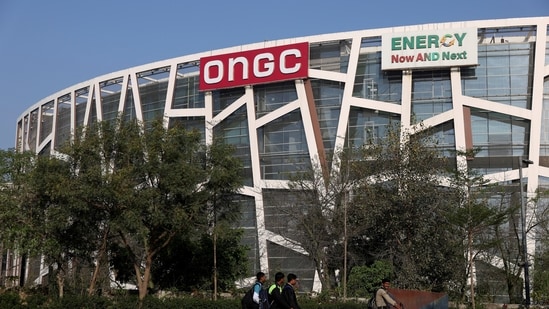
State-run Oil and Natural Gas Corp. Ltd, or ONGC, is planning to create India’s first strategic natural gas reserve near its gas-producing assets in western India, according to two people close to the matter.
The development comes after the Indian government’s plan to store natural gas in underground salt caverns failed to take off because of high capital expenditure and technical complexities.
A strategic natural gas reserve can cushion the impact of crises such as the West Asia war, which has disrupted global energy supplies, exposing India’s vulnerability as the country imports about 55% of its natural gas requirements, valued at around $15 billion annually.
The plan also follows the company’s recent announcement to build a 1.75 million-tonne (mt) strategic crude oil storage facility. New Delhi has strategic petroleum reserves of 5.2 mt.
“The plan is to initially come up with a pilot. The consideration right now is to do a feasibility survey and develop a reserve or storage in a depleted gas well, as that would be ready to handle the pressure of natural gas and the geology is already meant for it,” said one of the two persons cited above.
Options for natural gas storage
Apart from salt caverns, aquifers are another option for natural gas storage. A deep, water-bearing, porous rock formation can be converted into an artificial underground gas reservoir by injecting gas at high pressure to push the water out, trapping the gas safely beneath an impermeable cap rock.
{{/usCountry}}Apart from salt caverns, aquifers are another option for natural gas storage. A deep, water-bearing, porous rock formation can be converted into an artificial underground gas reservoir by injecting gas at high pressure to push the water out, trapping the gas safely beneath an impermeable cap rock.
{{/usCountry}}Mint reported on 4 March that the Petroleum and Natural Gas Regulatory Board (PNGRB) is considering proposing to the government to set up overground storage tanks near the liquefied natural gas (LNG) terminals in the country.
However, when such strategic reserves are planned, a portion should also be reserved for commercial use, said Rajesh Mediratta, managing director and chief executive of Indian Gas Exchange.
“Suppose the reserve is for 5 BCM (billion cubic metres). About 2 BCM can be used under a commercial model that can be easily traded and refilled, and the rest should be kept for strategic use only in an emergency situation. This will develop a functional revenue model as witnessed in Europe,” he said.
He added that the first preference for natural gas storage should always be depleted fields, given that the required infrastructure is already in place and capex is much lower than for salt caverns.
Queries emailed to ONGC and the Union petroleum ministry remained unanswered.
“It is the need of the hour for India to develop such strategic gas storages. Several countries including China, US, Germany and Europe as a whole have set precedents in the case of such long-term storage infrastructure,” said Manas Majumdar, partner and leader, oil and gas at PwC India.
Although India has diversified its oil imports over the past few years, LNG imports cannot be diversified as aggressively, given the limited large sources available globally. Currently, the US and Angola are among the key suppliers, alongside Qatar and the UAE, which have been impacted by the war and conflict in the Strait of Hormuz.
According to data from S&P Global Commodities at Sea, there were a total of 16 transits through the Strait of Hormuz on 20 July, down from the pre-war levels of over 130 vessels.