
 E-Paper



Isro to launch navigation satellite NVS-01 on May 29
This will be a return flight mission for the GSLV launch vehicle, which will carry the next generation NavIC satellite, said an Isro official

 Prefer HTon Google


The Indian Space Research Organisation (Isro) is planning to launch NVS-01, a navigation satellite on-board the Geosynchronous Launch Vehicle or GSLV Mk-II, on May 29, a senior official said on Saturday.
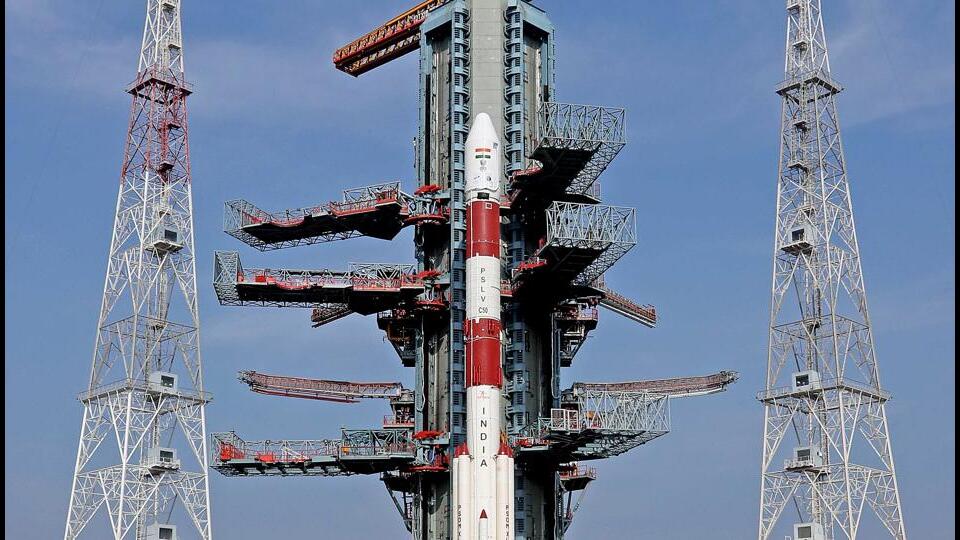
“The launch of NVS-01 is scheduled for around May 29. This will be a return flight mission for the GSLV launch vehicle, which will carry the next generation NavIC satellite. This satellite will replace the IRNSS-1G satellite launched in 2016,” a senior Isro official said, seeking anonymity.
Also read | ISRO's missions to moon, sun likely to take place in July
IRNSS-1G was the last navigation satellite of the seven satellites constituting the IRNSS space segment. Its predecessors – IRNSS-1A, 1B, 1C, 1D, 1E and 1F – were launched by PSLV-C22, PSLV-C24, PSLV-C26, PSLV-C27, PSLV-C31 and PSLV-C32 in July 2013, April 2014, October 2014, March 2015, January 2016 and March 2016, respectively.
To meet the positioning, navigation and timing requirements of the nation, Isro has established a regional navigation satellite system called Navigation with Indian Constellation (NavIC). NavIC was earlier known as the Indian Regional Navigation Satellite System (IRNSS).
NavIC was designed with a constellation of seven satellites and a network of ground stations operating 24x7. Three satellites of the constellation are placed in the geostationary orbit and four satellites in the inclined geosynchronous orbit. The ground network consists of a control centre, precise timing facility, range and integrity monitoring stations, two-way ranging stations, etc.
NavIC offers two services – standard position service (SPS) for civilian users and restricted service (RS) for strategic users. These two services are provided in both L5 (1,176.45 MHz) and S band (2,498.028 MHz). The NavIC coverage area includes India and a region up to 1,500km beyond the Indian boundary. NavIC signals are designed to provide user position accuracy better than 20m and timing accuracy better than 50ns.
The NVS-01 satellite is to replace the IRNSS-1G satellite that was launched in 2016 and has a mission life of 12 years. Among the still functioning satellites in the constellation, the earliest to be launched was IRNSS-1B in 2014 with a mission life of 10 years.


