
 E-Paper



Jallikattu kicks off in Tamil Nadu; Sri Lanka hosts bull taming sport for 1st time
Jallikattu, the traditional bull-taming sport, kicked off the year in Tamil Nadu with an event in Thachankurichi village featuring 500 bulls and heavy security.

 Prefer HTon Google


The fervour of Jallikattu, the traditional bull-taming sport, kicked off the year with a grand spectacle in the Pudukkottai district of Tamil Nadu on Saturday morning. The event in Thachankurichi village saw the participation of 500 bulls, captivating hundreds of spectators who gathered to witness the adrenaline-pumping spectacle. Visuals from the event showed participants trying to tame the bull amid heavy security.
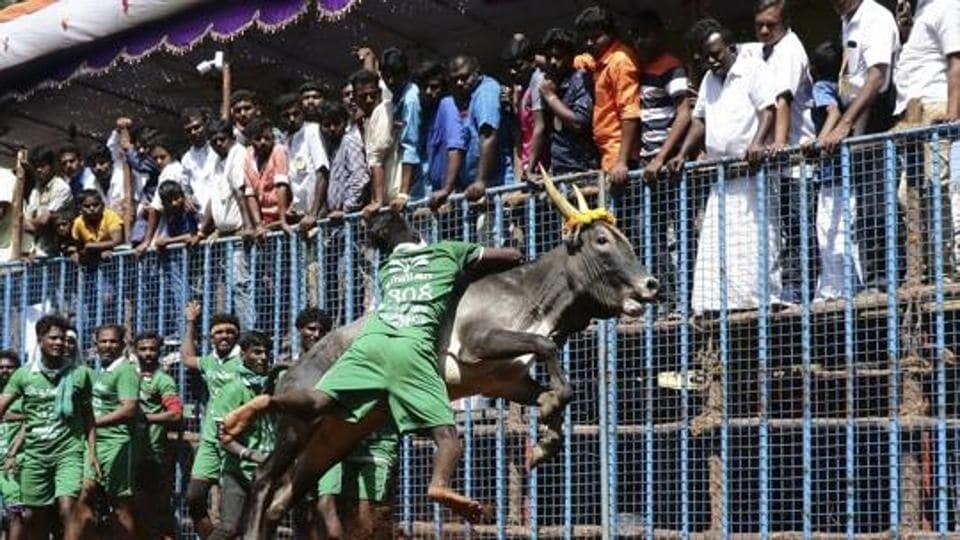
The Thachankurichi event marked the beginning of a series of Jallikattu competitions scheduled this month in various parts of the state.
Jallikattu is an age-old event celebrated mostly in the state of Tamil Nadu as part of Pongal celebrations.
But this year, Sri Lanka is hosting its first-ever Jallikattu event in Trincomalee. The event began at 10 am in the Sampur area of Trincomalee, featuring more than 200 bulls and over 100 skilled bull tamers.
Sri Lanka's Eastern Province Governor, Senthil Thonadaman, who hails from Tamil Nadu's Sivagangai district, has taken the lead in organizing the landmark event. With personal roots in the cultural milieu of Jallikattu, Governor Thonadaman is keen on showcasing the shared heritage between Tamil Nadu and Sri Lanka through this cross-border celebration.
“We will be conducting Jallikattu and Rekla races, silambam fights, boat races, beach kabadi. We have a lot of event connected to Pongal which are happening here. We are proud that the cultural events are restored with the Tamil community,” he told ANI.
During Jallikattu, ferocious bulls are released into a crowd, and participants attempt to tame them by grabbing their humps and horns. The sport has been a symbol of valour, courage, and rural identity, forming an integral part of Tamil Nadu's cultural heritage.
Objections to Jallikattu
However, in recent years, Jallikattu has become a subject of controversy, particularly concerning concerns related to animal welfare. Critics argue that the sport inflicts unnecessary harm and stress on the bulls, leading to injuries and even fatalities. Animal rights activists and organizations have been advocating for the ban of Jallikattu, citing ethical concerns and the need to protect the well-being of the animals involved.
In 2014, the Supreme Court of India imposed a ban on Jallikattu, citing animal welfare issues. However, the decision faced widespread protests and opposition, with many arguing that the ban was an infringement on their cultural traditions.
In 2017, the Tamil Nadu government passed an ordinance to allow Jallikattu. The government argued that Jallikattu was an essential part of the state's cultural heritage and introduced regulations to ensure the safety of both participants and bulls.
The Supreme Court, in May 2023, upheld the Tamil Nadu government's law allowing the bull-taming sport 'Jallikattu' in the State.
A five-judge Constitution bench of Justices KM Joseph, Ajay Rastogi, Aniruddha Bose, Hrishikesh Roy and CT Ravikumar was hearing a batch of petitions challenging Tamil Nadu and Maharashtra governments' laws allowing the bull-taming sport 'Jallikattu' and bullock cart races.


