
 E-Paper



Karnataka polls on May 10, results on May 13: ECI
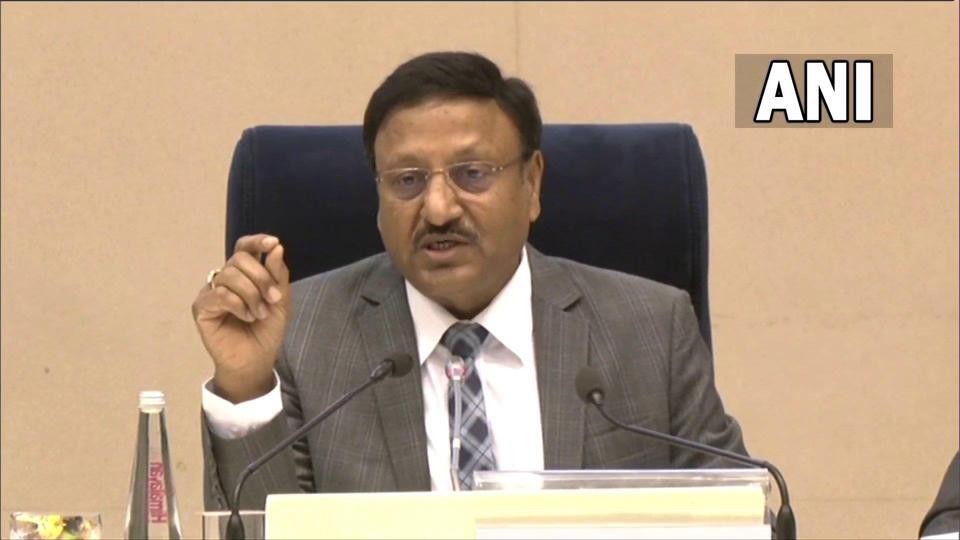
Chief election commissioner Rajiv Kumar said the poll watchdog had laid special emphasis on new-age voters, women, transgender people, persons with disabilities, and vulnerable tribal groups

 Prefer HTon Google


Karnataka will go to the polls on May 10 and the results will be declared three days later, the Election Commission of India (ECI) announced on Wednesday setting the stage for the second phase of a packed assembly election season in 2023.
Five more states are due to go to the polls this year. Assembly elections are also likely to be held in Jammu & Kashmir for the first time since the region was stripped of its semi-autonomous status in 2019.
The series of polls are expected to set the tone for the 2024 national polls. Karnataka sends 28 members to Lok Sabha, accounting for 5.36% of the strength of Parliament’s lower House.
Chief election commissioner Rajiv Kumar said the poll watchdog had laid special emphasis on new-age voters, women, transgender people, persons with disabilities, and vulnerable tribal groups as he announced the Karnataka poll schedule. “We are making it clear that there will be zero tolerance for use of money power,” he said as election commissioners Anup Chandra Pandey and Arun Goel flanked him.
April 20 is the last date for filing the nominations for the polls for which the ECI has set up over 58,000 polling stations. Women will manage 1,300 of the booths.
Over 52 million people, including more than 25 million women, can vote in Karnataka. Over 9,17,000 are first-time voters and over 16,000 are centenarians. The ECI has identified 81 expenditure-sensitive constituencies, up from 61 in 2018. As many as 2,400 surveillance teams are being deployed there.
In 2018, the assembly elections in Karnataka were held on May 12 and the results were declared three days later.
The Bharatiya Janata Party (BJP) is hoping to retain power in the state. It emerged as the single-largest party with 104 seats in 2018 but fell nine short of a simple majority in the 224-member assembly, where one member is nominated.
The Congress, which won 78 seats and two more later in by-polls, and Janata Dal (Secular) or JD (S) with 37 seats allied to keep the BJP out of power.
The alliance government fell after it lost the trust vote in the assembly in June 2020. A string of resignations by lawmakers of the Congress and JD (S) reduced the 15-month-old coalition between two erstwhile rivals to a minority and paved the return of the BJP to power.
Prime Minister Narendra Modi urged the people of Karnataka to ensure the BJP gets a full majority in the assembly as he addressed at a rally last week to mark the culmination of the party’s statewide “Vijay Sankalpa Yatra” ahead of the polls.
The yatra began earlier this month at four separate places and covered all 224 assembly segments amid factionalism within the BJP. Former chief minister B S Yediyurappa was forced to call off the yatra in Chikkamagaluru following protests.
BJP national general secretary C T Ravi’s comments that the candidates for the assembly polls will not be nominated in anyone’s “kitchen” in response to Yediyurappa’s statement that his son would contest highlighted the rumblings of discontent within the party.
Chief minister Basavaraj Bommai has been named as BJP’s campaign committee chief while his predecessor, Yediyurappa, too, has been roped in for electioneering two years after he was removed from the state’s top post.
Ahead of the polls, Karnataka has also been in the news over polarising issues such as a ban on hijab and corruption scandals.
The Congress, which too faces factionalism, on Saturday announced its first list of candidates for the Karnataka assembly elections. Former chief minister Siddaramaiah has been fielded from Varuna in Mysuru and his rival and state Congress chief DK Shivakumar from Kanakapura.
The Aam Aadmi Party also released its first list of 80 candidates as the party has sought to make inroads into other states after forming the government in Punjab last year.
The BJP returned to power in Tripura and in alliance with regional parties in Nagaland and Meghalaya as the first phase of the 2023 state election season concluded in March.


