E-Paper



Kedarnath tragedy: HC directs Wadia Institute to find ways that can be used to find remains of victims
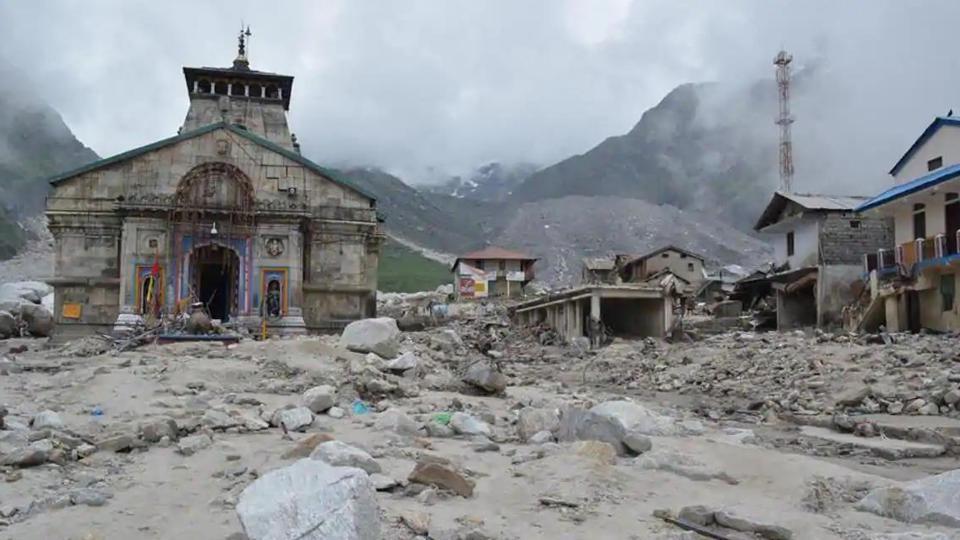
So far, 699 bodies/skeletons/remains have been retrieved from the Mandakini valley, where the Kedarnath shrine is located.

 Prefer HTon Google


Uttarakhand high court (HC) has directed the Dehradun-based Wadia Institute of Himalayan Geology to suggest scientific ways within a week that can be adopted to trace the 3,075 missing bodies of the 2013 Kedarnath flash flood victims, said Ajay Veer Pundir, the counsel of the petitioner, Ajay Gautam.
On Monday, the court gave these directions while hearing a public interest litigation (PIL) filed by the Delhi-based Gautam.
The PIL had sought directions from the HC to the authorities concerned to take expedient steps to search the missing people in the natural disaster, which had struck the hill state’s Rudraprayag district on June 16, 2013, in a bid to perform their last rites in accordance with the Hindu tradition.
So far, 699 bodies/skeletons/remains have been retrieved from the Mandakini valley, where the Kedarnath shrine is located.
The HC had directed the Uttarakhand government in November, 2016, to form special investigation teams (SITs) to trace and cremate the bodies of the victims, and consequently five SITs were set up in May, 2017.
Pundir said the HC had accepted their plea last year to approach Wadia Institute of Himalayan Geology as a respondent in the case in a bid to seek its technical support and suggestions in tracing 3,075 people, who are missing since June, 2013.
On September 4, 2019, the Uttarakhand government had filed an affidavit, stating that excavating the fragile Himalayan terrain to trace the bodies of 3,075 people could cause “irreparable damage to the ecology and the environment”.
It had stated: “There exists no technique or technology by which the presence of a human body can be detected under the pile of debris. It is technically not possible to pinpoint the location of human remains under the debris. The unearthing of human remains be left to the forces of nature and the state government is committed to DNA sampling and ceremonial cremation of these missing bodies.”
Gautam had suggested to the HC that a committee of experts should be constituted that could come up with some mechanism to recover the missing bodies and their last rites are performed as per the Hindu tradition.