E-Paper



Keen to work with India for stability in Indo-Pacific: US
The 33-page document released by the White House outlines the Trump administration’s desire to avoid military conflict with China, and refashion US ties with allies and partners like India

 Prefer HTon Google


Washington: The US intends to cooperate with India to ensure stability in the Indo-Pacific, keep the South China Sea open and secure the future of critical technologies, according to the Trump administration’s recently released National Security Strategy (NSS).
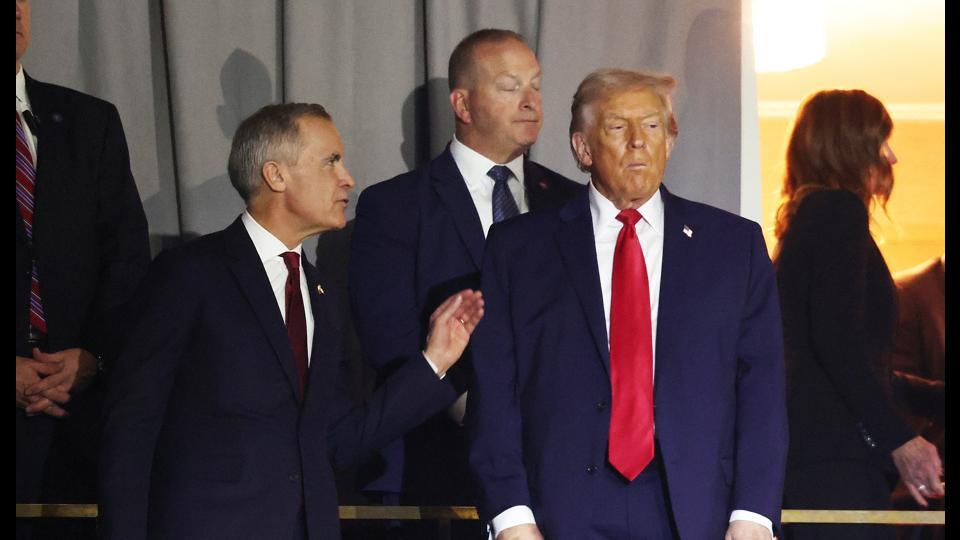
The 33-page document released on Friday by the White House outlines the Trump administration’s desire to avoid military conflict with China, refocus diplomatic and military resources on the Western Hemisphere and refashion US ties with allies and partners like India.
While the National Security Strategy makes clear that Washington will not seek global dominance, it commits America to prevent “any nation to become so dominant that it could threaten our interests”. To that end, the NSS proposes cooperating with allies and partners to shore up American economic strengths in its competition with China while also reinforcing military deterrence.
“We must continue to improve commercial (and other) relations with India to encourage New Delhi to contribute to Indo-Pacific security, including through continued quadrilateral cooperation with Australia, Japan, and the United States (”the Quad”),” the strategy document proposes.
The NSS also outlines concerns that the South China Sea — a vital lane for sea-based commerce — could be dominated by a “competitor” like China that could restrict flows of trade to the global economy. Building up stronger military deterrence to prevent this outcome is another key focus of the NSS, which will necessitate closer cooperation with India.
“This will require not just further investment in our military—especially naval—capabilities, but also strong cooperation with every nation that stands to suffer, from India to Japan and beyond, if this problem is not addressed,” the NSS reads.
Washington also envisions closer technology relations with New Delhi and other countries in Asia, Europe and Africa in an effort to maintain American dominance of critical technologies.
“America should similarly enlist our European and Asian allies and partners, including India, to cement and improve our joint positions in the Western Hemisphere and, with regard to critical minerals, in Africa,” the document adds.
By contrast, Pakistan features only once in the document in the context of President Trump once again claiming to have brokered a ceasefire agreement between New Delhi and Islamabad.
This is the first national security strategy, a document the administration is required by law to release, since the Republican president’s return to office in January. It is a stark break from the course set by President Joe Biden’s Democratic administration, which sought to reinvigorate alliances after many were rattled in Trump’s first term and to check a more assertive Russia.
The strategy reinforces, in sometimes chilly and bellicose terms, Trump’s “America First” philosophy, which favours non-intervention overseas, questions decades of strategic relationships and prioritises US interests.
The document is sure to roil longstanding US allies in Europe for its scathing critiques of their migration and free speech policies, suggesting they face the “prospect of civilisational erasure” and raising doubts about their long-term reliability as American partners.
The document accuses America’s longstanding European allies of facing not just domestic economic challenges but, according to the US, an existential crisis.
Economic stagnation in Europe “is eclipsed by the real and more stark prospect of civilisational erasure,” the strategy document said.