
 E-Paper



Keeping up with UP: Can Maya replay the social engineering card in 2027?
After comfortably winning the 2017 and 2022 assembly polls, the Yogi-Modi combine is aiming for a hat-trick

 Prefer HTon Google


For all political parties in Uttar Pradesh (UP), social engineering became the watchword after it catapulted Bahujan Samaj Party (BSP) leader Mayawati to power in 2007.
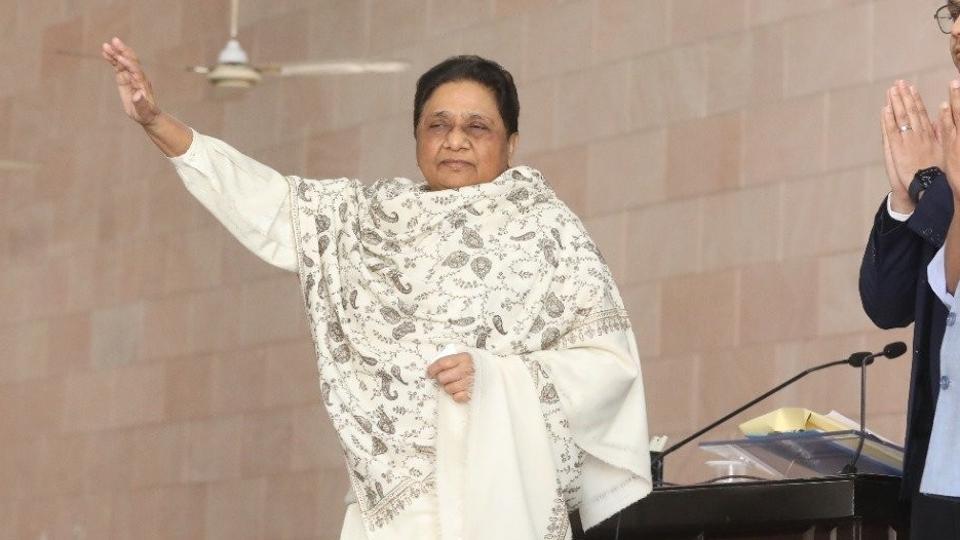
The formation of an independent government by a 23-year-old Dalit party had created history of sorts for two reasons – the BSP broke the 14-year-long coalition jinx, stabilising the politics in the state. Second, it punctured the ‘Mandal-Kamandal’ narrative dominating the political landscape of UP since 1989, forcing every political party to adopt her tested formula of building a caste coalition.
Her social engineering experiment was actually a replay of the Congress’s social coalition of Dalit-Muslim-Brahmins, which, after its collapse, had drifted in three different political directions - the BSP, Samajwadi Party (SP) and the BJP, respectively.
Ending her decade-long political hibernation, Mayawati is again trying to recreate the same social engineering as many in her party are expecting a hung house post 2027 assembly polls. Her past record shows she bargains best in hung situations.
However, UP’s political narrative has changed since 2007. While the BSP has been on a losing spree, the SP has gained strength and the BJP has retained its dominant position since 2014 Lok Sabha polls. After comfortably winning the 2017 and 2022 assembly polls, the Yogi-Modi combine is aiming for a hat-trick. Though the political arena appears crowded, the stage is being laid for a direct fight between the BJP and SP, along with their alliance partners.
Why Mayawati faces challenges in replaying social engineering in 2027?
In 2007, the voters of the state were tired of watching the vulgar display of power politics since the early 1990s. They saw eight chief ministers and three instances of President’s rule. The last coalition rule was a jumbo-sized government led by Mulayam Singh Yadav. Mayawati promised rule of law and assured representation to various castes as per their population. The formula clicked.
Second, the BSP at the time was a growing party. After promising participatory politics, Mayawati also deployed her two trusted lieutenants, Satish Chandra Mishra and Nasimuddin Siddiqui, to travel the length and breadth of the state to court and convince their respective castes.
Mishra is said to have travelled thousands of kilometres, organising Dalit-Brahmin ‘bhoj’. He dangled the carrot of power, convinced credentials of a pro-Dalit party, which had once raised inflammatory slogans against them and secured their support. He tried the same in 2017 but failed.
Once again, Mayawati is trying to encash the seemingly growing resentment among the Brahmins against the BJP. She has been giving the right signals but the overtures do not seem strong enough to move the Brahmins away from the BJP.
The Brahmins seem to be uncomfortable with the BJP for multiple reasons – the so-called pampering of Rajputs by the Yogi government, the perceived humiliation of Brahmins at Magh Mela, especially the incident of police dragging the disciple of Shankaracharya Avimukteshwaranand by his ‘choti’ (plait) and the UGC new equity regulations, stayed by the Supreme Court later.
Still, Brahmins are unlikely to ride a sinking ship and are unlikely to desert the BJP as the religiously inclined community has merged Brahminism with Hindutva. Both Modi and Yogi are brand ambassadors of Hindutva with their voters willing to ignore aberrations in politics or their governance.
Where the Muslims stand
Former BSP leader Nasimuddin Siddiqui had silently worked in bringing Muslims to the BSP fold. It was a tough task as their first choice was the SP and they were unsure about BSP’s political process to attain power. But when they saw a section of Brahmins moving to the BSP, the Muslims switched loyalty.
Siddiqui was later expelled from the BSP in 2017 for anti-party activities after a fallout with SC Mishra. He joined Congress in 2018 and has quit the grand old party also. Last week, Siddiqui joined SP and is expected to counter the much-talked about Asaduddin Owaisi (AIMIM) factor, especially in West UP.
Muslims are even more sceptical about the BSP today because of its much- discussed proximity to the BJP. Winning Muslims support will be an uphill task for Mayawati as the party is perceived as BJP’s ‘b team’. The community has also changed political strategy - earlier they used to support the strongest candidate against BJP or a Muslim candidate in constituencies. Now they jointly vote to defeat the BJP at the state level.
Losing her grip
Dalits are the foundation of Mayawati’s social engineering. However, the Dalits are disillusioned by her disinterest in elections or with their issues such as the Constitution and the UGC rules. They expect their firebrand leader to take to the streets against the current government but she is seen to be playing safe. The common perception is that Mayawati fears vindictive action by the government if she returned to her original firebrand style though SC Mishra claims there were no cases pending against her in any court.
During the days of hibernation, Mayawati also lost her monopoly over her core voters who are restless and open to testing other political options. Both the BJP and the SP have penetrated her vote bank through welfare schemes and due representation in politics respectively.
Elections are still a year away but Mayawati has started galvanising the party. Though she is promoting her nephew Akash Anand, whose posters were put alongside her, the fact remains Mayawati will have to shed her inertia as well image to make a comeback in 2027.


