
 E-Paper



Home isolation is key, hospitals ready: Delhi CM Kejriwal
Kejriwal pointed out how after May 17, when the lockdown was eased to allow restricted business and commercial activity, the city-state experienced a relatively low increase in hospital bed occupancy despite recording an increase of around 3,500 fresh cases in that period.

 Prefer HTon Google


New Delhi Delhi chief minister Arvind Kejriwal said on Monday that home isolation was effective for Covid-19 patients with mild or no symptoms and tried to ease concerns about the adequacy of Delhi’s hospital infrastructure to accommodate serious cases, as the city’s coronavirus disease tally rose past 14,000.
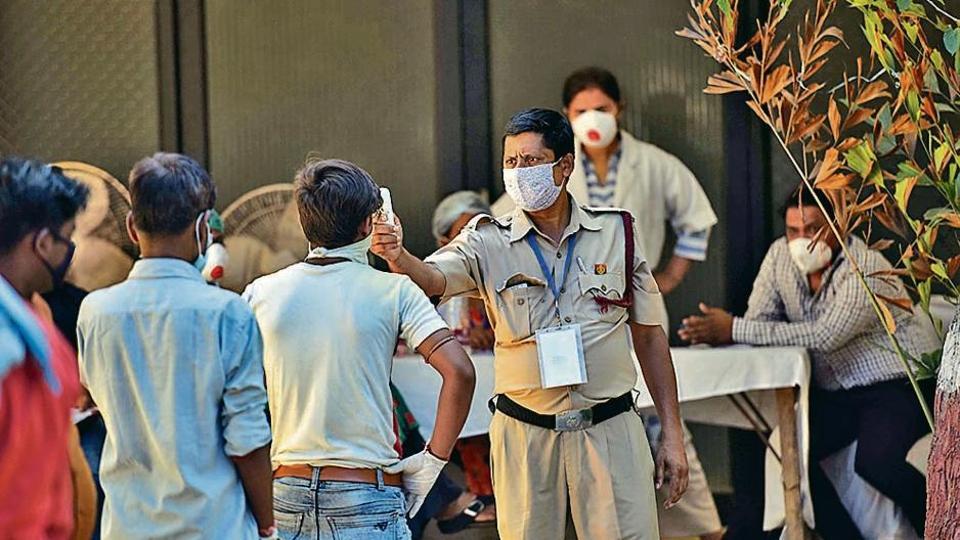
Kejriwal, who ordered the addition of 1,500 more Covid beds in Guru Teg Bahadur Hospital, pointed out how after May 17, when the lockdown was eased to allow restricted business and commercial activity, the city-state experienced a relatively low increase in hospital bed occupancy despite recording an increase of around 3,500 fresh cases in that period.
“Between May 17, when several relaxations were implemented, and yesterday (Sunday), Delhi witnessed an increase of around 3,500 fresh cases but, in the same period, around 2,500 people have recovered from the disease,” Kejriwal said in a press briefing by video link.
“Also, in the same period, the number of hospital bed occupancies rose by around 250 only,” Kejriwal said. “Till yesterday (Sunday), 3,314 individuals were in home isolation compared to around 2,000 individuals admitted in hospitals.”
His comments came a day after the Delhi government ordered private hospitals with 50 or more beds to set aside 20% of their bed strength for Covid-19 patients in a measure meant to prepare the city’s health care system for a surge in infections. The capital has 117 private hospitals that will be covered by this rule, which officials said was necessitated because dedicated privately run Covid hospitals were now running close to their capacity.
As of Monday, Delhi had reported 14,053 cases of Covid-19. Of these, with 7,006 active Covid-19 cases and 276 deaths, the chief minister stressed that the government was not running out of beds for treatment of serious patients. The Delhi government’s daily health bulletin recorded 15 new deaths on Monday.
“We have a total of 3,829 beds in our Covid-dedicated government hospitals. Out of this, 1,478 are occupied and 2,351 are vacant. We have 250 ventilators, of which only 11 are being used at the moment,” the CM said.
“At present, we have around 4,500 beds available, out of which around 2,500 are vacant. Once the 1,500 beds in GTB Hospital are ready, we will have more than 5,500 beds ready for Covid-19 treatment,” Kejriwal said.
Also, on Monday, senior government officials said, the Delhi government engaged Geospatial Delhi Limited (GSDL) — its own subsidiary — for the geospatial mapping of Covid-19 home isolation cases for better monitoring and municipal ward-specific trend analysis on a daily basis.
Geospatial mapping is a type of analysis that uses computer software that is capable of making maps, applying analytical methods to geographical datasets and processing spatial data.
“Effective steps to streamline the monitoring of each and every home quarantine case are being taken. Steps are being taken to ensure accurate allocation of cases to appropriate districts through GSDL mapping,” Delhi’s chief secretary Vijay Dev said.
GSD has so far been engaged in preparing a municipal ward-wise Covid-19 heat map of the Capital, but the ambit of the exercise has now been expanded to cover home quarantine cases separately. The maps, however, are not available in the public domain. GSDL had earlier helped the Delhi government in mapping the boundaries of Delhi’s 1,797 unauthorised colonies.
Kejriwal said on Monday: “The number of cases is going up in Delhi. But we are prepared… What really would have concerned us was a spike in the number of serious patients, which could have led to a collapse of the health infrastructure system in place. But it is not so… Most cases that are surfacing these days are those of patients with either mild or no symptoms, which are not required to be admitted in hospital. A special team which my office monitors talks to the patients in home isolation and their families on a daily basis and reports their health status.”
The home isolation facility, according to guidelines issued by the government, can be availed of by an individual who has tested Covid-19 positive but has mild or no symptoms.
Charoo Hans, former head of the microbiology department in Delhi’s Ram Manohar Lohia Hospital, said: “Home isolation for patients with mild symptoms and no co-morbid conditions can be an effective strategy to reduce burden on hospitals. But all necessary precautions have to be taken by the patients and the caregiver. The health of patients and caregivers has to be monitored.”
The Delhi government had issued a detailed standard operating procedure (SOP) on May 1. The SOP demands isolation in a separate room for at least 16 days, a separate toilet, periodic calls from surveillance teams, house visit by health teams and making the patient and caregiver download the Aarogya Setu app.
The SOPs also include putting an isolation sticker on the gate of the residence, wearing a triple-layered face mask by the patient that is to be routinely discarded, and by the caregiver when in the same room, use of hand gloves during any physical exchange, and avoiding contact with potentially contaminated items such as utensils, clothes, towels and bed sheets.
The person will be allowed to come out of isolation only after two of his/her tests turn up negative for Covid-19. Once home isolation ends, the person will still be under surveillance for another 14 days, and they are not to attend any gathering, the guidelines say.
Kejriwal also clarified that it was the responsibility of the hospitals to arrange a bed in a Covid-designated health facility if a patient gets infected by Covid-19 and take the patient there in its ambulance.
“A private hospital had asked a patient to look for a bed himself when he got infected with corona. We have served a show-cause notice to that hospital as to why its license should not be cancelled,” Kejriwal said.


