
 E-Paper



Kejriwal, Sisodia among 23 discharged in liquor policy case: How it's different from acquittal, why that matters
Delhi excise policy case: A person can be discharged due to failure to establish prima facie case, say experts; means allegations not enough to start trial

 Prefer HTon Google


When Arvind Kejriwal broke down outside Rouse Avenue Court in New Delhi on Friday, he told reporters that the court had declared him and Manish Sisodia "honest”. This came after all 23 people named in the Central Bureau of Investigation's Delhi excise or liquor policy case — including ex-CM Kejriwal, former deputy CM Manish Sisodia, Telangana politician K Kavitha, and AAP leader Vijay Nair — were discharged by Special Judge Jitender Singh.
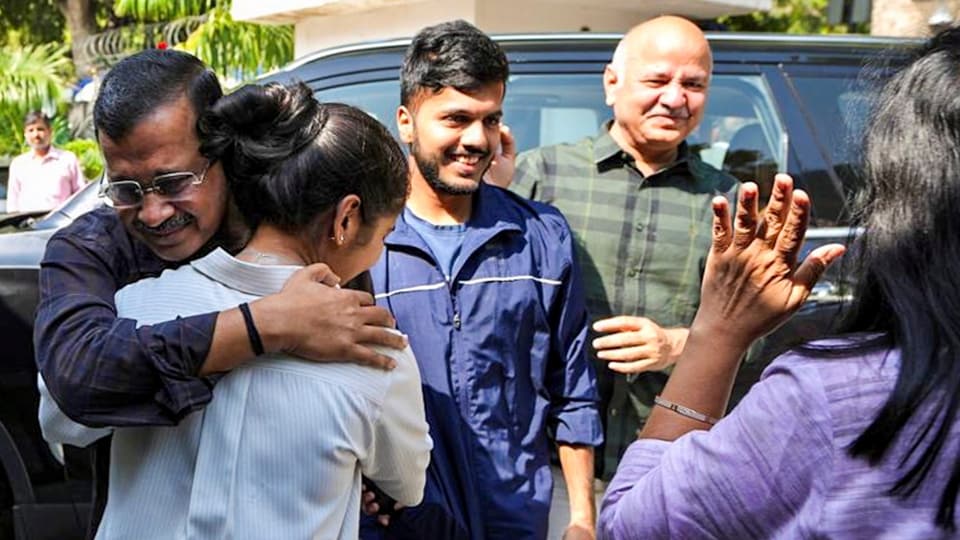
The court ruled there was "no overarching conspiracy or criminal intent" behind the excise policy and that the CBI had attempted to construct a narrative of conspiracy "based on conjecture rather than concrete evidence”.
Also read | Kejriwal breaks down after relief in Delhi liquor policy case: ‘Court said I'm kattar imaandaar'
In this, there's a crucial term holding added meaning for Kejriwal and the others — they have been ‘discharged’ altogether, and not "acquitted”, which means the court did not even find enough substance in the allegations for a trial.
What discharge actually means
Discharge does not just imply a judgment on guilt or innocence; it is the termination of proceedings altogether. "It happens before trial begins — before any witness is examined or any evidence tested in court, said Kashmir-based lawyer Habeel Iqbal.
Supreme Court advocate Anas Tanwir said, “A person can be discharged before framing of charges due to insufficient evidence to establish a prima facie case.”
In simpler words, a case essentially has four main stages:
- FIR or lodging of the complaint
- Chargesheet filed by police/probe agency in court
- Court examines chargesheet (called ‘challan’ sometimes) to determine if, prima facie (upon first impression), the allegations hold enough substance
- Trial is held towards a verdict, leading to conviction or acquittal
In the Kejriwal case, the court has stopped the proceedings at the third stage itself.
Discharge does not prevent the prosecution from refiling charges if new evidence emerges or it has grounds to challenge an order in a higher court.
What happens next?
The CBI has decided to approach the Delhi High Court to challenge the Rouse Avenue court ruling through a revision petition.
The CBI registered its case in August 2022 under legal sections covering criminal conspiracy, cheating, and disappearance of evidence, as well as the Prevention of Corruption Act. Three chargesheets were filed in total, with the second specifically naming Kejriwal.
The agency alleged that ₹100 crore was paid by a "south lobby" to influence the scrapped liquor policy. During arguments, additional solicitor general DP Singh, representing the CBI, maintained the evidence should be tested at trial — not dismissed before one had even begun. Senior advocate N Hariharan, representing Kejriwal, told news agency ANI that the court had "meticulously gone through all evidence produced by CBI and not a shred of allegation can be said to cross the threshold of charge”.
The court has even recommended a departmental inquiry against CBI officials.
The Enforcement Directorate is pursuing a separate case under the Prevention of Money Laundering Act, probing alleged hawala transfers and shell companies linked to the main case. Kejriwal was arrested by the ED in March 2024 and later by the CBI, before the Supreme Court granted bail in both cases. He spent over five months in jail.
Kejriwal's statement outside court was emotional and politically charged. "The sitting CM was dragged from his house and put in jail," he told reporters.
"(Home minister) Amit Shah and (Prime Minister Narendra) Modi ji together hatched the biggest political conspiracy to finish AAP," he alleged.
The BJP has reacted by saying it's a technical issue that can be appealed. Party spokesperson Sudhanshu Trivedi said in his first reaction, “The CBI will take the next step in this case. The party will give a structured response after studying the judgment in detail.”


