E-Paper



Learning Tamil serves gateway to ancient wisdom: Dharmendra Pradhan
Union education minister Dharmendra Pradhan on Tuesday underscored the central role of languages in sustaining India’s civilisational continuity.

 Prefer HTon Google


Union education minister Dharmendra Pradhan on Tuesday underscored the central role of languages in sustaining India’s civilisational continuity, stating that the country’s languages, regions, and traditions form “interconnected streams of one civilisation.” He said learning Tamil “is not limited to acquiring a language” but serves as a gateway to India’s ancient wisdom.
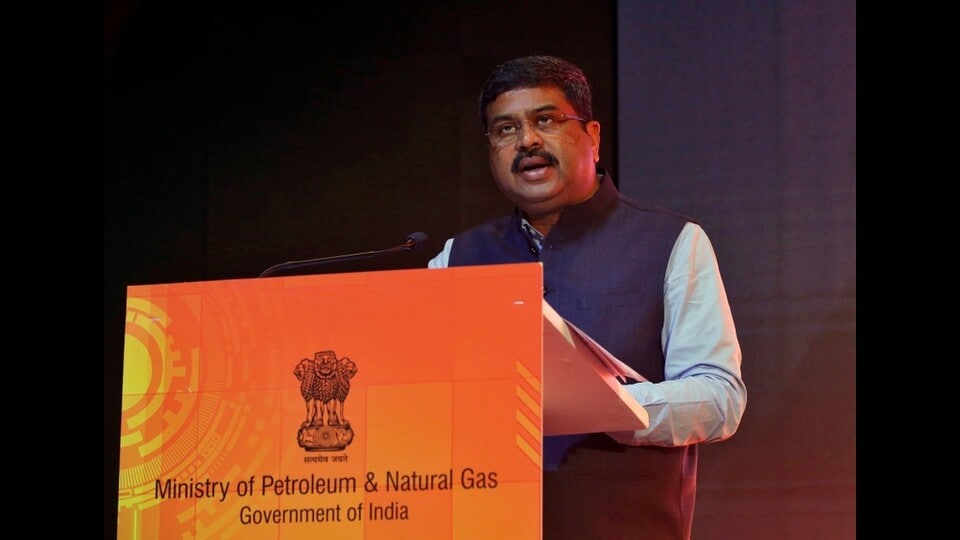
Addressing the valedictory session of Kashi Tamil Sangamam (KTS) 4.0 at Rameswaram, Tamil Nadu, Pradhan said linguistic diversity acts as a bridge rather than a source of division.
“India’s languages, regions, and traditions are not isolated strands, but interconnected streams of one civilisation. KTS initiative is not merely cultural but deeply civilisational in intent,” he said.
Focusing on Tamil, Pradhan said language learning extends beyond communication. “Learning Tamil is not limited to acquiring a language but it opens a gateway to India’s ancient wisdom,” he noted. Tamil, he added, has evolved as a “language of knowledge, scholarship and lived philosophy,” embodying centuries of intellectual endeavour across ethics, governance, mathematics, astronomy, medicine, and ecology.
The education ministry chose “Tamil Karkalam” or Learn Tamil as the central theme for KTS 4.0, amid ongoing differences between Tamil Nadu and the Centre over the National Education Policy (NEP) 2020 and its three-language recommendation. Tamil Nadu has opposed the policy, calling it an “imposition” of Hindi.
Pradhan described languages as carriers of India’s living knowledge traditions. “Languages preserved ideas, transmitted methods, and connected thought with everyday life,” he said, noting that Tamil has long been “one of the strongest pillars of gyan parampara, sustaining continuity and ensuring that wisdom remains accessible rather than exclusive.”
Invoking poet Mahakavi Subramania Bharati’s vision of linguistic unity, Pradhan recalled that Bharati believed “what is spoken in Kashi could be heard in Kanchi,” calling him a visionary of distance education. He added that Bharati’s dream of Tamil reaching beyond borders “has been realised through the Kashi Tamil Sangamam.”
Highlighting the “Learn Tamil – Tamil Karkalam” theme, Pradhan said the initiative sought to teach Tamil to North Indian students “in a simple and enjoyable manner”, while strengthening cultural unity, pride in Tamil, and national devotion. “Though we differ in food, attire, and language, we are united by the spirit of India,” he said.
Pradhan reiterated that the NEP 2020 recognises education as a civilisational pursuit. “Languages, arts, philosophy, and ethics are not optional elements of education. They shape thinking, character, and values,” he said.
The valedictory event was attended by vice president CP Radhakrishnan as chief guest. “The two holy cities of Kashi and Rameswaram have an unbreakable bond… It is also noteworthy that this event is being held in the place of former President Shri APJ Abdul Kalam,” he said.
KTS 4.0 was held in Varanasi from December 2 to 15, bringing together students, academicians, artists, writers, and cultural practitioners from across the country. In the second phase of the programme, a group of 300 students from Varanasi travelled to Tamil Nadu from December 16 to 30 for a 15-day Tamil language learning initiative.