
 E-Paper



LS Speaker, VP yet to get CJI report on probe into judge
A senior functionary who asked not to be named said that the government is in no hurry to start the impeachment process against justice Verma


The offices of Lok Sabha Speaker Om Birla and Rajya Sabha chairman Jagdeep Dhankhar are yet to receive the report on Delhi High Court judge Justice Yashwant Varma forwarded by the then Chief Justice of India to the President and the Prime Minister, suggesting that there’s been no movement on a possible impeachment motion against him in the monsoon session .
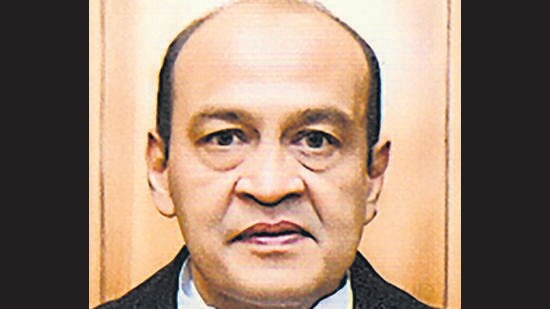
A senior functionary who asked not to be named said that the government is in no hurry to start the impeachment process against justice Verma, who has been sent back to the Allahabad HC after an undisclosed amount of currency, and some burnt currency notes were discovered in a room in his bungalow’s compound by first responders to a fire.
A top-ranking official of Parliament told HT that Birla is yet to receive any report and therefore, no preparation has started in the Lok Sabha secretariat for the impeachment, which is an elaborate process. Dhankhar’s office, according to a second official, has not received any communication on this matter. A fourth person added that the government has also, not yet indicated any plans to call a separate session to mark 50 years of the Emergency on June 25 as reported by some media.
A three-member enquiry panel formed by then Chief Justice of India Sanjeev Khanna comprising Punjab and Haryana high court Chief Justice Sheel Nagu, Himachal Pradesh high court Chief Justice G.S. Sandhawalia, and Karnataka high court judge, justice Anu Sivaraman submitted its report to CJI Khanna on May 5. The report confirmed that cash was indeed found at the residence of justice Varma, then a sitting Delhi high court judge. This cash was kept in a storeroom where a fire broke out March 14, following which fire service officials and police, engaged in dousing the flames, discovered half-burnt currency notes stacked in a sack. The police even recorded a video of the cash.
HT reported earlier this month that questions about the money trail and recovery of cash are likely to be at the heart of justice Varma’s defence.
In his covering letter to the report, the former CJI pointed out that justice Varma has the option to resign from office or seek voluntary retirement. Justice Varma is currently a judge of the Allahabad high court and on the CJI’s instruction, no judicial work is being assigned to him.
While the government is unlikely to sit on the probe panel’s report and the suggestion of CJI Khanna that justice Verma should be impeached, people aware of the government’s strategy said that the Centre will first wait to see if justice Verma resigns . .
“An impeachment motion can come only in the monsoon session, which usually starts in July. So, what is the hurry?” asked the first functionary.
Procedure for impeachment of HC judges
The removal of high court judges is guided by Article 218 of the Constitution, which relies heavily on Article 124 that deals with removal of Supreme Court judges.
The Constitution says that a high court judge shall not be removed from his office except by an order of the President passed after an address by each house of Parliament supported by a majority of the total membership of that house and by a majority of not less than two-third of the members of the house present and voting has been presented to the President in the same session for such removal on the ground of proved misbehaviour or incapacity.
“Parliament may by law regulate the procedure for the presentation of an address and for the investigation and proof of the misbehavior or incapacity of a judge under clause,” it adds.
The impeachment motion may be taken up in either house of parliament but in the Lok Sabha, at least 100 MPs have to sign the notice while in the Upper House, 50 lawmakers need to.
According to PRS Legislative Research, “the Speaker or Chairman may consult individuals and examine relevant material related to the notice. Based on this, he or she may decide to either admit the motion or refuse to admit it.”
If the motion is admitted, according to the rules of the House, the Speaker or Chairman (whoever gets the notice) will constitute a three-member committee to investigate the complaint. The panel will have a Supreme Court judge, a chief justice of a high court and a distinguished jurist. “The committee will frame charges based on which the investigation will be conducted. A copy of the charges will be forwarded to the judge who can present a written defence,” added PRS.
Once the investigation is over, the committee will submit its report to the Speaker or Chairman— and the chair will table the report before his House. “If the report records a finding of misbehaviour or incapacity, the motion for removal will be taken up for consideration and debated,” said PRS.
Article 124 says, the motion must be “supported by a majority of the total membership of that house and by a majority of not less than two-third of the members of the house present and voting has been presented to the President in the same session for such removal on the ground of proved misbehavior or incapacity.”
Once the motion is adopted in both houses, it is sent to the President, who will issue an order for the removal of the judge.


