E-Paper



Made clear to China peace in border areas essential for bilateral ties: Shringla
The comments came ahead of military talks between the two sides to address the dragging standoff in Ladakh

 Prefer HTon Google


NEW DELHI: India has made it clear to China that peace and tranquillity in the border areas are essential for developing bilateral relations, foreign secretary Harsh Shringla said on Wednesday ahead of military talks between the two sides to address the dragging standoff in Ladakh.
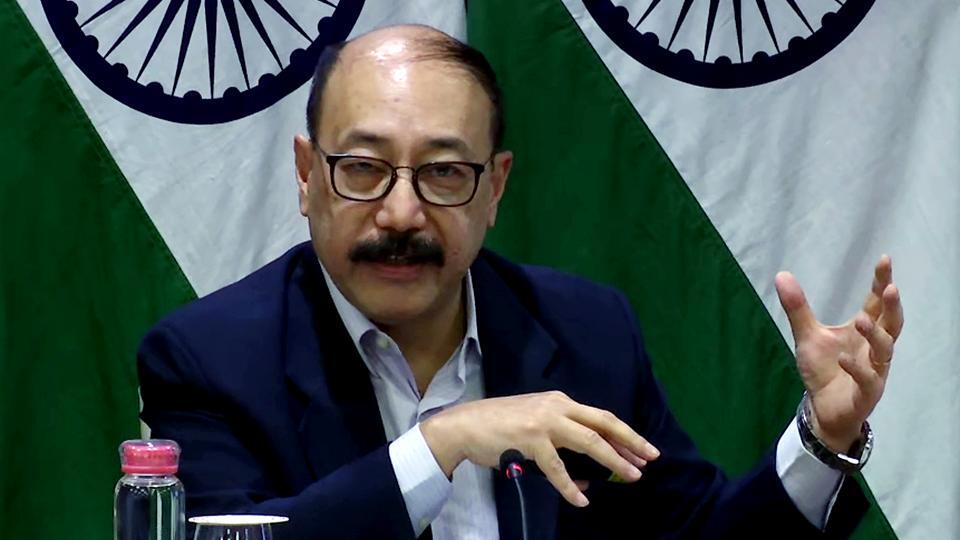
Addressing a training session on India’s neighbourhood at the Lal Bahadur Shastri National Academy of Administration, Shringla said that India desires a good relationship with Pakistan but “it cannot be at the expense of our security”.
India’s relations with both China and Pakistan are currently at an all-time low. The military standoff triggered by the massing of Chinese forces on the Line of Actual Control (LAC) is currently well into its second year, and ties between New Delhi and Islamabad have not recovered from the fallout of several terror attacks blamed on Pakistan-based groups.
“We have made it clear to China that peace and tranquillity in the border areas are essential for the development of our relationship. Development of India-China relationship has to be based on ‘three mutuals’ – mutual respect, mutual sensitivity and mutual interest,” Shringla said.
India and China are set to hold their 15th round of military talks on March 11 to ease tensions in Ladakh, with the discussions expected to focus on outstanding issues at remaining friction points along the LAC.
Shringla said India is contending with geopolitical realities and “extant threats such as cross-border terrorism and crime”, and the country will be “resolute in dealing with them”. He said India will continue to expand its capacities to deal with such issues.
Shringla said India will also build alliances through multilateral and plurilateral mechanisms such as the UN, Financial Action Task Force (FATF), Shanghai Cooperation Organisation (SCO) and Indian Ocean Rim Organisation (IORA) to deal with security challenges.
Speaking on the situation in the neighbourhood, Shringla said India has continued its “special relationship” with the friendly people of Afghanistan and decided to gift 50,000 tonnes of wheat as a response to the humanitarian situation in that country. India has also supplied Covid-19 vaccines, lifesaving medicines and winter clothing.
“We remain engaged with Myanmar, a country with which we share a nearly 1,700-km-long border. In our engagement, we have emphasised India’s interest in seeing Myanmar’s return to democracy at the earliest,” he said. He added India is committed to cooperating with Myanmar for security, economic and humanitarian assistance.
Even as India contends with regional challenges such as maritime security and natural disasters, it has established a record of being a “net security provider in the region”, Shringla said.
As part of its leading role in expanding maritime security, India has enhanced maritime domain awareness through linked radar systems with its Indian Ocean neighbours and helped upgrade the security capabilities of several neighbours. It is also conducting coordinated patrolling with Bangladesh, counter-terror exercises with BIMSTEC neighbours, and search and rescue and pollution control operations with Sri Lanka.
Shringla also highlighted the importance of connectivity and energy cooperation during his address to the group of trainee administrative officers. Connectivity within parts of the neighbourhood by road, water, rail and air has steadily improved, and India and Bangladesh will soon be connected by six rail links and India and Nepal by two rail links.
“Those of you here from the northeast would appreciate that it is now possible to travel from Kolkata to Agartala by bus via Dhaka. You would also appreciate that goods can now reach Tripura using multi-modal networks through Chittagong and through inland water routes,” he said.
In the field of energy, India’s energy grids are increasingly being integrated with those of its neighbours. India’s electricity grid is linked to Nepal, Bhutan and Bangladesh via high-capacity connections and transnational movement of electricity has become a reality.
“India supplies about 1,160 MW of power to Bangladesh, about 700 MW to Nepal, and imports 1.8 GW from Bhutan,” Shringla said. India has taken the lead in creating 2,100 MW of hydropower capacity in Bhutan and is building the 1,320 MW Maitree super thermal power project in Bangladesh.”
Shringla urged the trainee officers to “keep our neighbours in mind when you have policy formulation positions in your future careers.” He added, “Please remember that domestic policies might have unintended consequences in the neighbourhood.”
Shringla said many of India’s interactions with its neighbours are “complex interagency efforts” involving the external affairs ministry and other ministries. He added many state governments need to interact with neighbouring countries. “Your work will, in such situations, have a component which will require you to keep broader foreign and security policies in mind,” he said.