
 E-Paper



Mangaluru bomber trained in jail by LeT operative, say officers
The officers also said that LeT operative Afsar Pasha is involved in forming a ‘Jamaat fund,’ aimed at radicalising and converting youths in prisons to carry out terror missions

 Prefer HTon Google


An investigation into the threat calls made to Union minister Nitin Gadkari has revealed that Afsar Pasha, an operative of the terrorist organisation Lashkar-e-Taiba (LeT), trained the accused involved in the Mangaluru bomb blast to prepare Improvised Explosive Devices (IED) during their time in Belagavi jail, officers familiar with the developments said on Monday.
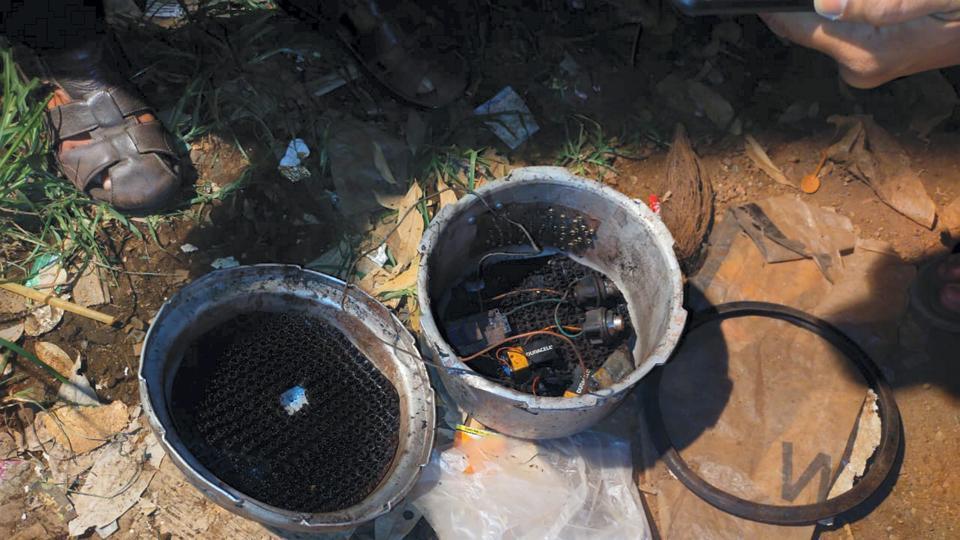
The officers also said that Pasha is involved in forming a ‘Jamaat fund,’ aimed at radicalising and converting youths in prisons to carry out terror missions.
Pasha’s involvement came to light during his interrogation by the Nagpur Police after he was taken into custody from Belagavi jail in Karnataka earlier this month.
The National Investigation Agency (NIA) had previously made some arrests in connection with the Mangaluru blast case. Jayesh Kantha, also known as Pujari, was one of the first arrested for allegedly making the threat calls to Gadkari in May.
According to police, the accused had made a threat call to Gadkari’s public relations office in Nagpur on January 14, demanding ₹100 crore and claiming to be a member of the Dawood Ibrahim gang.
A senior officer from the Karnataka Police confirmed that the Nagpur Police investigation established Afsar Pasha as the mastermind behind the Mangaluru bomb blast in November last year.
“He provided training in making cooker bombs to the accused while they were in a jail in Karnataka. Pasha had previously received bomb-making training in Bangladesh,” the officer stated.
The explosion in an auto-rickshaw in Mangaluru on November 19 last year injured the driver and a passenger, leading the state police chief at the time, Praveen Sood, to declare it an “act of terror with the intention to cause serious damage” on November 20.
During the investigation, police identified the bomber as Mohammad Shariq and discovered that the IED used potassium chlorate, a substance used in manufacturing matchboxes and crackers.
A search of a house in Mysuru where Shariq had stayed earlier yielded 150 matchboxes, sulphur powder, and gunpowder.
In November last year, the NIA officially took over the investigation into the Mangaluru blast from the Karnataka Police. Shariq had previously been arrested in December 2020 when pro-terror graffiti was found in Mangaluru. His associate, Mazz Muneer Ahmed, was also arrested in the same case.
The police suspected that Shariq used some of the money raised for his legal fight in the pro-terror case to buy the equipment used in making the bomb. In September 2022, Shariq’s name was also linked to another terror-related case involving the Islamic State, officials said.
Pasha’s involvement with the now-banned Popular Front of India (PFI) also came to light during the latest development, the officers said.
The PFI had transferred ₹5 lakh to Pasha’s bank account. “Pasha had previously orchestrated a blast in Dhaka, Bangladesh, where he spent considerable time. During his time in prison for terror activities, Pasha formed a group in Belagavi jail, indoctrinating prisoners from a specific community to join terror missions against India,” said an officer of the Nagpur Police.
The officer added that the creation of the ‘Jamaat fund’ was highlighted, which the PFI raised through donations, extortions, and similar activities to entice prisoners to join terrorist acts.
“The funds were primarily used to purchase electronic gadgets, phones, devices, and to cover expenses for prison facilities, including making calls and providing feasts,” the officer said.
Nagpur Police have also revealed that Pasha planned to expand his concept of jail-based groups for terror missions across India by posing as a PFI member.
He exploited inmates like Jayesh Kantha to execute his plans, utilising their networks and contacts for more significant terror operations.
“The radicalised and indoctrinated inmates would become sleeper cells in different places after release. Various government security and intelligence agencies have been alerted to this threat,” the officer added.


