
 E-Paper



Mann Ki Baat gives ‘great opportunity’ to share inspiring journeys: PM Modi calls for ideas for next episode
Prime Minister Narendra Modi had talked about the passage of farm bills, the importance of storytelling and the values of the Indian family system during the last edition of Mann Ki Baat.


Prime Minister Narendra Modi on Saturday called for ideas for the 70th edition of his monthly radio programme Mann Ki Baat, which will be aired on October 25. Modi’s Mann ki Baat is aired on All India Radio on the last Sunday of every month.
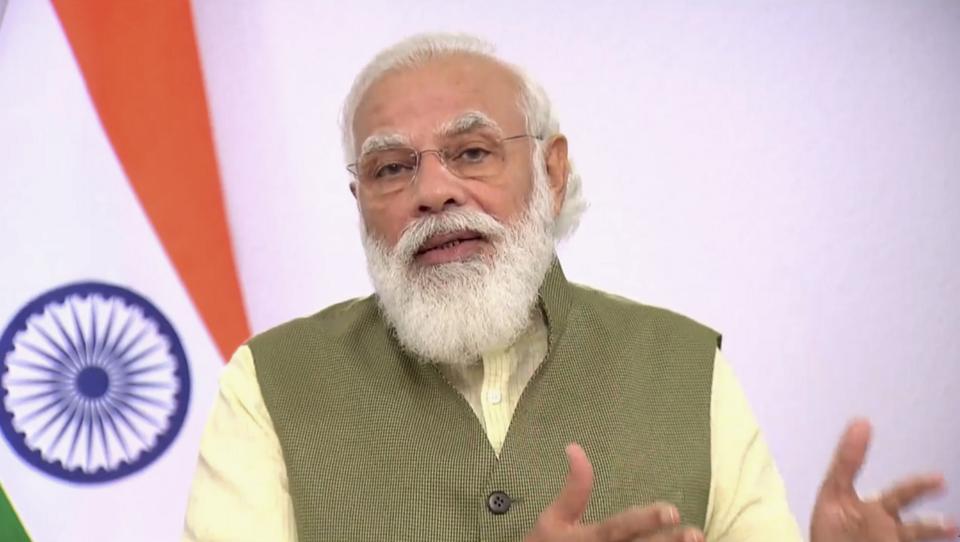
“#MannKiBaat presents a great opportunity to share inspiring journeys of outstanding citizens and discuss themes that power societal change. This month’s programme will take place on the 25th. Share your ideas on the NaMo App, MyGov or record your message,” PM Modi tweeted.
The Prime Minister had talked about the passage of farm bills, the importance of storytelling and the values of the Indian family system during the last edition of Mann Ki Baat. He had also hailed the courage, bravery and valour of soldiers, who carried out the surgical strikes in 2016.
On the farm laws, which are being criticised by opposition parties, he had said that these bills will empower farmers and give them the freedom to sell their produce. PM Modi said farmers have benefitted by the policies of his government since 2014.
Also read | Mann ki Baat: Farm sector playing key role in making India self-reliant, says PM Modi
He had also encouraged people to take up storytelling in his last Mann Ki Baat programme, saying “where there is a soul, there is a story”. “There has been a thriving tradition of storytelling in India. We are proud that we are citizens of the country where there has been a tradition of ‘Hitopdesh’ and ‘Panchatantra’. In the stories, an imaginary world of animals and birds was created so that words of wisdom and intellect be made easily understood,” the Prime Minister had said.
Kathakalashebam, he said, was an ancient method of telling religious stories. “Different types of folklores are prevalent in our country. There is an interesting style of storytelling in Tamil Nadu, Kerala, which is called Villu Pattu. It has a very interesting harmony between music and the story. In India, there has been a tradition of puppetry,” he had pointed out.
Also read | ‘Include inspirational stories from foreign rule, will inspire our young’, urges PM Modi on Mann Ki Baat
PM Modi also talked about the efforts being made by individuals to promote the art of “Kissagoi” (story-telling) across the country. “I have been observing the initiative to promote the art of ‘Kissagoi’. I got information about gaathastory.in website run by Amar Vyas and others. Vyas after completing MBA from IIM-Ahmedabad went abroad and then came back. Now he stays in Bengaluru and takes out time to do such interesting work in the field,” Modi said.
He also mentioned those who are popularising stories from rural India. Vaishali Vyavhare Deshpande from Maharashtra and Chennai’s Srividya Veeraraghavan were among them. He also mentioned Geeta Ramanujam’s kathalaya.org and another website called Indian Storytelling Network which are doing good work in the field.
Bengaluru’s Vikram Sridhar who is working on stories related to Mahatma Gandhi was also mentioned by Prime Minister Modi in his address. He also urged the citizens to share information about others who are working in the field.
(With agency inputs)


